
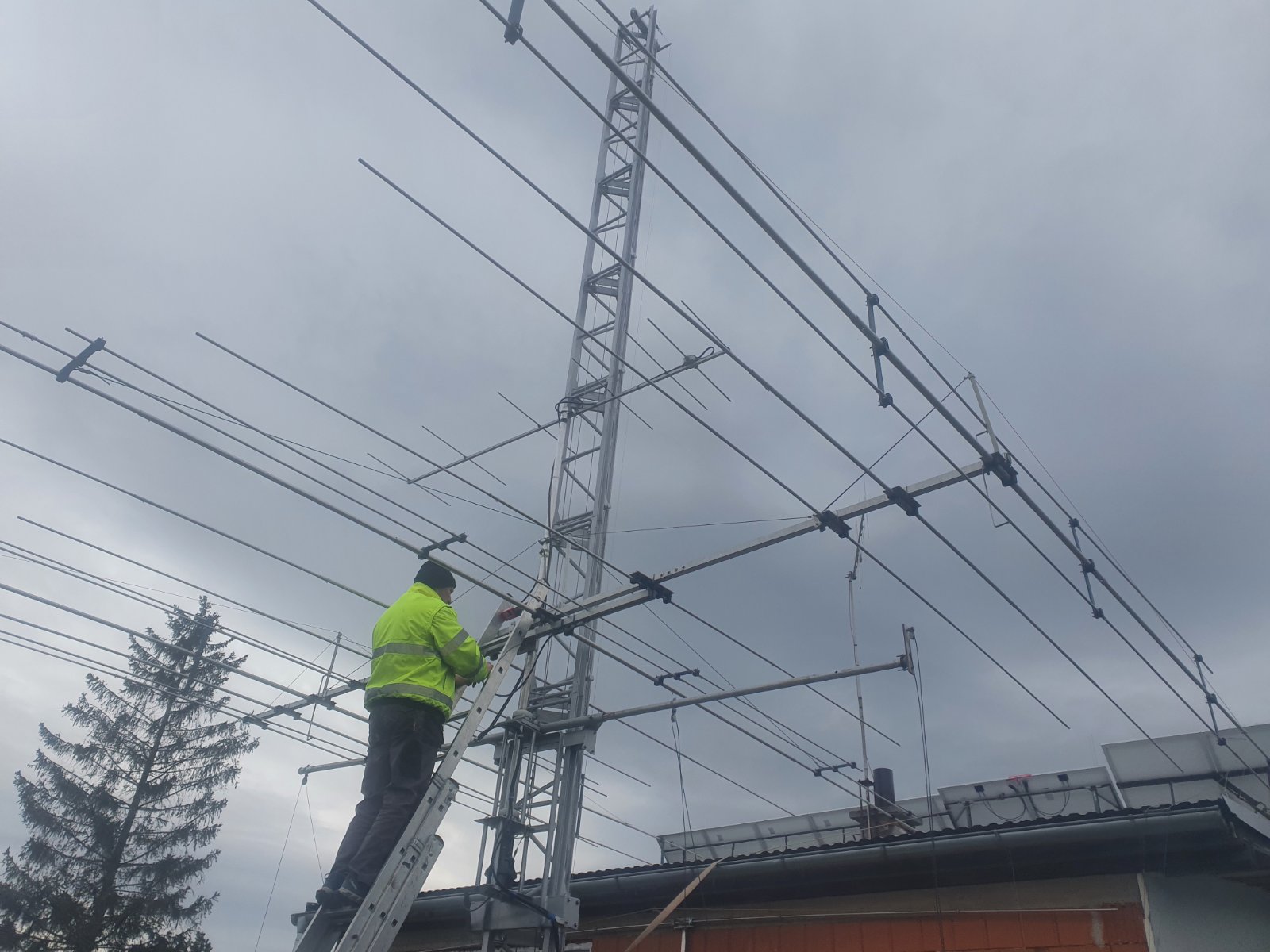
"HF Terrain Assessment", HFTA - is a program that can calculate how suitable a specific antenna will be in terms of height and environment for connections to a certain area of the world. Autorom programu je N6BV a je šírený napr. na CD ku ARRL Antenna Book-u. Ponúka odpovede na dve podstatné otázky:
- What is the optimal height of the antenna above the ground?
- Does the terrain profile near the antenna affect signal propagation?
In the article you will find out
Using HFTA
Underestimating these questions can lead to the antenna not meeting our expectations in real operation. How to use HFTA to achieve the best results?
Preparation
Najprv je potrebné pripraviť si dáta z vlastného QTH. It is a file with elevation data from our QTH up to a distance of 4km in the selected direction (e.g. to W/VE, JA, etc.). This part is the most laborious. It either means reading this data from a map, using a program, or a website (e.g. vyskopis.cz).

Then we can start the program. We will add the properties of the ground to the parameters, select the Anglo-American/metric system, and load the elevation file. These files contain data on the probability of signal impact on the antenna at a certain angle from/to the target area. For example, for connections across the continent, all signals come to the antenna from higher angles than, for example, in DX connections. Because files are not defined for OM, use files for OK.
Antennas
HFTA dokáže porovnávať horizontálne antény od dipólu po 8el.yagiFour antenna systems can be compared at once. In addition to the graphical representation, HFTA calculates the 'Fig. of Merit' parameter, which is a number expressing the suitability of the antenna for connections to the target area at the given antenna height.
Result of the analysis of terrain and antenna height above ground
On the following graph, you can see the result of the analysis for connections across Europe (specifically western EU) in the 10m band from my QTH. Note that the fourth antenna (light blue curve), a 4-element Yagi at a height of 15m, has a significant null in the range of 28-31 degrees, which is the desired angle for these connections. According to the analysis, a dipole at half the height (dark blue curve) is even more suitable for this purpose.
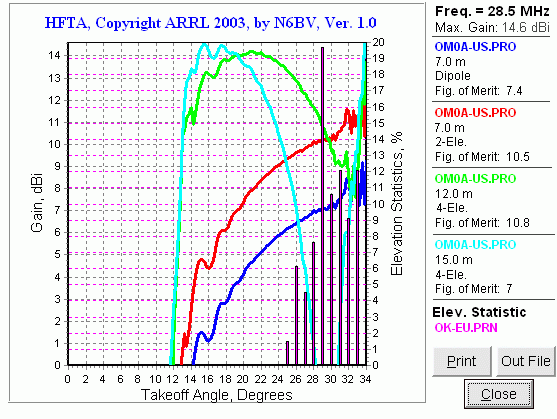
HFTA teda zodpovedal prvú otázku Aká je optimálna výška antény nad zemou?For connections across Europe from my QTH, it is more advantageous to place the antenna at a height of 7 to 12m, rather than 15m.
Does the terrain profile near the antenna affect signal propagation?
Odpoveď na druhú otázku Má profil terénu v blízkom okolí antény vplyv na šírenie signálu? the second graph provides the answer. These are also connections across Europe, but towards the northeast, where I have no obstacles nearby.
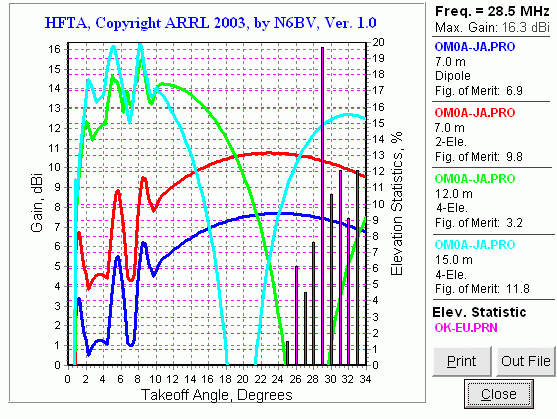
As can be seen, by rotating the same antennas at the same height, the radiation of the antennas has changed significantly. Towards the west, where I have massive mountains, none of the antennas radiate at an angle lower than 11 degrees. However, in the open direction, effective radiation is visible even at lower angles. The logical conclusion is that the terrain profile in the vicinity significantly affects signal propagation.
Results
The results are very interesting. Not all QTHs are the same, not even on HF. And the height of the antenna above the ground also has a significant impact on the suitability of the antenna, in some cases, a smaller antenna low to the ground is even more advantageous than a larger antenna high above the ground.
If you are interested in an analysis for your QTH, please send me the elevation data of your QTH, types of antennas, their height above the ground, frequency, and geological areas of interest. Elevation data should be in the prescribed format: distance and altitude in feet, for example:
English