
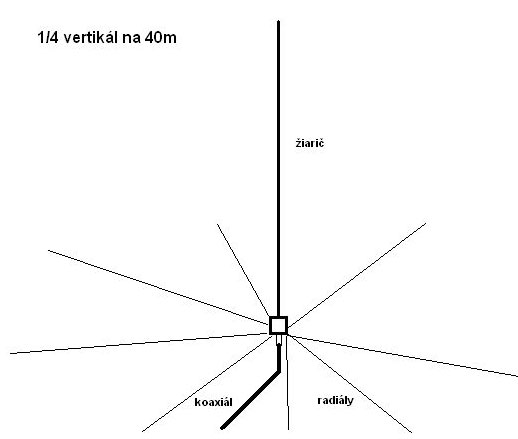
Štvrťvlnný vertikál je efektívna a jednoduchá anténa pre pásmo 40m. Je ju možné realizovať ako groundplane – vertikál so šikmými vyzdvihnutými radiálmi, alebo so zemnými radiálmi. Mal som možnosť porovnať obe verzie v predošlých CQWW contestoch a nebol medzi nimi postrehnuteľný rozdiel.
V článku sa dočítate
Mechanická konštrukcia s teleskopickými tyčami od OK5IM
Keďže výška vertikálnej časti je približne 10m, ponúka sa možnosť využiť na druhú verziu antény teleskopické tyče od Jirku OK5IM. Tie majú výšku 12,5m. Nevyužijeme z nich posledné dva najtenšie diely. Na teleskop plastikovými „zdrhovačkami“ alebo izolepou pripevníme žiarič.

Z mechanického hľadiska je vhodné vyrobiť vodotesnú krabičku – prechod medzi koaxiálnym káblom a anténou. Radiály sú uchytené pomocou svoriek. Príklad takejto krabičky môžete vidieť na fotografii.
Rozmery antény
Teoretická dĺžka žiariča je 10,56m (pre 7,1MHz). V praxi je vodič o niekoľko desiatok centimetrov kratší. Je to zapríčinené tým, že:
- radiály sú pod krabičkou na zemi, t.j. celkovú dĺžku žiariča tvorí drôt žiariča + prepoj v krabičke + vzdialenosť krabičky od zeme s položenými, resp. zakopanými radiálmi
- vplyvom okolitého prostredia v ktorom je anténa umiestnená
- skracovacím činiteľom vodiča s izoláciou
- hrúbkou vodiča

Tieto vplyvy spôsobujú, že reálna dĺžka žiariča je okolo 9,7m. Platí však, že krabičku sa snažíme umiestniť čo najnižšie k zemi.
Aby sme dosiahli vyhovujúce PSV pre pripojenie na koaxiálny kábel bez prispôsobovacieho obvodu (v ktorom chtiac-nechtiac vždy vzniká nejaká strata), volíme len menší počet radiálov (8 až 12 podľa kvality zeme). Dobrá dĺžka je 10m, ak nie je priestor, snažíme sa natiahnuť aspoň niekoľko dlhších radiálov ktoré doplníme väčším počtom krátkych radiálov.
Účinnosť antény a jej vylepšenie
Teoretická účinnosť antény je okolo 70%. Ak by sme zväčšili počet radiálov nad sto(!) a použili prispôsobovací obvod, dosiahli by sme účinnosť okolo 85%. Zlepšenie vyžarovania dosiahneme zlepšením odrazovej plochy okolo antény – zakopaním radiálov. Tie však s anténou nespájame!
Potlačenie spätných prúdov
Na obmedzenie spätných prúdov tečúcich po povrchu tienenia koaxiálneho kábla je vhodné namotať zopár závitov koaxiálneho kábla ako tlmivku pri napájacom bode antény na plastikovú fľašu či iný nevodivý materiál.
Portablová vs domáca verzia antény
V portablovej verzii zvládne anténu postaviť jeden človek za pár minút. Pre trvalú inštaláciu môžeme spraviť žiarič aj samonosne vo forme priehradovej konštrukcie uloženej na izolátoroch. Príklad ukazuje fotografia.

Priehradová konštrukcia štvrťvlnnej antény na 7MHz
Zväčšenie zisku a získanie smerových účinkov je možné zostackovaním napríklad štyroch antén. Je to však zložitejšia sústava na zhotovenie – štyri identické antény, fázovacie vedenia, relátka, prepínač s indikátorom smeru, napájací zdroj atď.
Štvrťvlnný vertikál je jednoduchou a dobrou anténou – vyskúšajte!