
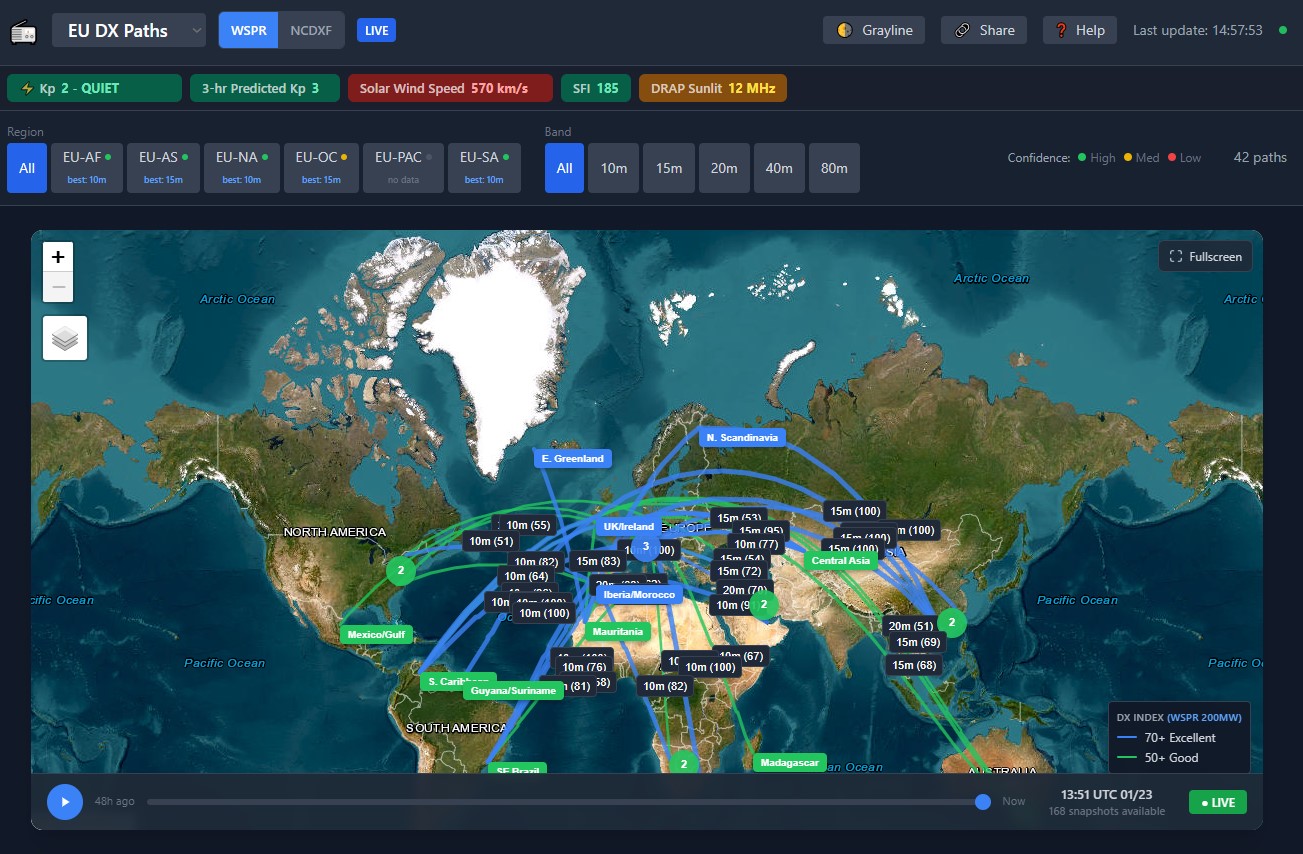
Každý skúsený rádioamatér vie, že úspech na KV pásmach nie je len o výkone a anténach, ale predovšetkým o správnom načasovaní. Nástroj DX Map od HB9VQQ (aktuálne vo verzii 5) predstavuje špičkovú platformu, ktorá premieňa surové dáta z tisícov prijímačov na prehľadnú vizuálnu mapu šírenia v reálnom čase. Roland HB9VQQ veľmi aktívne skúma šírenie a podporuje rádioamatérsku komunitu. Hosťuje napríklad server pre RM-Noise.
Ak chcete vedieť, či je „otvorená Amerika“ alebo či má zmysel zapínať rádio na 10-metrovom pásme, tento nástroj je pre vás povinnou jazdou. Nájdete ho na adrese: dxmap.hb9vqq.ch/v5/.
Dva svety, jeden cieľ: WSPR a NCDXF
Sila DX Mapy spočíva v kombinácii dvoch kľúčových zdrojov dát, ktoré sa aktualizujú každých 15 minút:
-
WSPR (Weak Signal Propagation Reporter): Sieť tisícov nízkovýkonových majákov. Je ideálna na zisťovanie celkovej kondície pásiem a objavovanie netradičných ciest. Pokrýva pásma od 80m po 10m.
-
NCDXF (International Beacon Project): Systém 18 synchronizovaných 100W majákov na strategických miestach sveta. Keďže vysielajú s konštantným výkonom, sú najlepším referenčným bodom pre SSB (fónickú) prevádzku.
Tip: Ak hľadáte digitálne spojenia, sledujte WSPR. Ak vás zaujíma, či sa dovoláte hlasom, prepnite sa na NCDXF.
Rozkódovanie indexov: Čo hovoria čísla?

DX Mapa nepoužíva len farebné čiary, ale aj sofistikované indexy:
-
DX Index (WSPR): Ukazuje, ako sú aktuálne podmienky odlišné od typického stavu pre danú hodinu. Hodnota 100 je normál, 120+ znamená excelentné podmienky.
-
Band Score (NCDXF): Kombinuje silu signálu a počet staníc, ktoré maják počujú. Skóre 30+ znamená dobrú, spoľahlivú cestu.
-
Indikátory trendu: Šípky vedľa hodnôt sú kľúčové. ↑ (zlepšovanie), ↓ (zhoršovanie), ★ (novootvorená cesta). Ideálne je zachytiť začiatok otvorenia (stúpajúci trend).
SSB pohľad: dovolám sa fóniou?

Jednou z najužitočnejších funkcií pre „fónistov“ je SSB Outlook. Na základe SNR (pomeru signálu k šumu) a počtu skimmerov odhaduje šancu na hlasové spojenie:
-
Strong: Výborná šanca na SSB QSO.
-
Moderate: Možné, ale vyžaduje trpezlivosť.
-
Weak/Unlikely: Radšej skúste CW alebo digitálne módy.
Vesmírne počasie pod drobnohľadom

V hlavičke mapy nájdete aktuálne solárne indexy, ktoré priamo ovplyvňujú vaše rádio:
-
Kp Index: Magnetická aktivita. Hodnoty 0–2 sú ideálne. Pri 5+ (búrka) očakávajte degradáciu ciest cez póly.
-
SFI (Solar Flux Index): Vyššie číslo (150+) znamená „živé“ horné pásma (10m–20m).
-
DRAP (D-Region Absorption): Ukazuje, ktoré frekvencie sú pohlcované slnečným žiarením (kritické pre dennú prevádzku).
Interaktivita a história
Mapa nie je statická. Môžete využiť:
-
Filtre: Zobrazte si len konkrétne regióny (napr. EU-NA) alebo konkrétne pásma.
-
History Playback: Pomocou ovládačov v spodnej časti si môžete spätne prehrať posledných 48 hodín. Je to fascinujúce sledovať, ako sa pásma otvárajú a zatvárajú v závislosti od „Grayline“ (stmievania/svitania).
-
Klávesové skratky:
Space(Play/Pause), šípky←/→(krok v čase),F(celá obrazovka).
Praktické tipy pre operátorov
| Režim | Na čo sa pozerať? |
| SSB / Fónia | Hľadajte cesty „Strong“ s aspoň 5 skimmermi. |
| CW (Telegrafia) | Stačia cesty označené ako „Weak“ A index 50+. |
| Digitál (FT8) | Akákoľvek viditeľná čiara na mape znamená potenciálne spojenie. |
| Magnetická búrka | Sledujte rovníkové cesty, tie bývajú stabilnejšie než polárne. |
DX Map od HB9VQQ je v roku 2026 pravdepodobne najkomplexnejším bezplatným nástrojom pre pochopenie toho, čo sa práve deje v éteri. Predtým, než začnete zbytočne ladiť po prázdnych pásmach, pozrite sa na mapu – vaše rádioamatérske „oči“ vám poďakujú.
Vydal som verziu 7 programu https://dxmap.hb9vqq.ch s mnohými novými funkciami. Pozrite si ju, 73 de Roland HB9VQQ