
In Rádiožurnál 2/1998, OK1VEY and OK1UKE described an electronic repeater with an ISD circuit according to Bojan Debejak S57BBD. For those who do not own the aforementioned magazine, I would recommend visiting the website Jarda OK1VUP www.QSL.net/ok1vup, where there is a scheme with Jard's adjustments.

Opakovač, alebo voice keyer, je totiž veľmi užitočné zariadenie pre SSB contestmanov a je oň pomerne veľký záujem. Neuniklo ani mojej pozornosti a po získaní jedného obvodu ISD som obvod postavil. Funguje, ale v zázname je nepríjemný brum, ktorý nie a nie odstrániť. Na prosbu o pomoc cez sieť packet rádia zareagovala štvorica rádioamatérov – Jarda OK1VUP, Roman OK2CRC, Ivan OK1MMN a Luděk OK2IEN. Aj týmto sa im chcem poďakovať za cenné rady pri riešení tohto problému.
It is best to start with their advice
Zdravim do zahranici..hi Pokud se jedna o to stejne co myslim , tj. zapojeni s ISDxxxx a mikroprocesorem.. atmel.. (zapojeni dle OK1UGA), tak ten brum neni zavada obvodu ISD, mne stacilo odpojit stineny kablik s elektretovym mikrofonem a v tu ranu brum nikde. Navic se jeho intenzita menila v zavislosti na ruznych uhlech.. jedina odpoved je ruseni atmelem ci 555kou co v zapojeni je.. Pokud vim tak pouzite ISD 2560 (8KHz/60 sec) funguje bezchybne…a samotne zadny brum do nahravaneho signalu nemicha.. S pozdravem, Roman, OK2CRC Ahoj DR OM, sam jsem postavil davac s ISD 1020 a 1016. Resil jsem stejny problem. Stravil jsem nad tim nekolik dni. Je potreba oddelit analogovou a digitalni zem. V praxi jsem to udelal tak, ze jsem pouzil stabilizaci 2x 7805 pro analogovou a digitalni cast zvlast. Vse beha bez nejmensich problemu k plne spokojenosti. Nemam tu pred sebou doporucene zapojeni vyrobce ale na schematu zapojeni IO s popisem vyvodu je videt kde tyto dve napajeni jsou. V doporucenem zapojeni jsou tyto dve VCC spojene, coz je samozrejme spatne. Opravuje to i dodatek vyrobce ISD v doporucenem zapojeni. Pokud by jsi sis stale nevedel rady mohl bych data sheet pohledat a rici ti presne ktere nohy to jsou. 73 Ludek OK2IEN DR OM. Neco podobneho jsem take vyrabel, ovsem vlastni kostrukce, „digitalni“ brum je zpusoben vzorkovanim a odstranit jej nelze, resil jsem to nakonec jazyckovym rele pripojenym na obvod voxu (tez vlastni konstrukce), ktere spinalo vystup pouze pokud byl na nem nejaky uzitecny signal maskujici brum, kupodivu to chodilo docela dobre a spinani nebylo v signalu slyset (myslim, ze se tam pripojoval nejaky odpor misto vystupu), problem byl spis s voxem, aby hned zabiral a mel tu spravnou casovou konstantu dobehu… Ted pouzivam zvukovou kartu. Tenhle VOX KEY jeste mam a obcas ho i pouziju. 73 ivan ok1mmn Ahoj, ja jsem se taky pred nedavnem pustil do stavby opakovace podle Ra 2/98 a se stejnym vysledkem – brum. neznam upravy o kterych pises, ale ja jsem to vyresil oddelenim zemi – analog a digital zvlast a to pomoci tlumivky. napajeni zustalo spolecne. na svych strankach na qsl.net mam novy obsah webu (zatim pod ok1vup.htm a ne pod index.htm, kde to v sekci Technique popisuju. Podivej se na http://www.qsl.net/ok1vup/Technique/opakovac/opakovac.htm, kde je schema jiz upraveneho zapojeni. Je pravda, ze v samotnem zaznamu se brum neobjevuje, ale jakmile to pripojim k TCVR, then it appears a little (badly) - I'm working on it then, I'll probably want to separate it and the power supply. 73! Jarda OKVUP
I was the first to try the modification according to SPRAT No. 78 (spring 94). According to it, a dynamic microphone is connected to ISD terminals No. 17 and 18 (microphone inputs). It would be galvanically separated from the ground. But the result was bad...
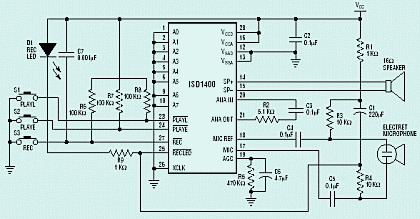
The second modification was the adjusted connection of the electret microphone according to AR-A 12/94. In this connection, the microphone terminal is also not connected directly to ground. The result is also bad…
From the information I received, I tried two. As the first modification from Jard OK1VUP, which only required small modifications on the circuit board. The improvement was noticeable, but not enough. It would require longer-term experimentation, searching for a suitable choke, etc.
When I tried Luďek's modification with two stabilizers, I carelessly connected the second stabilizer so that it was powered by the first one, that is, with five volts. Approximately 3.8V was being received at terminal No. 28 of the ISD - but the hum disappeared. However, the record was significantly distorted. There is no mention of the supply voltage range in the data sheet. According to the article in AR, it is 4.5 to 6.5V.

After further experimentation, I finally reached a state that I am satisfied with. I left a single stabilizer, while I feed the ISD digital time (pin no. 28) through the GA203 germanium diode. It is soldered from the underside of the printed circuit board below the perimeter where I scratched the joint. After reducing the voltage by a few tenths of a volt, the deterioration of the recording quality is minimal, but there is no trace of hum.
Other than that, I've only made one modification to the timer circuit. I reduced resistor R1 from 47k to 22k and capacitor C2 from 2.2uF to 22uF. In this way, the gap before repeating the recording can be set from 1.2 to 6.7 seconds, which seems sufficient to me.
Overall, I rate the connection as very successful, the circuit board is designed very clearly and without a single error. I can warmly recommend it to others after making minor adjustments.
Literature:
[1] Electronic repeater with ISD circuit, Bojan Debeljak S57BBD, translated by OK1VEY and OK1UKE, Rádiožurnál 2/1998
[2] SPRAT č.74 (jar 1994), Analogue Solid stane speech recorder, Paul Lovell G3YMP
[3] Digital audio memory G102, G103, Jindřich Tolg and Ing.Tomáš Tolg, Amatérske rádio A 12/1994
[4] http://www.qsl.net/ok1vup/technika/opakovac/opakovac.htm
[5] Catalog ISD14xx