
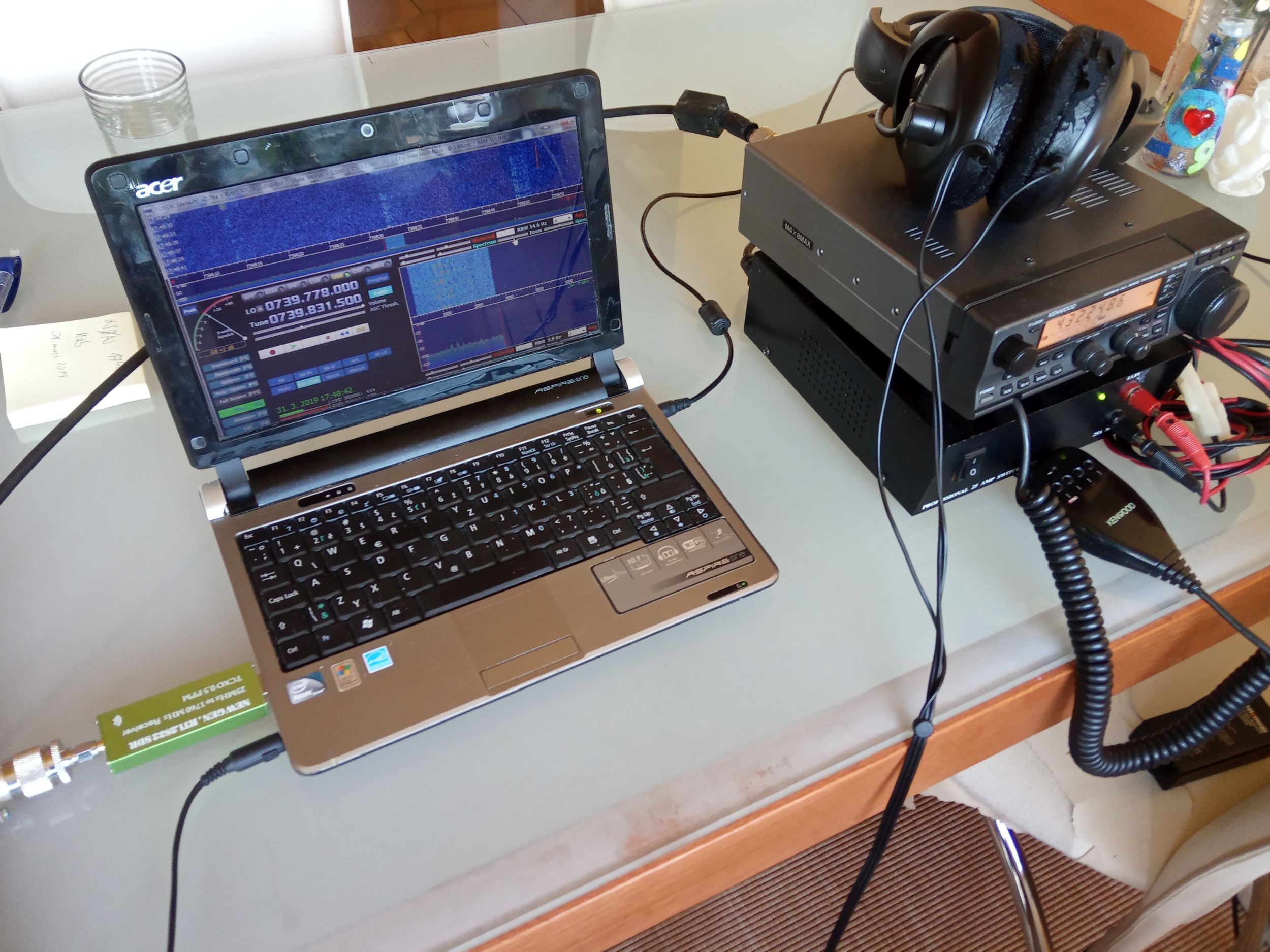
November 15th is the birthday of two satellites, which are milestones in radio amateur satellite activity. 46 years ago, on November 15, 1974, he was sent from Vandenberg to his five space satellite AO-7. Now 46 years old, the satellite is still with us (although it seemed to be out of service for some time) and radio amateurs communicate daily through its transponder.
AO-7 can work in three modes
A: linear non-inverting
Uplink: 145.850 – 145.950 MHz
Downlink: 29.400-29.500 MHz
Beacon: 29.502 MHz
Power: 1.3W PEP
B, C: linear inverting
Uplink: 432.125 – 432.175 MHz
Downlink: 145.975 – 145.925 MHz
Beacon: 145.975 MHz
Power: 8W PEP (B) and 2.5W PEP (C)
Mode A can be recognized by the active beacon at 29.502MHz. In addition to telemetry data, the latter also transmits the identification group of letters "HI HI". There are not many stations after the break of RS12/13 working 145/29, but during the weekends it is possible to hear SSB and CW calls from various stations, especially around 29.450.
Modern Es'hail 2 / QO-100 satellite
The second satellite to which the date November 15 is linked is Es'hail 2 / QO-100. However, it is significantly younger, having been launched into orbit from the Kennedy Space Center on that date in 2018.
This satellite enabled many radio amateurs to become familiar with higher frequencies (uplink is at 2.4 GHz and downlink at 10 GHz). Many radio amateurs use home-made radiators, transverters or converters and are interested, for example, in phenomena such as attenuation of signal propagation in certain weather conditions (rain, fog). Measuring technology for these bands has also become more available, for example NanoVNA or the D6 analyzer.
All the best, AO-7 and QO-100!