
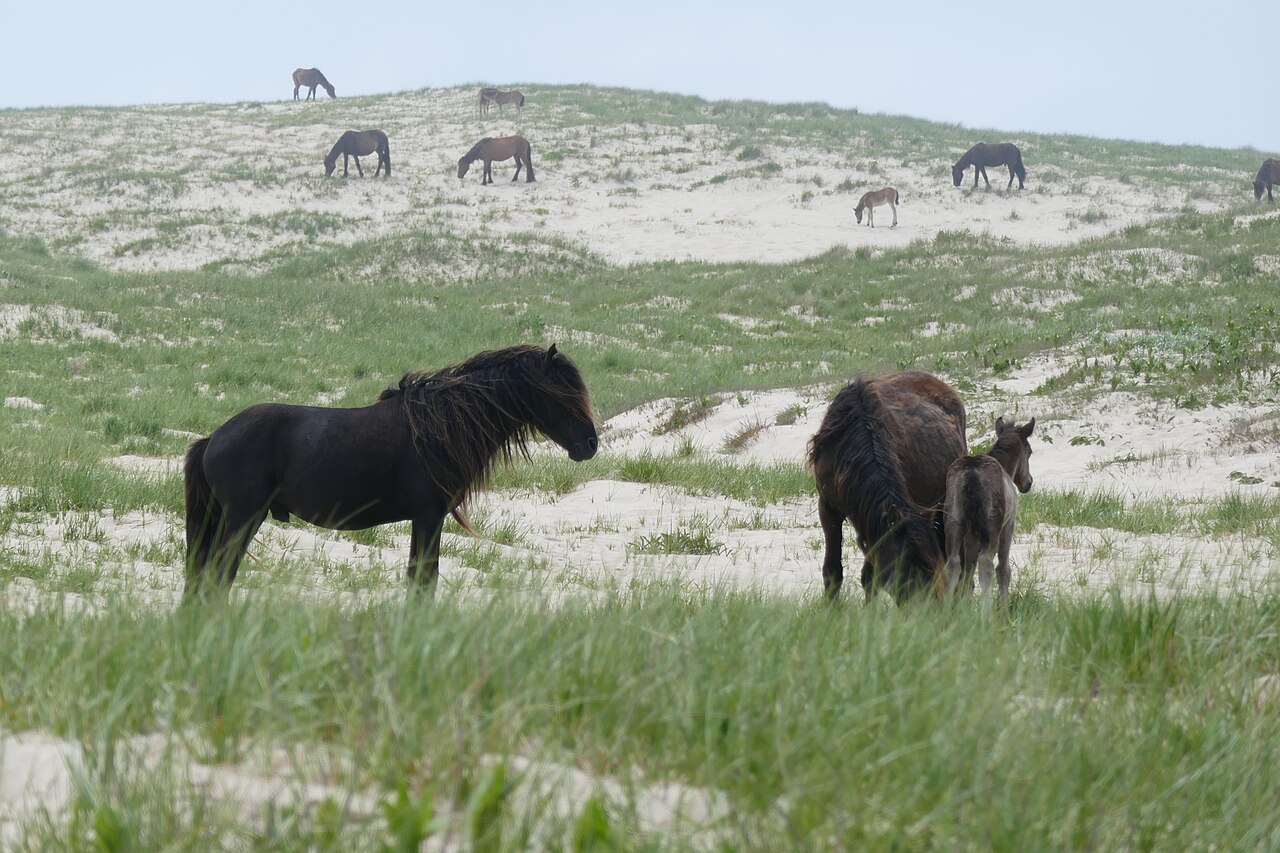
Sable Island with the prefix CY0 is not just an ordinary piece of land in the Atlantic Ocean. This narrow sandy arc, located about 300 kilometers southeast of Halifax in Nova Scotia, is a symbol of inaccessibility and challenge for amateur radio operators. With a length of approximately 42 kilometers and a width of just under one and a half kilometers, it is a dynamic environment formed by constantly changing sand dunes. The island is known as the 'Graveyard of the Atlantic' due to more than 350 historical shipwrecks, but for the amateur radio community, it is primarily one ofthe most sought after DXCC entít na svete.
In the article you will read
An invitation that cannot be refused
The basic impulse for 2026 was the official invitation from the Parks Canada national park administration. After a successful operation in 2023, they again expressed trust in the CY0S team and invited them for a 10 to 12-day stay from March 19 to 31, 2026. For amateur radio operators, this is a rare opportunity, as access to this isolated sandy island is strictly regulated to protect the unique ecosystem, which includes wild horses and seal colonies.
The team leaders are again experienced veterans Murray Adams (WA4DAN) and Glenn Johnson (W0GJ). Their names are a guarantee of quality and professionalism in the DX world. They are joined by Ralph Fedor (K0IR), a legend of the amateur radio world and holder of ten 'DXpedition of the Year' awards. Ralph's arrival in the team added a touch of distinction to the project, as he is an operator who has activated the most inhospitable places on the planet.
Sable Island: A sand dune in the middle of the ocean
Sable Island is located about 300 kilometers east of Halifax in Nova Scotia. Geographically, it is a dynamic and constantly changing formation. Currently, it is 40 kilometers long, but its width does not exceed 1 kilometer anywhere. The entire surface of the island is exclusively sand. There is no natural protection in the form of trees, which in March, when freezing, windy, and snowy weather prevails on the island, poses a huge burden for operators and equipment.
The wind here commonly reaches gusts of 40 to 60 knots (approximately 75 to 110 km/h). The absence of vegetation means that masts and antennas must withstand the direct pressure of Arctic storms. The team, as part of its preparations, had to design special 42-inch wooden anchoring stakes that can hold antenna systems in loose and unstable sand.
Logistical puzzle and weight limits
Transportation to the island is the most critical point of the entire project. There is no landing strip here. The team uses the services of Sable Aviation and their Britten-Norman Islander aircraft, which must land on the southern beach of the island. This landing depends on the tide, the hardness of the sand, and visibility. Flight delays are common here, to which the team responds with maximum flexibility.
The weight limit is relentless. The total allowed weight for two flights is set at 2880 pounds (approximately 1306 kg). However, this figure includes not only the equipment but also nine team members, their personal belongings, and all food. Calculations showed that the operators with personal equipment take up to 73% of the total capacity. For the expedition to even take place, team members had to switch to a diet of freeze-dried foods, and their personal luggage was limited to 42 pounds (19 kg) per person.
Journey to Halifax and final preparations
The journey to Sable began long before departure. Glenn (W0GJ) and Murray (WA4DAN) made a 2300-kilometer drive from the US mainland to Halifax, loaded with tons of equipment. On March 16, 2026, key weighing of materials began at the Vision Air Services hangars in Halifax. Part of the heavy equipment was scheduled for transport by Sikorsky helicopter, while the rest and the operators were to fly in the Britten-Norman Islander aircraft on Wednesday, March 18.
However, the weather in the area began to deteriorate sharply in mid-March. Forecasts reported heavy rain and wind, which again confirmed that flights to Sable Island do not operate according to a predetermined schedule but according to what nature allows. The team, led by Larry (W0PR) and Bill (K5DHY), was meanwhile working intensively on publicity and fundraising, as the expedition's budget had soared to 0,000.
Expedition CY0S 2026 is a testament to the indomitable will of the amateur radio community. It is a race against time, weather, and strict limits, resulting in the activation of one of the most iconic stations of the decade.
FlexRadio Aurora: The end of the standalone amplifiers era

One of the most significant technical decisions of the team was the deployment of six completely new radio stations FlexRadio Aurora AU-520M. Tieto zariadenia predstavujú technologický skok, ktorý bol pre úspech CY0S kľúčový. Aurora disponuje integrovaným výkonom 500 wattov, čo tímu umožnilo eliminovať potrebu samostatných koncových zosilňovačov.
V podmienkach, kde sa bojuje o každý kilogram nosnosti lietadla, znamenalo odstránenie ťažkých zosilňovačov a prepojovacích káblov úsporu stoviek kilogramov. Vo februári 2026 prebehli v domácom prostredí Craiga (K9CT) komplexné testy všetkých šiestich staníc zapojených do siete. Testovanie zahŕňalo módy CW, SSB, RTTY a FT8, confirming flawless cooperation with laptops and network infrastructure. One of the stations is specially configured for simultaneous operation on HF FT8 and 6 meters.
Antenna engineering for hurricane winds
The expedition's antenna park is designed with regard to the absence of natural wind obstacles. The team relied on proven solutions from DX Engineering and spiderbeam. Základom sú 12-metrové sklolaminátové teleskopy (Spider Poles), ktoré prešli výrazným posilnením.
The team chose an innovative approach to anchoring. Each mast has anchoring rings installed every three meters. Given that the wind on Sable reaches gusts over 100 km/h, all anchoring ropes were pre-measured and prepared in domestic conditions. The anchoring stakes are 42 inches long (over 100 cm) to achieve the necessary stability in loose sand. The team also modified yagi antény pre pásma 10 až 20 metrov, ktoré sú po testovaní uložené v špeciálnych lyžiarskych vakoch na uľahčenie transportu lietadlom.
Historical premiere on 23 cm EME CY0S
The biggest technical attraction of CY0S 2026 is the historically first activation of the 23 cm band from Sable Island. Lee (WW2DX) spent hundreds of hours configuring equipment for moonbounce (EME). The entire setup for 1296 MHz is integrated into a durable Pelican case.
Although the team originally faced problems with the rotator for the EME antenna, all faults were resolved by February 2026. According to calculations, the Moon will be in a very favorable position during the expedition, giving hope to hundreds of EME enthusiasts to establish the historically first connection with Sable Island on this frequency. In addition to EME, significant attention is also given to the 6-meter band, where the team will use a special Yagi antenna and 500 W power.
CY0S frequencies
V oblasti digitálnej prevádzky bude CY0S využívať najmodernejší protokol „SuperFox“ v rámci softvéru WSJT-X. Tento mód umožňuje expedičnej stanici spracovať masívny pile-up with higher efficiency than the older Fox/Hound mode. However, on the 60-meter band, the team will remain with classic FT8 to ensure compatibility with all users.
Frequency plan
| Band | CW | SSB | FT8 | RTTY |
|---|---|---|---|---|
| 160 m | 1.820 | 1.860 | 1.836 | – |
| 80 m | 3.523 | 3.790 | 3.567 | – |
| 60 m | 5.352 | – | 5.357 | – |
| 40 m | 7.023 | 7.175 | 7.056 | 7.045 |
| 30 m | 10.108 | – | 10.131 | 10.142 |
| 20 m | 14.023 | 14.240 | 14.091 | 14.085 |
| 17 m | 18.079 | 18.130 | 18.091 | 18.105 |
| 15 m | 21.023 | 21.285 | 21.091 | 21.080 |
| 12 m | 24.894 | 24.955 | 24.911 | 24.925 |
| 10 m | 28.023 | 28.485 | 28.091 | 28.080 |
| 6 m | – | – | 50.313 / 50.323 | – |
Connectivity and confirmation of connections
Vďaka technologickej podpore od Remote Ham Radio a Starlink bude tím schopný v reálnom čase nahrávať logy na servery ClubLog. This is now an essential standard that reduces the number of duplicate connections. The QSL service will be provided by Bill (K5DHY) through the system OQRS, pričom prioritou je okamžité nahrávanie do systému LoTW.
QSL information CY0S
- Online OQRS via Club Log after the end of the DX expedition (preferred)
- Priamo (Direct) cez WA4DAN (SASE + 5 USD)
- LoTW
Technická stránka expedície CY0S 2026 ukazuje smer, ktorým sa bude uberať moderný DXing: integrácia výkonu do rádioamatérskych staníc, využívanie digitálnych módov novej generácie a extrémna precíznosť v anténnom inžinierstve. Ostrov Sable je neúprosným testovacím polygónom a tím CY0S je pripravený potvrdiť, že technologický pokrok dokáže prekonať aj tie najťažšie prírodné bariéry.
Current information on https://t-rexsoftware.com/cy0s/index.htm#reloaded