
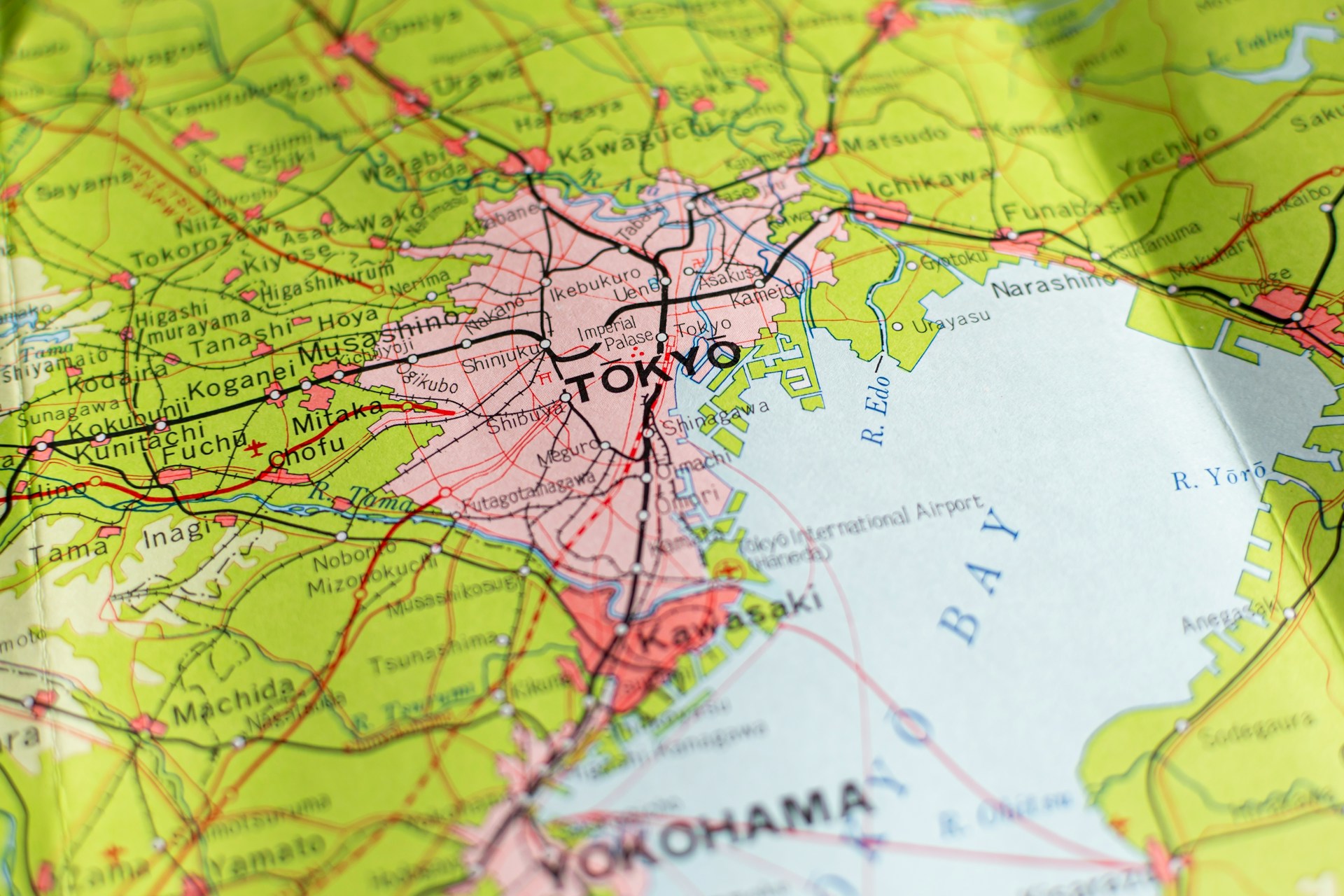
Pre rádioamatéra zo Slovenska či strednej Európy predstavuje Japonsko (JA) jeden z najfascinujúcejších cieľov na krátkych vlnách. Japonskí operátori sú svetoznámi svojou disciplínou, vynikajúcim technickým vybavením a neuveriteľnou aktivitou na pásmach. Raz ročne sa naskytá unikátna príležitosť nadviazať spojenia s desiatkami japonských prefektúr a otestovať svoje antény smerom na východ v rámci Japan International DX Contestu (JIDX).
In 2026, the April part of this prestigious event awaits us in CW fashion. In this article, we take a detailed look at the rules, technical details, strategy and changes brought about by recent years. JIDX is not just an ordinary competition; it's a celebration of technical skill and perseverance that connects DX operators from around the world to the island kingdom of the rising sun.
You will read in the article
Basic information and the date of the procedure
Japan International DX contest je rozdelený na dve samostatné časti podľa módu. Jarná časť patrí telegrafii (CW) a jesenná časť fonickej prevádzke (SSB). Cieľom pre svetových operátorov (DX stanice) je nadviazať čo najviac spojení s japonskými stanicami v čo najväčšom počte japonských prefektúr a na ostrovoch spadajúcich pod jurisdikciu JD1.

The dates for 2026 are set as follows:
JIDX CW 2026: From Saturday 11 April 07:00 UTC to Sunday 12 April 13:00 UTC.
JIDX SSB 2026: From Saturday 14 November 07:00 UTC to Sunday 15 November 13:00 UTC.
The competition lasts a total of 30 hours. This time frame is chosen strategically to allow the use of signal propagation on different bands during two grayline transitions and multiple phases of day and night propagation.
Preklad a výklad súťažných podmienok Japan International DX contest
In order to succeed in the competition and avoid disqualification, it is essential to understand the structure of the categories and scoring. The JIDX terms are considered very fair in the ham radio community, but require precision.
Permitted bands and frequency segments
It competes on all classic shortwave bands: 1.8, 3.5, 7, 14, 21 and 28 MHz. Bands WARC (10, 18 and 24 MHz) are excluded from the competition.
An important point is the recent changes in Japanese legislation that have expanded the allowed segments on the lower bands. The following frequencies are available for Japanese stations:
1.8 MHz: 1800-1875 kHz and 1907.5-1912.5 kHz. (The recommended segment for CW in the contest is 1800-1830 kHz).
3.5 MHz: Wide spectrum including segments 3500-3580 kHz, 3599-3612 kHz and others.
For Slovak operators, it is important to monitor these extended windows, especially during nighttime broadcasting on the 80-meter band, where Japan often appears on frequencies that were previously unavailable to them.

Competition categories (Entry Classifications)
Each participant must choose exactly one category. JIDX does not distinguish a special category QRP, which is included in the Low Power category.
Single Operator
High Power (HP): Power over 100 W. Option to start All-Band (all bands) or Single-Band (one selected band).
Low Power (LP): Power up to 100 W (including QRP). Same options as HP (All-Band/Single-Band).
In the individual category, the operator must perform all actions related to the competition himself. The use of spotting networks (e.g. DX Summit) is allowed, but self-spotting (sending spots about yourself) is strictly prohibited.
Multi Operator
M1 (Single-TX): Multiple operators, one transmitter. The 10-minute rule applies - when changing a band, the station must stay on the given band for at least 10 minutes. The exception is jumping to another band in order to obtain a new multiplier (so-called multiplier station).
M2 (Two-TX): Maximum of two simultaneous broadcast signals on two different bands at any time. Maximum 8 band changes per hour.
Maritime Mobile (MM)
Stations operating from the sea. They use the suffix /MM and send their number for the purpose of the competition CQ zones. Their results are counted, but they are not eligible for plaques.

Competition code (Exchange)
Code exchange in JIDX is specific to whether you are a Japanese or DX station:
Japanese stations (JA): Sending RST + prefecture number (01 to 50).
Other stations (DX - including Slovakia): Send RST + CQ zone number. It is number 15 for Slovakia (OM).
Exchange example: OM3XYZ de JA1AAA 599 10 (Tokyo) -> JA1AAA de OM3XYZ 599 15.
Scoring and multipliers
The JIDX scoring system motivates to work on the lower and upper bands, where establishing a connection with Japan is more challenging.
Points for QSO:
1.8 MHz: 4 points
3.5 MHz and 28 MHz: 2 points
7, 14 and 21 MHz: 1 point
DX-DX connections (e.g. Slovakia – Czech Republic) or JA-JA are not included in the scoring and do not bring multipliers either. Also, connections via converters, cross-mode or cross-band are not allowed.
Multipliers
For us (DX stations), the multipliers are the Japanese prefectures on each band separately. There are 50 of them in total, including the islands of Ogasawara and Minami-Torishima (JD1). The maximum number of multipliers per band is therefore 50.
Overall result
It is calculated as the sum of points for QSOs from all bands multiplied by the total sum of multipliers from all bands.

Strategy for operators from Central Europe (OM/OK)
Success in JIDX from the territory of Slovakia depends on understanding the propagation of the signal towards the east (long-path and short-path).
Promotion and bands
In April 2026, we will be in the post-maximum phase of the 25th solar cycle. Although the peak of the cycle is likely to be behind us, conditions at higher elevations will still be excellent.
28 MHz and 21 MHz: Japan usually opens in the morning (around 07:00-10:00 UTC). These bands bring 2 points (at 10m) and are key to a high score. Due to the high solar flux, they can be open longer than usual.
14 MHz: Stable band that has been open for Japan the longest. This is where you get the most connections, albeit for 1 point.
7 MHz: Key band for late afternoon and evening. Japanese stations have excellent antennas on 40 meters and tend to be very strong.
3.5 MHz and 1.8 MHz: These are the real challenges. 160m connections to Japan require a quiet environment and directional antennas for reception (Beverage, K9AY). Don't forget that a 1.8 MHz connection is worth up to 4 points!

Direction of antennas
Pre väčšinu contestu budeme smerovať antény na severovýchod (cca 45° – 60°). Avšak nezabúdajte na možnosť Long Path (LP). Niekedy, najmä na 14 a 21 MHz v podvečerných hodinách, môžu byť japonské stanice silnejšie zo smeru juhozápad (cca 230°).
List of prefectures
It's worth having a list of prefecture codes handy. It often happens that the operator quickly sends a code that is not completely obvious. The most common are 10 (Tokyo), 25 (Osaka) or 01 (Hokkaido). Rarer prefectures like 48 (Ogasawara) can help your multiplier a lot.
Technical instructions for sending logs (Logs)
The JIDX committee no longer accepts paper diaries. All logs must be submitted in electronic format Cabrillo.
Deadline for submission
No later than one month after the end of the competition. For the CW episode 2026, it is May 13, 2026.
Shipping method
Web upload (recommended): Direct file upload via the official jidx.org website. It is the fastest and safest way.
By email: To cw@jidx.org. Please include your call sign and category in the subject of the message.
Acknowledgment: After the journal has been successfully processed, you should receive an acknowledgment of receipt within a few minutes.
Prizes and awards
Although amateur radio is about sport and technique, the awards are a nice end to the effort. The JIDX committee issues certificates in PDF format, which are available for download. First places (depending on the number of participants and second and third) are awarded for each country (entities DXCC) and each category.
If you achieve an excellent result, you can also receive a plaque. Plaques are sponsored by individuals or clubs and awarded to winners in major categories regardless of performance (HP/LP).
Conclusion and recommendation
JIDX CW 2026 is an excellent opportunity for all those who enjoy telegraphy and DX-ing. Japanese operators are famous for their ability to "pull out" even weak signals from interference, so don't be afraid to compete even with 100 W power and a simple antenna. Every connection with the JA station counts and contributes to the overall atmosphere of the event.
From the point of view of a Slovak radio amateur, JIDX is a test not only of technique, but also of patience in the search for optimal propagation conditions. Don't forget to check your log settings before the competition, verify the correctness of the CQ zone (15) and prepare for hours of quality telegraphy.
More information and a list of prefectures can be found on the official website: http://jidx.org/