
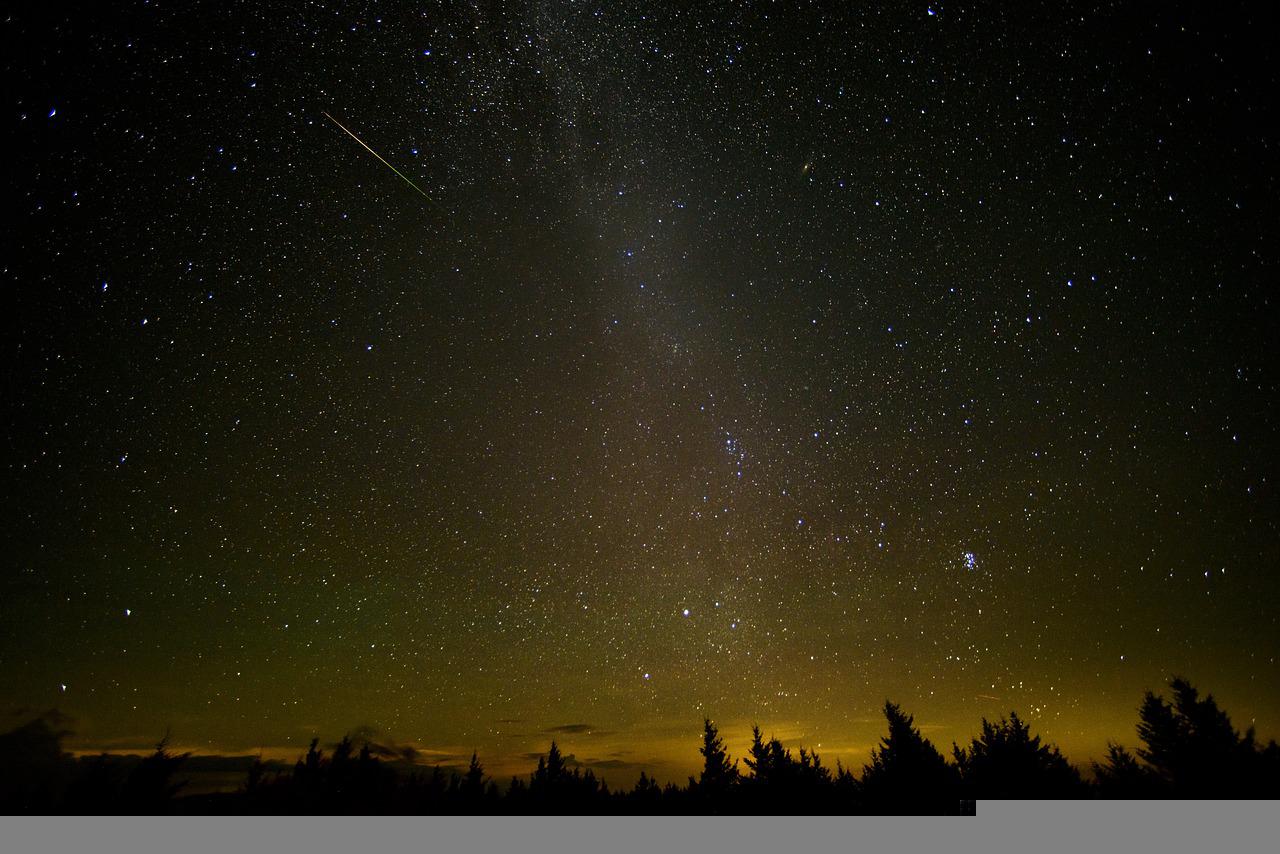
As the Activity Fades Lyrids, amateur radio operators observing the sky begin to pay attention to another significant phenomenon. The Eta Aquarids are one of the nine major meteor showers of the year and represent one of the most interesting challenges for operators on the 50 MHz and 144 MHz bands in terms of radio propagation.
In the article you will read
Characteristics and Origin of the Eta Aquarids Shower
The Eta Aquarids are closely related to the most famous comet in history - 1P/Halley (Halley's Comet). The Earth passes through a stream of dust left by this comet twice a year. In the fall, it is the Orionids, but the spring Eta Aquarids are often more productive for amateur radio purposes due to the geometry of the encounter with the Earth.
This shower is characterized by a high geocentric speed of up to 64 km/s. Meteors enter the atmosphere extremely quickly, leading to immediate and intense ionization. This is a key parameter for Meteor Scatter operation. The high speed generates 'sharp' reflections, which are often shorter than those of slower showers. This requires the operator to have quick reactions and precisely set software for decoding digital modes.
Time Frame and Width of the Maximum
The shower is active over a relatively wide time interval, usually from April 21 to May 18. Unlike some other showers that have a sharp maximum lasting only a few hours, the Eta Aquarids have a relatively broad maximum. The peak activity is expected on the night of May 5 to 6, but an increased rate of reflections is observable several days before and after this date.
This feature makes Eta Aquariids an ideal object for long-term planning of DX expeditions or testing new antenna systems. VHF. The stable presence of ionized trails allows for planning skeds (scheduled connections) with greater certainty of success.
Directional strategy and time windows
When operating Meteor Scatter, it is critical to understand when and in which direction to turn the antenna. The position of the radiant in the constellation Aquarius defines the optimal times for individual directions within Europe. Based on years of observations and amateur radio practice, the following optimal windows have been established:
Direction SW-NE: The best conditions for establishing connections are from 07:00 to 10:00 UTC.
Direction E-W: The optimal window opens early in the morning, from 04:00 to 09:00 UTC.
Direction SE-NW: The highest probability of successful bursts is between 06:00 and 10:00 UTC.
Direction S-N: In this direction, there is no significant optimum for connections for this particular shower. The geometry of meteor trails relative to the radio path in the north-south direction does not provide sufficient reflection efficiency.
These time windows are key for effective use of station power and minimizing unnecessary transmissions into the void. Operators should integrate this data into their planning on the ON4KST chat or when scheduling skeds.
Technical minimum for Meteor Scatter operation
For operators who are just starting with Meteor Scatter (MS) or want to improve their results during the upcoming Lyrids and Eta Aquariids, we present a summary of technical recommendations.

Station equipment
The basis for successful MS operation is a quality antenna with a narrow radiation pattern and a low-noise amplifier (LNA) placed as close to the antenna as possible. Since reflections often last only fractions of a second, any loss in the coaxial cable can mean the loss of a decodable signal.
Performance is important in MS operation, but it is not everything. Digital mode MSK144, which has become the standard for this operation, is designed to work with very short sequences. Accurate time synchronization in the computer (for example, via NTP or GPS protocol) is an absolute necessity. If your time is off by more than a second, the chance of successfully decoding rapid reflections from Eta Aquariids dramatically decreases.
Operating practice

During operation, a division into the first and second periods is typically used. Stations transmitting towards the east or north should transmit in the first period (First), while stations to the west and south in the second (Second). This rule minimizes mutual interference of stations in the same geographical area.
An important element is monitoring 'bursts' – longer reflections that allow the entire contest code to be exchanged within a single session. During the Lyrids, these reflections are often longer due to the lower speed of the meteors, which also allows for operation with traditional telegraphy (CW) at high speeds (HSCW), although this method is now declining in favor of digital technologies.
Conclusion
The meteor showers Lyrids and Eta Aquarids are not just astronomical events, but represent two key milestones in the spring amateur radio calendar. A proper understanding of the physics of reflection, respecting time windows according to directions, and technical precision are the way to successful DX contacts that would not be possible under normal conditions on VHF bands. Whether you focus on the more stable reflections of Lyrids or the rapid trails of Eta Aquarids, the 6m and 2m bands will offer an unparalleled dynamic during these days. See you in the amateur radio ether at the next ping!