
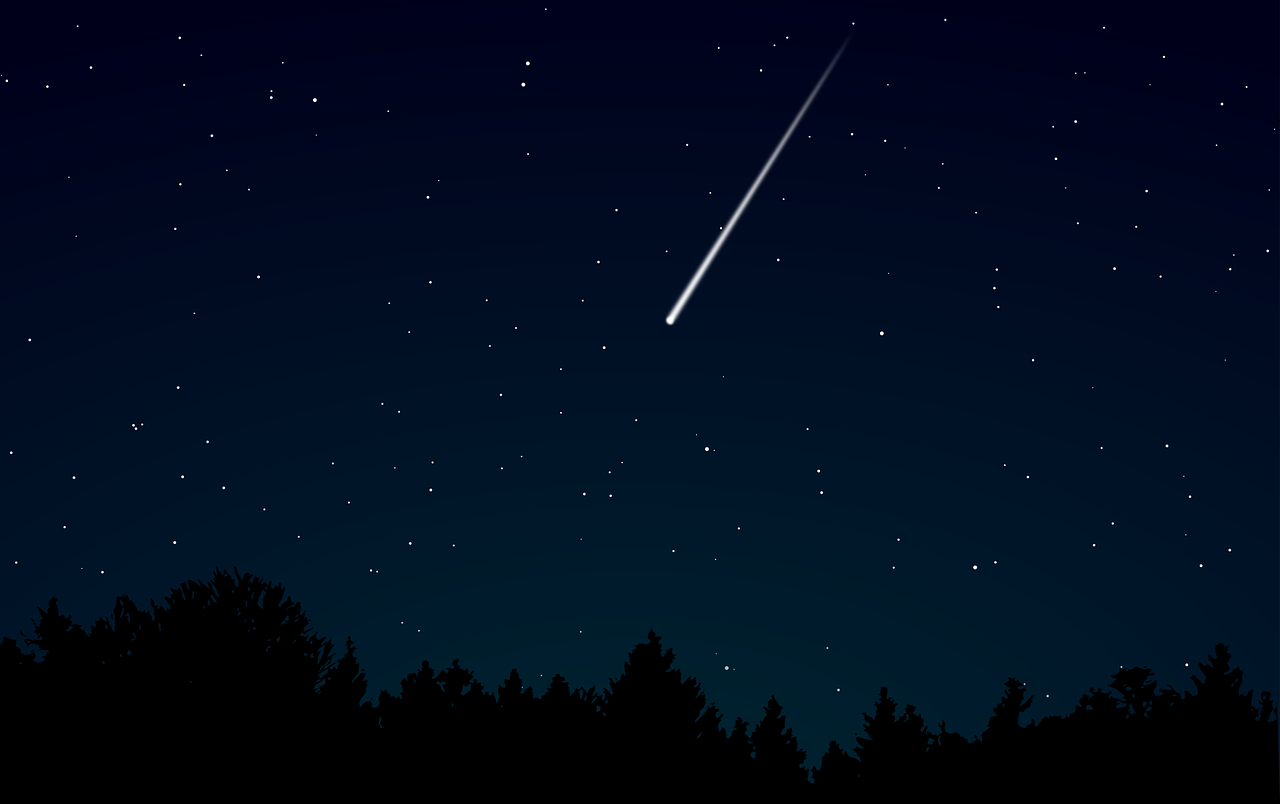
Odraz od meteorických stôp (meteor scatter) represents one of the most demanding and at the same time fascinating types of DX operation on VHF bands. For an experienced amateur radio operator, a meteor flyby is not just a visual spectacle but primarily a technical opportunity. Radio waves in this case reflect off ionized trails created by the ignition of meteors as they pass through the upper layers of the atmosphere. The meteor shower Lyrids, which annually opens the spring season, offers an excellent opportunity to establish such connections.
In the article, you will read
Historical and Astronomical Context of the Shower
The Lyrids are among the oldest documented meteor showers in human history. The first records of their activity date back to China in 687 BC. This shower is associated with the parent comet C/1861 G1 (Thatcher), which has an orbital period of approximately 415 years.
From an astronomical perspective, the radiant of the shower is located in the constellation Lyra, near one of the brightest stars in the northern sky – Vega. Although it seems that meteors are emanating from this point, for the amateur radio operator, the overall area of ionization in the E-layer of the ionosphere is more important. The Lyrids are active approximately from April 16 to 26, with the peak activity usually occurring around April 22. The average frequency is 10 to 20 meteors per hour, but history also records unexpected 'bursts' of activity when the frequency temporarily rose to hundreds of meteors per hour.
Physical properties and impact on amateur radio operation
The Lyrids are characterized by a geocentric speed of approximately 49 km/s. Compared to other showers, such as the Leonids, they are medium-speed meteors. For the amateur radio operator, this speed means that the resulting ionized trails are relatively stable and can create reflections lasting from several tens to hundreds of milliseconds (pings) to several seconds (bursts).
Bright and slow bolides that can create such dense ionization at their peak that connections can be made even at a frequency of 144 MHz, which is considered the pinnacle of effort in Meteor Scatter operation within the amateur radio community. When using modern digital modes, such as MSK144, je práve tento roj ideálnym časom na testovanie smerových anténnych systémov a výkonových zosilňovačov.
Connection tactics during the Lyrids
Since the radiant of the shower is located in the evening hours near the constellation Hercules, amateur radio operators must adapt their operations to the geometry of reflection. In Meteor Scatter operation, the rule of direct visibility does not apply; it is crucial to find a point in the atmosphere (the so-called hot spot), kde sa dráha meteoru a anténne zväzky oboch staníc pretínajú pod správnym uhlom.
Aktivita roja je 16.-22.apríla 2026. The expected peak of activity will occur on April 22 at 19:15 UTC. The maximum of the Lyrid shower is relatively narrow (unlike some meteor showers, observations do not last for an entire week). ZHR 10 to 20.
For the year 2026, it is recommended to monitor activity especially at the time of the radiant's culmination when the probability of hitting the optimal layer of the atmosphere is highest. Visual observations and prediction simulations can help estimate the exact moment of the maximum, but for the amateur radio operator, the real work begins several days before the maximum, when the first preliminary meteors (pre-cursors) appear.