
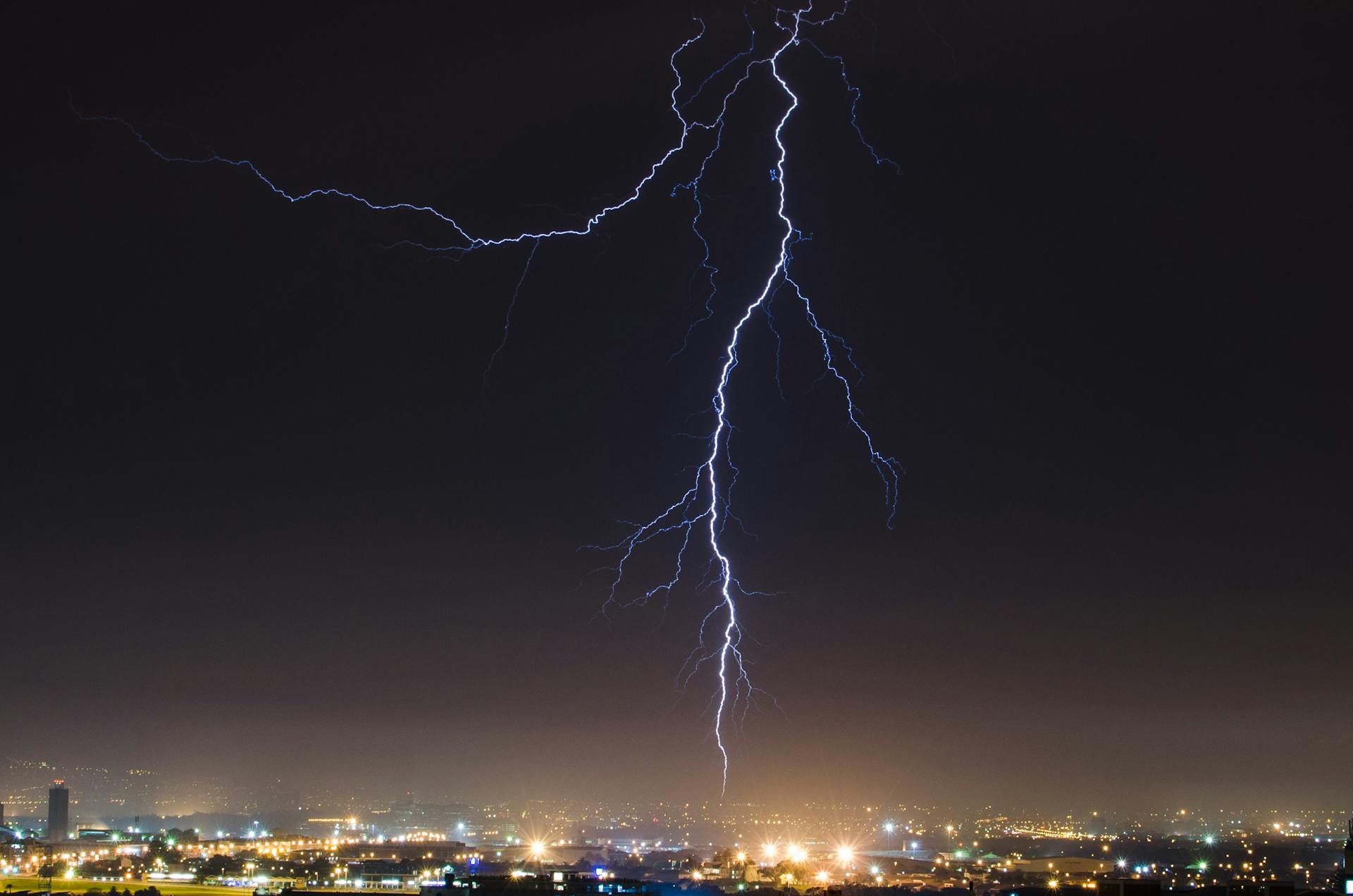
The summer months and storm activity bring a period of increased voltage for every radio amateur. This does not mean the voltage in the power supply, but the atmospheric voltage that threatens the investments in our hamshacks. Modern transceivers are full of sensitive semiconductors, static-prone field-effect transistors (FETs) and integrated circuits with high integration density. For these components, even a distant lightning strike means a fatal risk. The issue of lightning protection and the elimination of static electricity from antenna systems is one of the basic pillars of amateur radio electrical engineering.
There are various myths circulating among operators about the 100% effectiveness of lightning arresters or grounding systems. However, an experienced radio amateur knows that the only truly 100% protection of radio equipment against a direct or nearby lightning strike is to physically disconnect the coaxial down conductor from the TRX.
In the article you will read
Lightning hazard for amateur radio equipment
Lightning is an electrostatic discharge with enormous energy. The current in the lightning channel usually reaches values of 30,000 to 200,000 amperes at a voltage in millions of volts. If lightning strikes the antenna structure directly, without adequate protection, the radiators, feeders and all structural accessories in the hamshack are immediately destroyed. Fire often occurs and people's health is endangered.
Pre rádioamatérov je však oveľa častejším nebezpečenstvom indukované napätie z blízkych úderov blesku, prípadne statický náboj vznikajúci trením vzduchu and prachových častíc o anténu, známy ako statická elektrina. Dlhé drôtové antény (napr. Windom, Long Wire, dipóly pre pásmo 160m alebo 80m) fungujú ako obrovské zberače tohto náboja. Indukované prepätie sa šíri koaxiálnym káblom priamo do anténneho vstupu prijímača. Výsledkom býva zničený Predzosilňovač (LNA), prepálené vstupné obvody, zničené PIN diódy prepínača príjem/vysielanie alebo poškodené procesorové dosky moderných SDR transceivers.
Unique advantage of the principle of mechanical antenna disconnection

Conventional protective elements, such as gas-filled arresters (surge protectors with a discharge cartridge), operate on the principle of switching the center conductor to ground when a certain threshold voltage is reached (usually above 90 V to 350 V). These systems have three major disadvantages: response speed, residual voltage and parasitic capacitance. Before the gas in the arrester ionizes and begins to conduct current to ground, several nanoseconds pass, during which the high voltage peak penetrates the receiver and manages to destroy sensitive semiconductors.
The unique advantage of mechanical antenna disconnection lies in the implementation of the so-called Air Gap. If the antenna connector is physically moved away from the connector leading to the TRX by a sufficient distance, the electric arc of low and medium voltages cannot overcome this insulation barrier. Unlike semiconductor surge protectors or gas cartridges, the air gap does not introduce any additional attenuation into the antenna system, no parasitic capacitance and does not affect the standing wave ratio (SWR) during normal operation. By disconnecting both the center conductor and the coaxial cable shield, the hamshack becomes invisible to the induced voltage.
Technical parameters Rig Cables® Rig Isolator™ Automatic Air Gap Antenna Switch

Manually disconnecting connectors before every storm or when leaving the hamshack is impractical and human error is common. The Rig Cables® Rig Isolator™ Automatic Air Gap Antenna Switch solves this problem. It is a hardware solution that automatically physically disconnects the antenna line using an integrated linear accelerator.
The device works on the principle of voltage control. When a control voltage of 12 V is applied to the switch (for example, from a common power supply for the TRX), the linear motor moves the mechanism with the connectors towards itself and a safe galvanic connection of the antenna with the transceiver occurs. The moment you turn off the hamshack (disconnect the 12 V source), the internal mechanism automatically retracts, creating a physical air gap between the connectors. In addition, the antenna feed from the outside is automatically redirected to the ground terminal of the device chassis in the disconnected state, thereby permanently discharging static charge to the ground.
The device uses a massive linear actuator (Linear Actuator) with the following specifications:
| Technical parameters of the actuator | Value and specification |
|---|---|
| Input Voltage | 12V DC |
| Stroke Length | 30 mm |
| Maximum load (Load Capacity) | 64 N |
| No-load Speed | 15 mm/s |
Thanks to the 30 mm stroke, a safe isolation distance is guaranteed, which reliably withstands common induced atmospheric overvoltage. The design uses high-quality Teflon dielectric and robust all-metal connectors of the SO-239 type (UHF female), or N connectors depending on the version, which guarantees minimal insertion loss in both HF and HF bands. VHF.
Video: Rig Cables® Rig Isolator™ Automatic Air Gap Antenna Switch in action
For a better idea of the mechanical robustness and speed of automatic disconnection, you can watch a short demonstration video directly from the manufacturer, which captures a real-life contact closing and opening cycle using a 12 V linear actuator:
Price and availability
The Rig Cables® Rig Isolator™ Automatic Air Gap Antenna Switch is a premium solution for automated hamshack protection. The current retail price of this automatic model na oficiálnom webe výrobcu je 249,99 USDThe manufacturer also has a simplified version in its portfolio with manual control mechanism (Manual Air Gap Antenna Switch), whose price is set at 99,95 USD.
The devices are available directly through the official e-shop Rig CablesGiven the high quality of workmanship and the elimination of the risk of burning out expensive TRXs (whose price often exceeds thousands of euros), this is a reasonable investment in the safety of the entire amateur radio station.
Other versions of protection of amateur radio equipment against the effects of lightning

In addition to mechanical disconnectors, there are other proven methods of protecting amateur radio equipment on the market. Each system has its own specific place in the hierarchy of surge protection:
- Classic Gas Tube Surge Arrestors: Devices from manufacturers such as Diamond (SP3000) or Alpha Delta. They contain a replaceable gas-filled cartridge. They are suitable as a first line of protection on an antenna mast for static discharge, but do not achieve the insulating qualities of a complete air gap in the event of a direct strike.
- Coaxial stubs (quarter-wave shorted lines): A high-frequency solution for single-band antenna systems (often on VHF/UHF repeaters). For the operating frequency, a quarter-wave stub presents infinite impedance (does not affect the signal), but for DC and low lightning frequencies it is a hard short to ground.
- Grounding switches and terminal blocks: Manual, robust knife switches that manually mechanically connect the center conductor of the coaxial cable directly to the external grounding system (connected to the building's foundation grounding conductor) before a storm.

The best results in amateur radio practice are achieved by combining several levels of protection: static grounding of the mast, installation of a gas lightning arrester at the cable entry into the building, and deployment of an automatic disconnector with a real air gap directly before entering the expensive TRX.