

Ahojte. Aby sme pri LoRa APRS they did not recycle already written texts for the introduction, I recommend spending five minutes on a short introduction from the website: https://www.aprs.cz/lora-jako-ucinny-digitalni-mod-pro-aprs/

Okay, now that we have the mandatory driving, the question arises as to what development of this technology we have in Slovakia. In our country, several radio amateurs, whom I could count on the fingers of two hands, are devoted to the topic of APRS using LoRa technology. Thanks to this, the first installed iGate receivers and APRS Trackers were created.
It is something new and different from the classic APRS 1.2K operating in the VHF band. When deciding whether to go this way, it is always necessary to be aware of all aspects, because everything has its advantages and disadvantages.
You will read in the article
Advantages
- low costs for the condition of iGates and Trackers,
- efficient data transmission over long distances with low power,
- energy efficiency,
- separate device for the purpose of tracking
Disadvantages
- it is necessary to tinker 😊
Of course, more could be written, but if I underline it and count it, even a disadvantage can actually be turned into an advantage, because tinkering is basically also a part of our hobby. Of course I realize that not everyone knows and that is why we are a community to help each other. The result and the goal of this article is to get basic and necessary information among other radio amateurs, based on which almost everyone will be able to make their own tracker, or install an iGate, which would help us expand the APRS network.
iGate as such

So that we don't start from the end, I will start with the element that makes up the network, iGats. As always, there are several solutions to choose from, but our choice has settled on using the TTGO LoRa32 board. You can buy it via AliExpress and here is a link where you can find all the technical parameters https://www.aliexpress.com/…list_main.426.30311802JBqaFt Today the price tag is around 20 euros.
You can find the FW for iGate at: https://github.com/lora-aprs/LoRa_APRS_iGate?fb…edEmIgMqvNmBZzc
iGate needs a power supply, a UHF antenna for receiving signals and a WIFI connection for its proper function. After configuring and connecting the power supply, the iGate will connect to your WIFI and the site map www.aprs.fi the LoRa iGat symbol will appear. You define the position on the map by entering your coordinates when configuring the board. The receivers are able to process even very weak signals, but yes of course, the better the location, the better the coverage. But don't worry, an iGate located on a housing estate in the city is better than none. Our common goal is to find enough of you in Slovakia and to jointly build a network of receivers that would enable us to provide quality coverage. To date, I have registered on the iGata map in the following regions: Košice mesto, Kojšovská hoľa, Brezno, Dolný Kubín, Banská Bystrica, Panský diel, Dolný Ohaj, Bratislava. If I forgot someone, I apologize in advance. We thank you all for the development of the APRS network. It's great, but we still have places not covered and this is an invitation to all of you to join us and help us with this project. The best places are of course high elevations, but where there is no height, density will help, so if there are more of us, the network will expand and the coverage map will be colored. Together we can do it.
Everything worked out, we have a network, and what next?
Of course, without end devices, the network has no meaning, and that is why various constructions of APRS trackers were also gradually created. They are single purpose devices only for sending location and sending message. I liked this idea because when hiking, SOTE, on portables, or on mushrooms, I don't have to allocate and discharge another radio station separately on APRS. I have it at hand, and if I don't go to CQ čakám, či ma niekto zavolá. Môj tracker v správe oznamuje, že som v teréne a kde som QRV. Proste tracker zapnem, odložím do batoha, auta, na bike a nestarám sa. Zariadenie pracuje bez môjho zásahu samo a ja sa môžem venovať inej činnosti.
How then?

As with iGats and trackers there are several development boards to choose from and after some time and trial and error we settled on using the CubeCell GPS-6502 ASR6502 board. Here is the link: https://www.aliexpress.com/item/100500267229…Uid=QXM7SuN2ebBT
You can find the FW for the tracker at: https://github.com/dj1an/Cubecell_LoRa_APRS_Tracker?fbclid=IwA…uFGcS6JK-yOLErfw
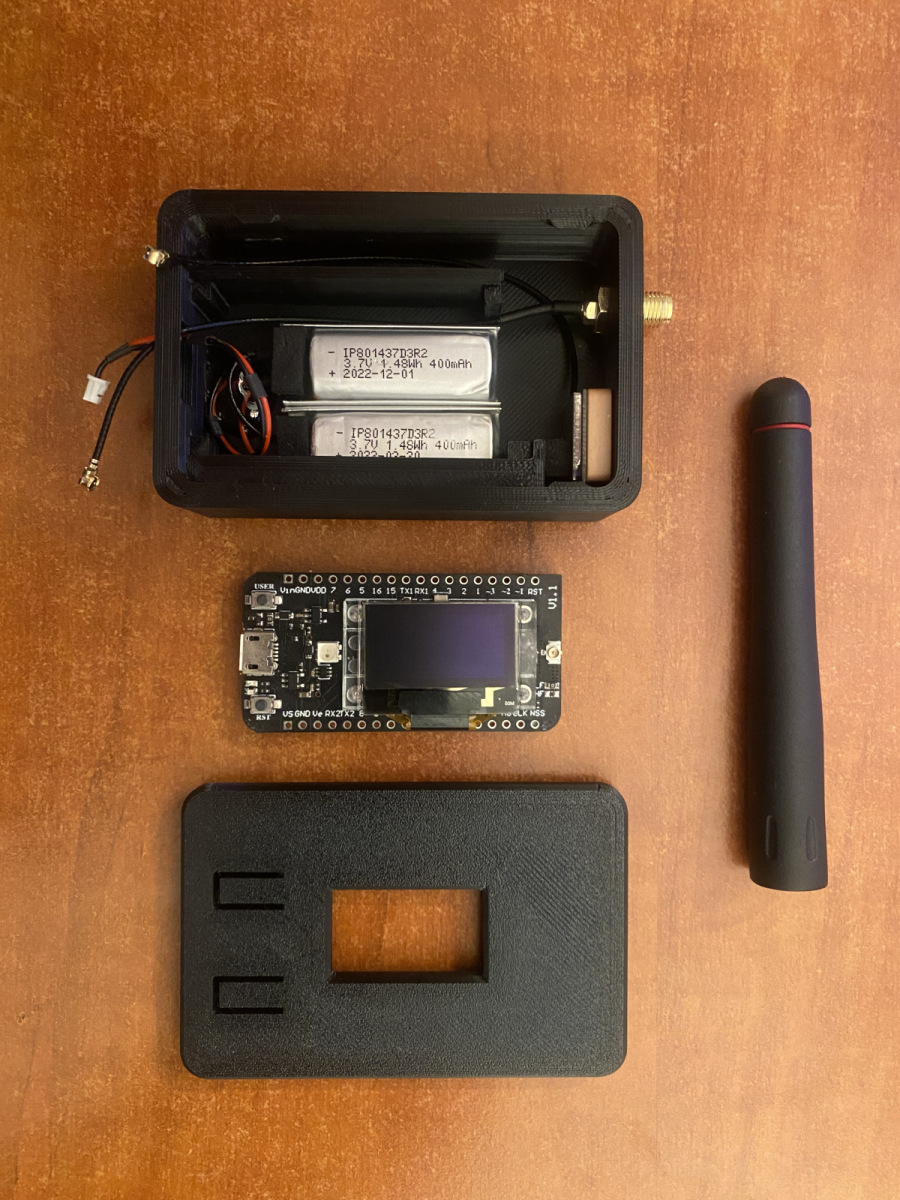
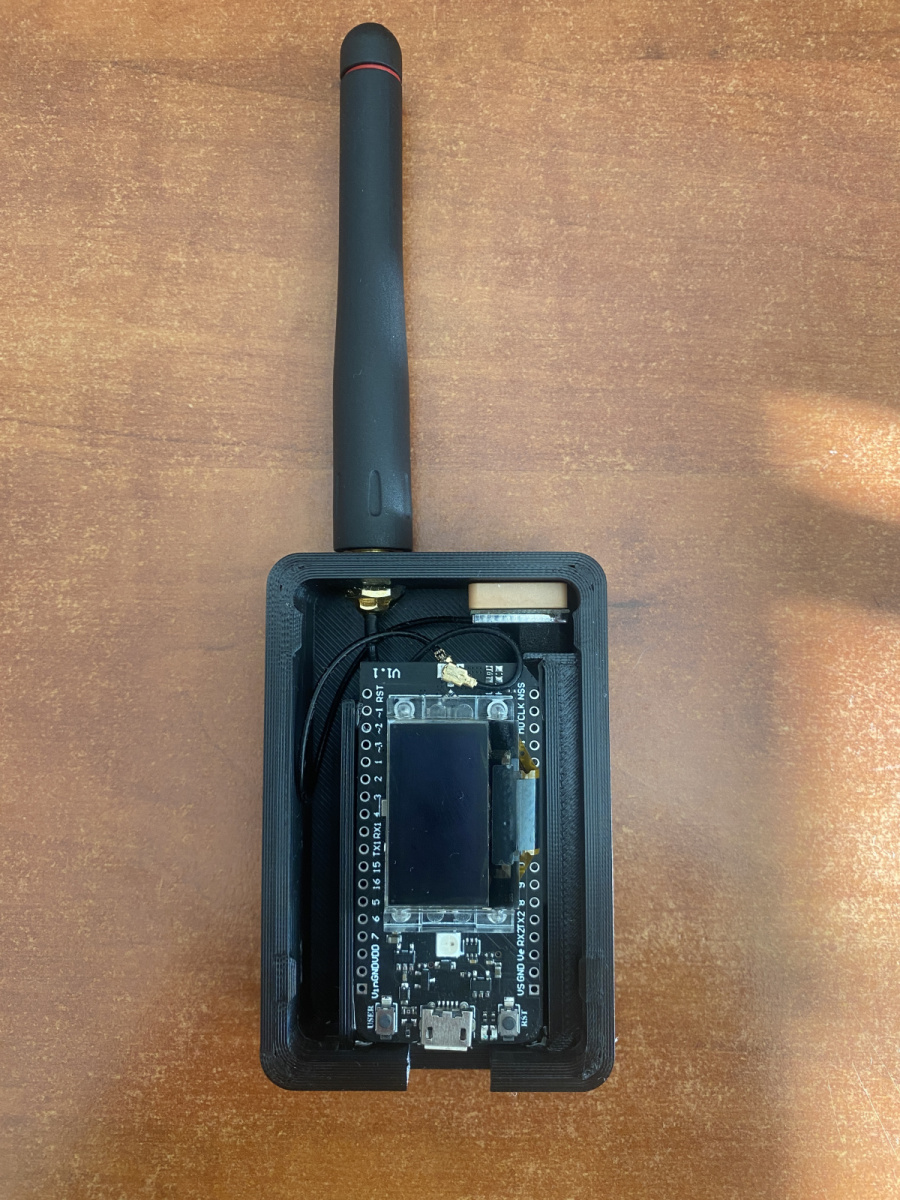
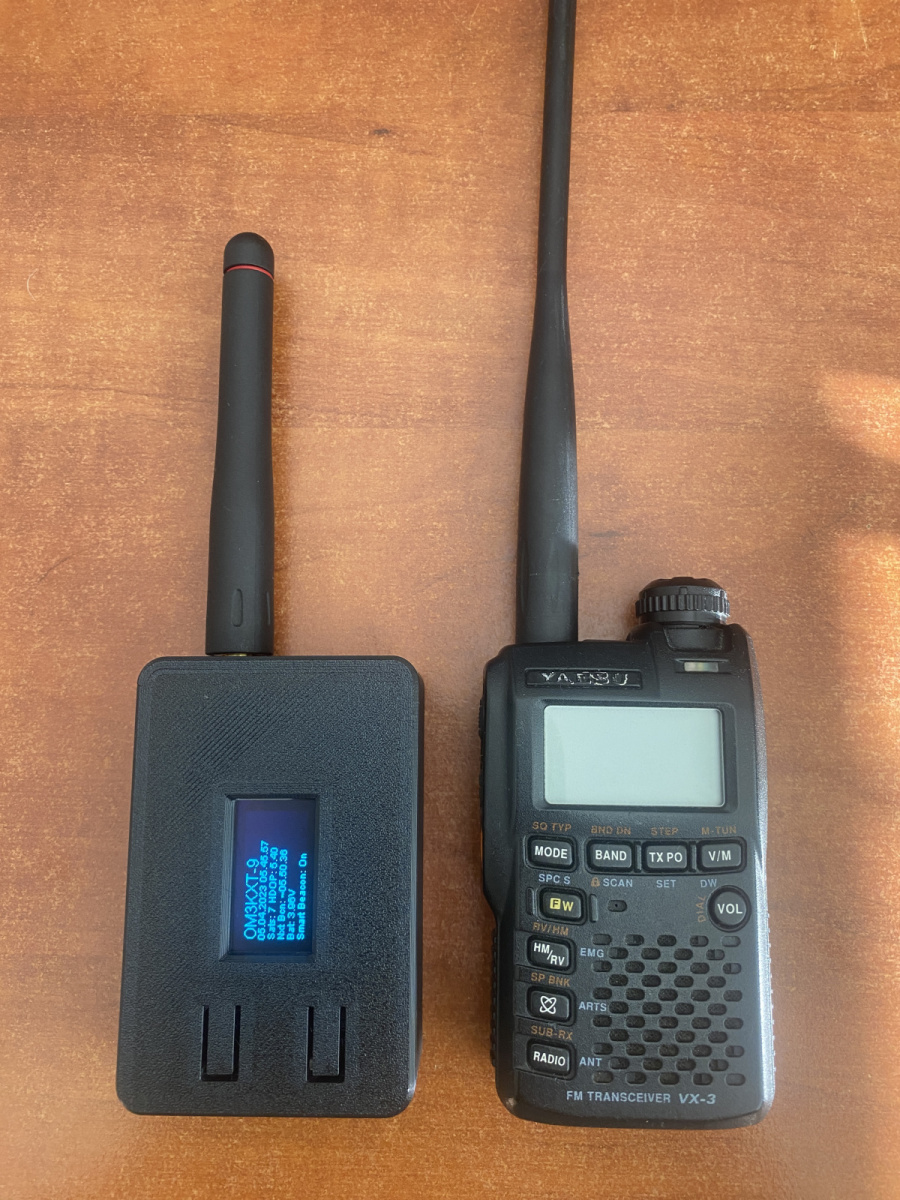
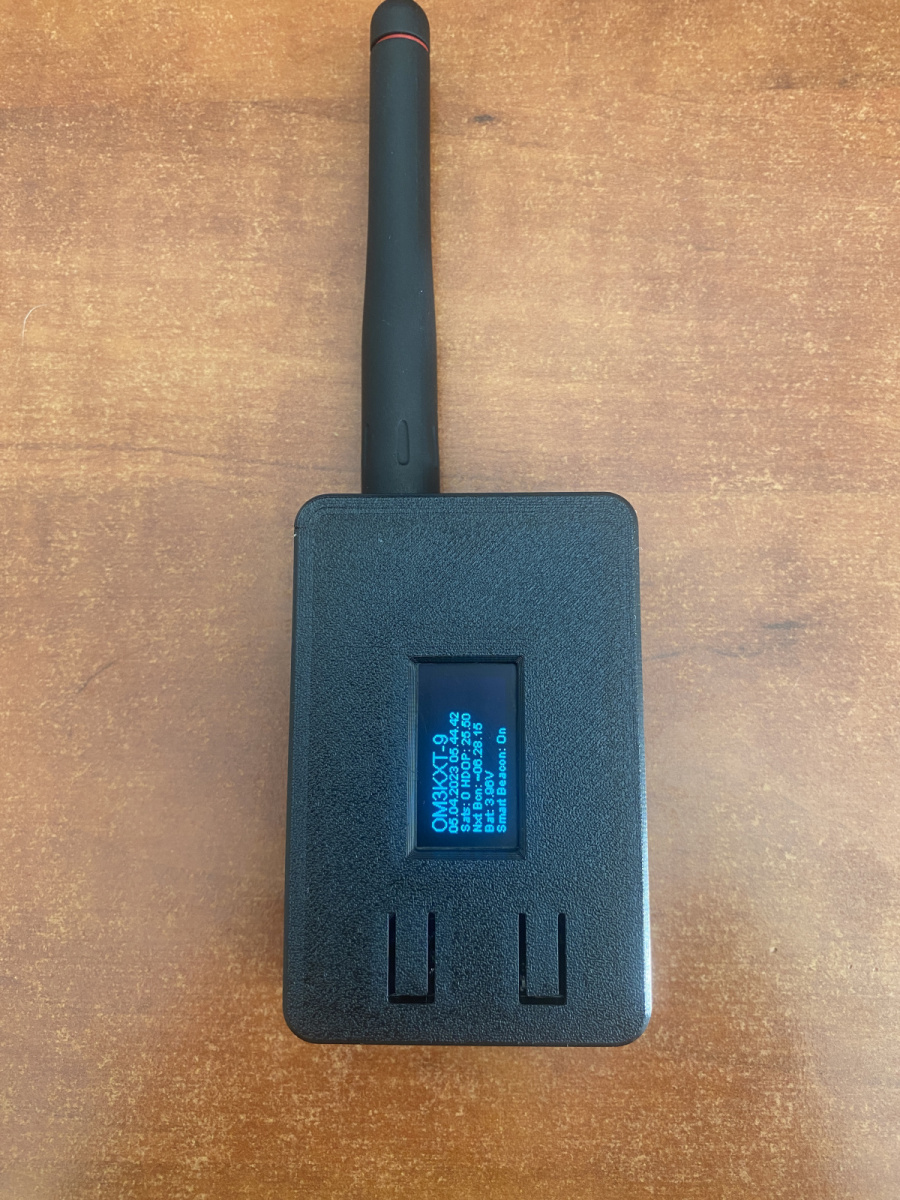
Today, the price tag is around 30 euros. When the ordered board arrives, the package contains the board, UHF antenna and power cable. That antenna tunes to roughly 470 Mhz, so you can save it for something else, but basically you already have most of what you need. In order for the board to become a functional tracker, it is necessary to place it in a box, connect the GPS antenna, the power supply and the UHF antenna. We handle the boxes differently. From completely universal for storing various objects, to precisely designed and printed with a 3D printer. STL files are available. The GPS antenna is also located on the board, but we found it useful to use an external one connected using the IPX connector, which is there for this purpose. The external antenna has significantly better efficiency. Another component you need is a patch cable for connecting the UHF antenna. Here we also use IPX (on the board) and on the other hand panel SMA. And finally, just connect the power supply. So, when you have successfully assembled and configured the whole thing, the tracker is ready for use. Yes, configuring and uploading the FW is like a flight into space for me, and I always successfully annoy the willing Paľ OM7FX, don't be afraid to write him anything, he will be happy to help. Thanks Pali. When you get here, you connect the power supply and after a short start, your brand, profile, battery status, time, number of satellites and the time of the next track will appear on the display. The tracker now waits until it finds at least three satellites, and when this condition is met, it sends the first track. iGate receives your signal and sends it to the aprs.fi server. After the first broadcast track, your symbol and brand will appear on the map. When you click on it, a window will open in which you can see the brand, time, signal strength, speed of movement, battery status, the brand of the iGat that received your signal and the message you set. The FW of the tracker allows you to choose from three profiles, each of which can have a different symbol, for example car, bike, or anything that the APRS protocol knows and offers - the choice is large. Each profile can also be specifically defined, especially with regard to the frequency of sending tracks, which are defined either by time or by the conditions of changes in your movement (smart beaconing). Of course, you can have a different predefined message for each profile.
LoRa APRS – practical experience
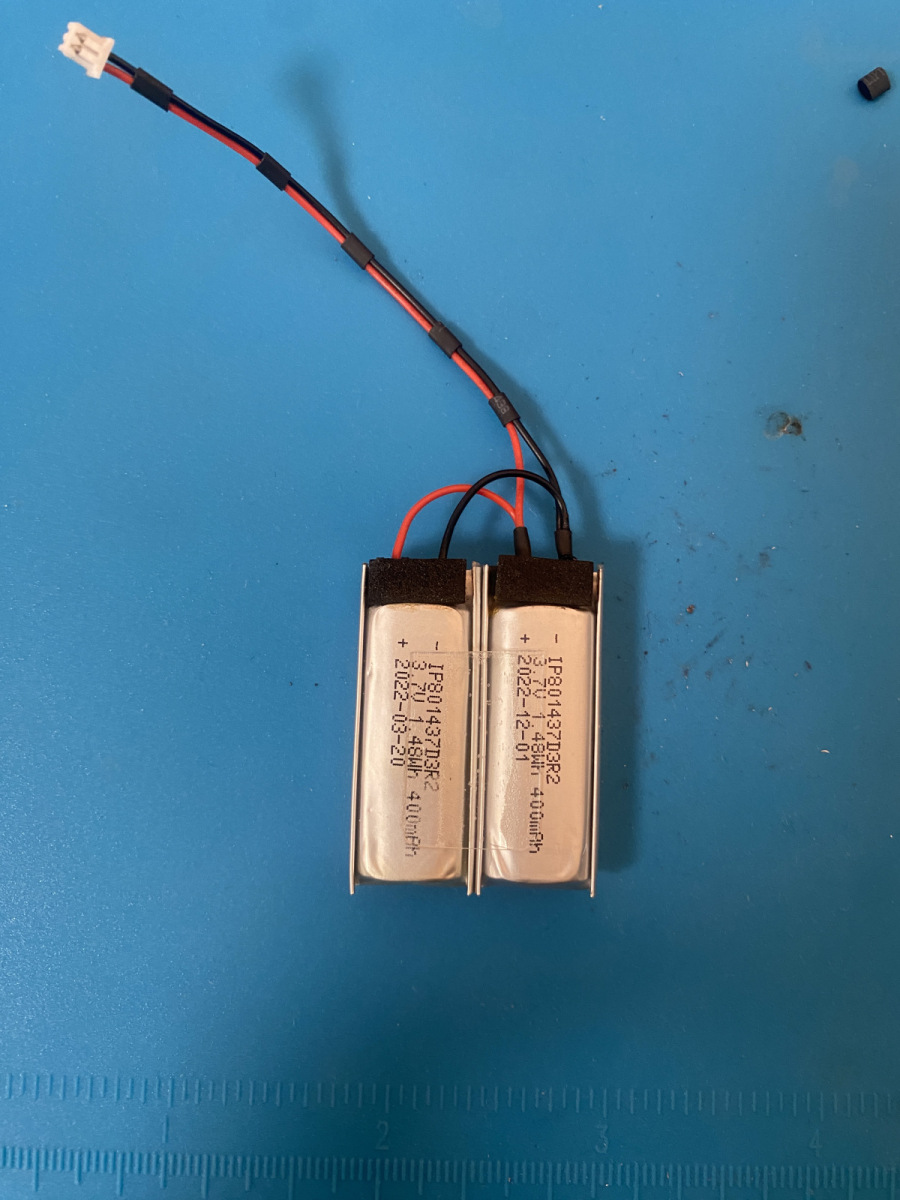
In my case, it is a conversion into a pocket where we went for size, weight and durability. The tracker is powered by two 3.7V / 400mAh batteries in parallel connection, which is enough for more than 24 hours of operation with a total weight of 84g. The power of the transmitted signal is 100mW and this power can be reduced by setting it, but why 😊. That way it is suitable for a pocket or a pocket on a bike and the like. The price tag of the finished device, which is in the photo, does not exceed the amount of 50 euros. Vehicle version. When installing in a car, of course, weight and dimensions are not so important, so you can place the device in any box. It is very convenient to use higher power in vehicles, and in the offer on AliExpress there are available output stages from 1W to 8W. I use PA 1W, which is fine. I made the longest jump with a power of 1W from the tracker to the iGat at a distance of 288 km. Of course there are better results. You can see the solution that I liked in the photos below the article. There are also videos that I uploaded to my YT channel, which you can find at this link: https://youtube.com/@miroslavsnopko3294 On this channel, you will also find a video with a description of the operation of the tracker, its menu, functions and controls. In the description of the video itself, there are links to order the necessary components. Basically, it should be enough to put it together and use it yourself. I wish you a pleasant viewing. Quite comprehensive information can be obtained from the FB group: https://www.facebook.com/groups/3615066025205504 I highly recommend. For these purposes, we have also created our OM group on messenger under the name: APRS / LoRa and everyone is welcome in it. There we take over everything related to production and ideas. We will be happy to answer any questions there.

Well, but what about others who use classic APRS in the VHF band?

Right question. The answer is like the joke about the woman behind the wheel. She is like a star, you see her but she doesn't see you 😊. That's how it is here too. APRS RPT-re working in the VHF band, of which there are several in OM, we have set them to forward selected data from the aprs.fi map. Well, at least the two that we built are set up like this. One is in Poľana and the other above the town of Banská Bystrica. When the LoRa tracker broadcasts its data and it appears on the map, the VHF APRS RPT sends it repeatedly. If you are a classic APRS user, this information will appear on the station after receiving it. Thanks to this setup, at least a partial intersection between the two technologies is created.
Why all this?
You could say why not 😊, but there are also practical reasons. First of all, whoever is playing does not get angry. Everyone will probably be pleased with a device that they can build from available parts for an affordable price, and what's more, it works well. I use it when traveling by car, when I go for a bike ride, for mushrooms, for SOTU, or just when we go to a meeting. I simply let the target group know that I am on the move and in a message that they will read that I am on reception and on what frequency. All this leads to the fact that we take our hobby somewhere further and make ourselves happy with such toys. Among other things, especially during trips to nature, it is a nice addition in case of any problem. After all, anything can happen. In this spirit, I also approached the Mountain Service of the Slovak Republic, where there is a certain cooperation where this technology could also be beneficial, but that is a long way, so we will talk about it sometime in the future.
Many thanks

Toto som si nechal na záver. Chcem sa poďakovať rádioamatérom z Košíc konkrétne Martinovi OM8KT a Peťovi OM8AKX for helping with our beginnings 😊. I am glad that there are people who are willing to selflessly share advice and experience. Right after them, I also thank our "digital" guru Paľovi OM7FX a tak isto aj Peťovi OM7TEK ktorý nám výrazne ako programátor pomohol pri úpravách prvých FW.
So, friends, let's do it together and try to develop this network, let our APRS map fill up.
We are also preparing a practical presentation at the meeting of Remata 2023, Donovaly 2023 and Tatra 2023. Of course, if you have any questions, call +421915864250 or write to miro.om7ama@gmail.com
73 on the band and goodbye on the map Miro B.Bystrica / OM7AMA
For these and similar applications, I recommend checking the trash cans where disposable e-cigarettes are thrown.
In most disposable e-cigarettes, the LiPol cells are usually 3.7V 400mAh, or in your "e-cigarettes" the cells are 3.7V 900mAh.
They are fully rechargeable and last more than 400 cycles.
It is good to use protection circuits, ready, where you can also set the charging current, the BMS also works, which disconnects the load when the voltage drops below 2.3V.
It is necessary to work carefully and preferably outside, so that if the article is accidentally cut when disassembling the e/vaigle, there is no fire when the article is punctured.
I recommend this circuit to save the article.
https://vi.aliexpress.com/item/1005003403061811.html?spm=a2g0o.productlist.main.5.446 1JzMNJzMN2e&algo_pvid=a70d3307-79bc-40f5-b613-ba5e982720bf&algo_exp_id=a70d3307-79bc- 40f5-b613-ba5e982720bf-2&pdp_npi=3%40dis%21EUR%211.88%211.13%21%21%21%21%21%40211be59 e16816735048254951d0761%2112000025630140986%21sea%21SK%210&curPageLogUid=zw207PyaHfcl
If you want to limit the charging current, there is a notorious circuit where you just need to change the resistor and the charging current will decrease.
if we use 2 cl. parallel, it doesn't matter even max. charging current around 800mA/1A is still less than 2C per cell
Thank you for the article, I was interested.