
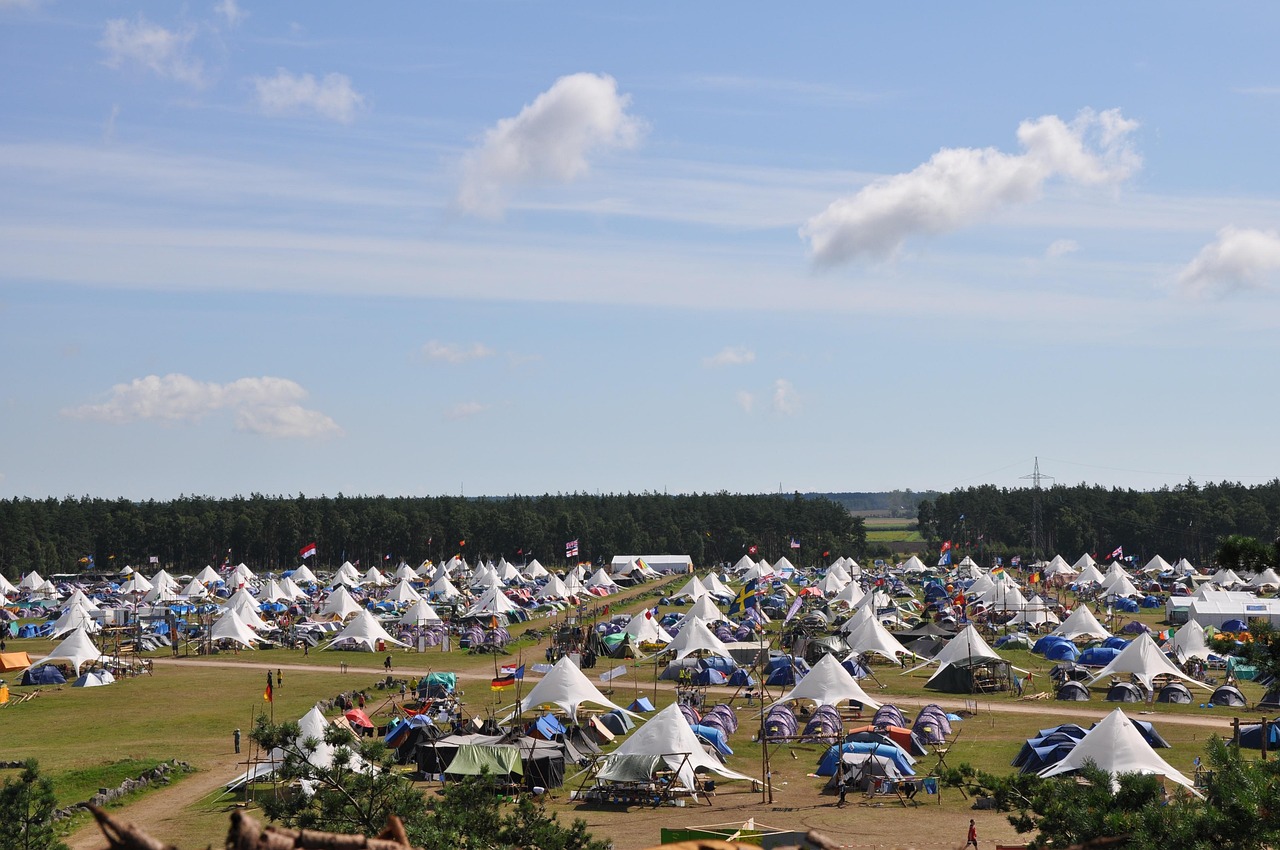
The World Scout Movement and the international amateur radio community come together every year on the third weekend of October to enable young people to communicate with peers from around the world through the Jamboree on the Air and Jamboree on the Internet (JOTA-JOTI) event. In 2026, the event will take place from October 16 to 18 under the main theme 'A Peaceful and Inclusive World.' JOTA-JOTI is one of the largest global scouting events, connecting internet and amateur radio communication.
For amateur radio operators, JOTA-JOTI presents an interesting opportunity to show young people how radio communication works, the propagation of electromagnetic waves, antennas, electronics, and digital technologies. The official JOTA website emphasizes the educational aspect of amateur radio and the possibility of live connections with scouts in other parts of the world.
In the article you will read
Jamboree on the Air (JOTA) and real operation on amateur radio bands

Jamboree on the Air is an annual scouting activity where scouts connect through amateur radio stations. It is not a traditional contest aimed at maximizing the number of contacts per hour. The communication itself, the exchange of experiences, and the opportunity to establish a live connection with another scout group are more important. JOTA-JOTI uses amateur radio connections as a means to develop interest in wireless technologies, electronics, and engineering.
For local radio clubs and amateur radio operators preparing a temporary station in a clubroom, school, or camp, it is important to adapt the station primarily for safety and ease of operation. It is interesting to prepare a configuration that allows young participants to try the microphone under the supervision of an experienced operator and observe the waterfall. SDR receiver, change frequency, or observe the progression of the radio signal.

When transmitting, it is necessary to respect the conditions of the valid amateur radio license and national legislation. The official JOTA website points out that the rules determining whether scouts can speak on the radio themselves vary by country. Where the rules do not allow it, the connection is led by a licensed amateur radio operator.
From a practical perspective, it is advisable to have a quality microphone, comfortable headphones, simple PTT control, and a sufficiently clear display or SDR waterfall. Young participants are often more interested in observing the signal on the screen than in the complicated operation of the transceiver menu.
On HF, multiple bands can be utilized depending on the time of day and current propagation conditions. During the day, higher bands are particularly significant, while lower bands are often applicable in the evening and at night. The advantage of HF is the possibility to establish a connection over very long distances, thus demonstrating the practical significance of ionospheric propagation.
| Amateur radio area | Recommended technical operation for JOTA | Educational and technical benefits for youth |
|---|---|---|
| Shortwave bands | SSB operation with wire or directional antennas | Demonstration of ionospheric propagation, the effects of conditions, and working with antennas |
| 2 m and 70 cm | FM simplex, local communication, and repeaters as available | Understanding line of sight, polarization, and radio path loss |
| Digital modes and SDR | Waterfall monitoring, demonstration of digital signals, and decoding suitable modes | Integration of amateur radio, DSP, computers, and wireless data transmission |
Digital technologies and image transmissions
JOTA-JOTI also provides space for demonstrating digital technology. Amateur radio operators can showcase software-defined radio, real-time radio spectrum monitoring, or digital communication modes to young participants. Such a demonstration is very illustrative, as the participant can observe the radio signal on one screen while simultaneously seeing the result of its computer processing.
An interesting example could be SSTV or another image or data mode. The result is particularly attractive to young people when they can watch the entire process from the radio signal to the final image or text.
Jamboree on the Internet (JOTI): connection via the internet
While JOTA uses amateur radio bands, JOTI connects participants through the internet. The event includes moderated chats, video calls, and other online activities that allow communication between scouts from different countries. The official JOTA-JOTI platform lists options for communication such as moderated chats via Rocket.Chat or ScoutLink and group video calls.
For the amateur radio community, the connection between physical radio communication and the modern internet environment is particularly interesting. Young participants can compare the differences between traditional radio connections, local FM operations, long-distance HF connections, and communication over the internet.
Open access and registration
JOTA-JOTI 2026 allows registration for individuals and scout groups through the official online platform. A scout.org account is required for registration. Participants aged 13 and older can register independently, while a parent or legal guardian can register a child under 13. A scout group leader can register the entire group. After completing the registration, participants will receive a confirmation via email.
Registration is free and also provides access to the program, activities, and other options on the JOTA-JOTI platform.
Activity Hub and Challenge Valley
The center of the online program JOTA-JOTI 2026 is the Activity Hub. It is an interactive environment where various program areas and activities are concentrated. Participants can choose from amateur radio activities, educational programs, thematic challenges, online meetings, and other activities.
A separate part is the Challenge Valley, which includes activities focused on acquiring new knowledge and skills. The challenges may include offline activities, webinars, games, live broadcasts, and other programs. Upon completing a challenge, participants can earn a digital badge.
ScoutPass and digital badges
JOTA-JOTI 2026 also utilizes integration with the ScoutPass system. After completing challenges, the earned digital badges can be added to the digital wallet in the ScoutPass app. This is a simple gamification element that allows participants to track their progress and achievements.
For technically oriented young people, this system can be an interesting motivation, as the individual tasks break down broader topics into smaller, manageable steps.
Collaboration with licensed amateur radio operators
A licensed amateur radio operator plays a crucial role in JOTA. The official JOTA website states that a scout group needs the support of at least one licensed amateur radio operator or amateur radio club to utilize an amateur radio station. The operator oversees the station's operation and helps young participants understand the rules and principles of amateur radio communication.
The role of an experienced amateur radio operator is not just to 'make the connection.' It is important to explain to young participants what is happening on the radio, why signals propagate differently on various bands, and how antennas, power, or propagation conditions affect the outcome of the connection.
The amateur radio operator must also ensure compliance with license conditions, proper station identification, technical safety, and courteous communication. The official JOTA-JOTI Code of Conduct emphasizes consideration, tolerance, politeness, and a friendly approach to other participants in amateur radio operations.
Child safety and Be Safe principles

The technical aspects of JOTA-JOTI go hand in hand with child safety. Organizers pay special attention to protecting participants in the online environment as well as during amateur radio activities.
The official rules for 2026 state that separate registration is intended for participants aged 13 and older. Children under 13 must be registered by a parent or guardian, and active participation and supervision from them are expected during the event. Participants aged 13 to 18 should involve and inform their parent or guardian in JOTA-JOTI.
Online participants must complete the Be Safe Online e-learning, and the same requirement applies to adult participants and members of the organizing team. Licensed operators supervise communication and adherence to safety rules during amateur radio operations.
It is also important to remember that amateur radio communication is not private. Sensitive personal data, passwords, or contact information should not be transmitted over the air.
Frequencies used during JOTA
JOTA-JOTI provides examples of frequencies traditionally used for scouting amateur radio activities in its amateur radio manual. However, the current JOTA-JOTI page for 2026 still refers to the 2024 edition of the manual for amateur radio activities. Therefore, these frequencies should be understood as recommended or commonly used meeting places, not as separately assigned frequency segments. It is always necessary to respect the current national and regional band plan and the ongoing operations on the band.
| Band | SSB – frequencies listed in the JOTA-JOTI manual | CW – frequency listed in the manual |
|---|---|---|
| 80 m | 3.690 and 3.940 MHz | 3.570 MHz |
| 40 m | 7.090 and 7.190 MHz | 7.030 MHz |
| 20 m | 14.290 MHz | 14.060 MHz |
| 17 m | 18.140 MHz | 18.080 MHz |
| 15 m | 21.360 MHz | 21.140 MHz |
| 12 m | 24.960 MHz | 24.910 MHz |
| 10 m | 28.390 MHz | 28.180 MHz |
| 6 m | 50.160 MHz | 50.160 MHz |
In real operations, it is not advisable to blindly stick to one frequency. Before starting to transmit, it is important to check if the frequency is clear, listen to surrounding traffic, and consider current propagation conditions.
Logistical support and the role of volunteers

Setting up a local JOTA station requires more than just the transceiver. It is necessary to provide an antenna, a suitable mast or holder, power supply, coaxial cables, weather protection, and above all, a safe working environment for children and adults.
Simple and illustrative experiments are very suitable: comparing two antennas, monitoring the SDR waterfall, measuring SWR, demonstrating polarization, or experimenting with signal attenuation. Such activities can connect amateur radio technology with physics and electronics in a way that is easily understandable for young people.
The success of the local JOTA station largely depends on volunteers – radio amateurs, scout leaders, and other technically skilled individuals who can create a safe and engaging environment.
JOTA-JOTI 2026 as an opportunity for amateur radio

JOTA-JOTI is more than just a weekend event for the amateur radio community. It is an opportunity to show young people that radio is not just a historical technology, but a vibrant technical field that connects antennas, electronics, physics, computers, and communication.
JOTA allows showcasing the magic of live radio communication, while JOTI adds a modern internet dimension. The Activity Hub, Challenge Valley, and ScoutPass create an educational and motivational environment where young participants can gradually acquire new skills.
The combination of traditional amateur radio with modern digital technologies can be one of the best ways to show the younger generation the technical possibilities of radio communication. Therefore, JOTA-JOTI 2026 is a suitable opportunity for amateur radio clubs to set up a demonstration station, engage young people in safe operations, and perhaps discover future radio amateurs, technicians, and builders among them.