
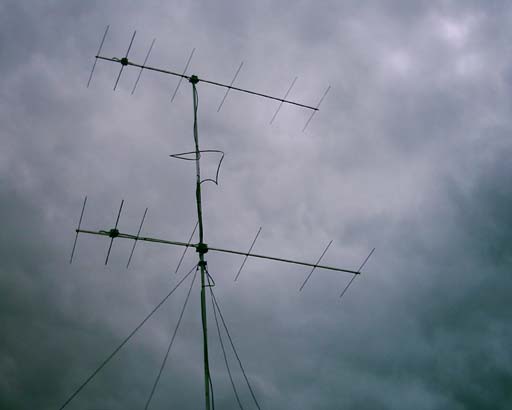
In the calendar of Slovak VHF pretekov existujú podujatia, ktoré nie sú len ďalším contestom do ročného seriálu, ale nesú aj historický odkaz. Presne takým je Memoriál Ondreja Oravca, OM3AU, tradičný pretek venovaný osobnosti, ktorá zásadne formovala slovenskú VKV scénu. Podujatie je súčasne športovým meraním síl aj pripomienkou človeka, ktorý v časoch elektrónkových TCVR, mechanical rotators and hand-tuned preamplifiers pushed the boundaries of the possible. The current 2026 edition is organized by the VHF Commission of the Slovak Radio and Television Association on the standard date of the first full weekend in June.
In the article you will read
Who was Ondrej Oravec, OM3AU (ex OK3CDI, ex OK3AU)?
Among radio amateurs, the name Ondrej Oravec is synonymous with the Slovak VHF pioneer era. He was one of those operators who did not perceive amateur radio as just a hobby, but as an experimental technical discipline. At a time when many were focused on HF DX operations, Ondrej Oravec systematically explored the possibilities of VHF, satellite connections and later also EME.
His previous calls were OK3CDI and OK3AU, after changing prefixes he worked as OM3AU. Historical sources list him as one of the most important personalities of Slovak VHF amateur radio. In a document on the history of amateur radio sport he is explicitly mentioned as the third Czechoslovak operator on satellite links and at the same time as the first Slovak station on space links.
Pioneer 2 meters
Ondrej Oravec was known primarily for his activity on 144 MHz. At a time when today's DSP receivers, GPSDO references or ready-made LNA modules did not exist, VHF operation meant a combination of technical invention and operator discipline. Every dB was gained through honest engineering.

OM3AU was among the stations that demonstrated that the 2m band is not just local. FM pásmo na jednoduché QSO, ale plnohodnotný priestor pre DX prevádzku. An article dedicated to his first connections pripomína, ako už v raných rokoch posúval hranice QRB on 2 meters and helped build the Slovak VHF community.
Satellites and EME
However, OM3AU's significance went far beyond classic VHF connections. He was among the experimenters who were interested in satellite operations back in the days when AO-10 and similar projects represented the pinnacle of amateur radio technology.
Historical records say that he listened to the first Sputnik and later made connections via amateur satellites. Of particular value is the data on the connection with the USA by reflection from the Moon (EME), made on February 10, 1989.
For today's operator with SDR waterfall and digital modes like JT65 or Q65, EME may seem like a manageable discipline. However, in the OM3AU era, it represented an extremely demanding technical challenge: high-power PAs, precise antenna systems, high-quality LNAs, and perfect operator timing.
Technical experimenter

Ondrej Oravec's generation was not a "plug and play" generation. At that time, radio amateurs constructed their own transverter, preamplifier, relay switching, power supplies, antenna systems, and sometimes even mechanical parts of masts. That is why his name is associated with technical progress, not just with sports results.
Such personalities shaped amateur radio as an experimental technical service, not just an operator operation.
Why the OM3AU Memorial was created
The memorial was created as a tribute to this personality and at the same time as a tool to support VHF activity. Its purpose is not only a symbolic remembrance, but also practical support for operation on the 144 and 432 MHz bands.
To je dôležité najmä v čase, keď časť rádioamatérskej komunity presúva pozornosť na FT8, DMR, hotspoty či internetovo asistovanú komunikáciu. VHF contest stále zostáva čistou disciplínou kombinujúcou operátorské schopnosti a technickú pripravenosť.
OM3AU 2026 Memorial Terms and Conditions
The 2026 edition is held according to the currently published rules of the SZR VHF Commission.
| Data | Value |
|---|---|
| Race name | Ondrej Oravec Memorial OM3AU 2026 |
| Deadline | June 6, 2026, 14:00 UTC – June 7, 2026, 14:00 UTC |
| Duration | 24 hours |
| Bands | 144MHz, 432MHz |
| Allowed modes | podľa pravidiel VHF komisie (štandardná contest prevádzka) |
| band schedule | IARU Region 1 |
Categories
| Category | Description |
|---|---|
| 144 MHz SINGLE | One operator |
| 144 MHz MULTI | More operators |
| 432 MHz SINGLE | One operator |
| 432 MHz MULTI | More operators |
| check log | Unclassified audit log |
Competitive exchange
Standard contest exchange:
RS(T) + connection sequence number + WW locator
Example:
59 023 JN98KS
In CW, of course, in the form corresponding to the RST exchange.
Scoring
The principle is classic VHF distance scoring:
- 1 km of distance covered = 1 point
- QSO with the same station is counted only once.
- The result is the sum of all valid QSOs
This means that it is not enough to just make local QSOs within a nearby QTH. Long QRBs, good antenna systems, proper station placement and the ability to read conditions are crucial.
Diaries
Log sa odovzdáva elektronicky cez oficiálne rozhranie VHF komisie.
| Requirement | Details |
|---|---|
| Format | EDI |
| Handover | via web interface |
| Alternative | checklog according to rules |
Pre contest stanice je samozrejmosťou korektný export z logovacieho softvéru a následná kontrola. Chyby v lokátoroch alebo výmene môžu výrazne ovplyvniť výsledok.
Strategic insight for operators
Memoriál OM3AU je síce národný memoriál, ale z pohľadu operátora ide o plnohodnotný VHF contest. Znamená to niekoľko praktických dôsledkov.
At 144 MHz, the decisive combination remains:
- good antenna system (yagi, stack, or long-boom configuration),
- low-noise RX chain,
- reasonable performance without IMD degradation,
- discipline in pile-up,
- monitoring of tropical conditions.
At 432 MHz, the quality of power supplies, connectors, relays, and LNA placement will be even more pronounced.
Ak sa objaví tropo ducting alebo zlepšené podmienky, contest sa môže dramaticky zmeniť. ODX spojenia potom rozhodujú celé poradie.
Live link OM3AU
The best memories of personalities like Ondrej Oravec are not just archival QSL cards or historical photos from the Shack. The real tribute is the activity on the air.
Every honest VHF QSO made, every yagi built, every new operator who understands the difference between local FM communication and serious DX contesting, is a continuation of the legacy of people like OM3AU.
The Memorial is therefore not just a race. It is a reminder of an era when amateur radio meant experimentation, technical courage, and a willingness to push the limits.