
Tiež máte pocit, že čím novší TCVR, so the less it is connectable to something else? Imagine buying a TCVR and after some time a transistor amplifier. But he needs to switch low-pass filters... and what now? If the manufacturer of the TCVR had this in mind, you can connect it so that the switching is done automatically. Another option is to share CAT data. The third possibility is that the amplifier measures the frequency from the transmitted signal and switches the low-pass filters.. But it is a bad solution because the switching takes place already during the transmission. The last option is for the operator to switch the low-pass filters manually.
The situation will get even more complicated if we have multiple antennas on some bands. Another switch. In addition to obvious discomfort, there is also a chance that some switch will not be in the correct position during transmission and may damage the equipment.
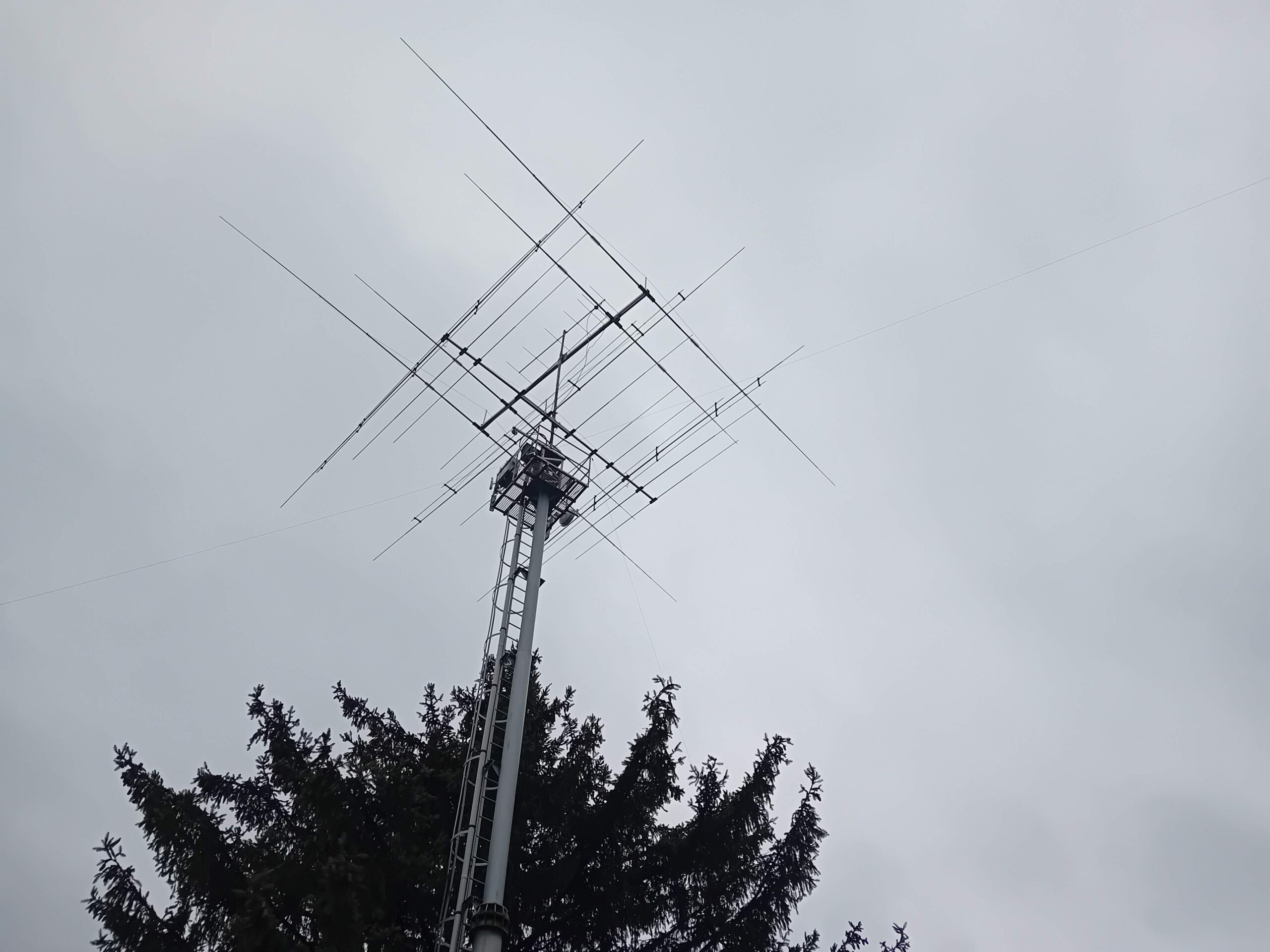
Imagine switching to a different band and the correct antenna automatically switches. That on vkv zadáte „DL“ alebo „JO50“ a hneď sa prepne pevne nasmerovaná yagi antenna in this direction? And conversely, if I type '9A', will it switch to the other - rotatable - antenna?
Imagine low-pass filters in the amplifier are switched automatically even when the TCVR does not have a band output. Imagine the correct transvertor….
You will read in the article
Solution: OTRSP. What is it?
OTRSP is a simple serial (RS-232 / USB-serial) protocol that allows contest logger or other program to control:
- Two-radio switch (switching RX/TX between two transceivers)
- SO2R controllers
- Antenna switches
- Footswitch / PTT routery
- CW/FSK/PTT matrix
- Headphone / audio switch control
There are many possibilities and it sounds complicated. However, in practice, it is simple. How to do it?
Practical example of OTRSP with N1MM+
First, we will need an OTRSP decoder. It is possible to implement it with minimal costs using Arduino Nano a kódom K7MDL, ktorý nájdete napríklad na https://github.com/ok1cdj/OTRSP_BAND_DECODER . Don't be misled by the name "BAND DECODER".
It will provide conversion to BCD code. This gives us the direct ability to control 4 switches or with a BCD decoder, we get 8 (DEC decoder) up to 16 outputs. An example of a simple switch with a board with 4 relays

Such modules are available for example through Techfun https://techfun.sk/product/4-channel-relay-with-jumper-hl
These relays are not intended for switching RF signal. They are suitable for switching a special RF switch or controlling an amplifier.
For 16 outputs, another decoder is needed, for example https://remoteqth.com/bcd-to-16.php
Po pripojení Arduina k PC spustíme N1MM+. Cez položku Config v menu prejdeme na možnosť Configure Ports, Mode Control, Winkey etc. V novom okne na záložke Hardware Select the COM port that was created by connecting Arduino to PC and select the OTRSP protocol on it.


Na záložke Antennas môžeme definovať tabuľku prepínania. Príklad ukazuje príklad dvoch antén v pásme 144 MHz. Prvá je pre Azimut 230 to 300 degrees (called West) and the second one is for azimuth 50 to 130 degrees (called East). At the same time, there is an option activated that automatically selects the antenna for the station in that direction.

First TIP
Doesn't suit at the moment as it defines automatic switching? Use ALT+F9 for manual switching.
Second TIP
If we also enter the name of the connected rotator in the table, it is possible to control it directly from N1MM+, where the command for rotation will go to the respective rotator even if multiple rotators are connected.
Third TIP
Ak Vám nevyhovuje N1MM+, tak skúste DXLog či Logger32 a Other, ktoré podporujú OTRSP
Conclusion
Therefore, OTRSP is not just for SO2R, but a practically useful thing for many radio amateurs. One possible disadvantage is that switching requires a PC with a log. However, this may not be a disadvantage - PC is now a standard hamshack.
Warning: If the PC is not connected or there is a loss of communication with the PC - the Arduino switch does not work! LED indicators on relay boards can be used to check functionality.