
Patrik DC8PAT designed the irradiator for the satellite QO-100 can be made using 3D printing. It is currently in version 2.1, which you can purchase via https://nolle.engineering/qo100-products/ . However, he released the older version for non-commercial use for free at https://www.thingiverse.com/thing:3899461 , which allows other radio amateurs to make this irradiator themselves.
You will read in the article
QO-100 irradiator using 3D printing
The design of the DC8PAT combines a satellite LNB pre Downlink v pásme 10 GHz s 3,5-závitovým helix ožarovačom pre Uplink v pásme 2,4 GHz satelitu QO-100. Všetky časti by mali byť vytlačené na PET/PETG, pretože je odolný voči UV žiareniu. To zabezpečil predajca https://www.jaspravim.sk/profil/kush3dp veľmi odborne a rýchlo. Túto službu 3D tlače Ham radio produktov som využil viackrát k plnej spokojnosti.

I had to add a reflector. Patrik on https://nolle.engineering/ice-cone-feed/ also includes technical drawings. I printed the template for the reflector on paper in a scale of 1:1. In the original, however, there is a reflector made of aluminum with a thickness of 4 millimeters, which I did not have available. I therefore used kuprextite, which is much easier to work with.
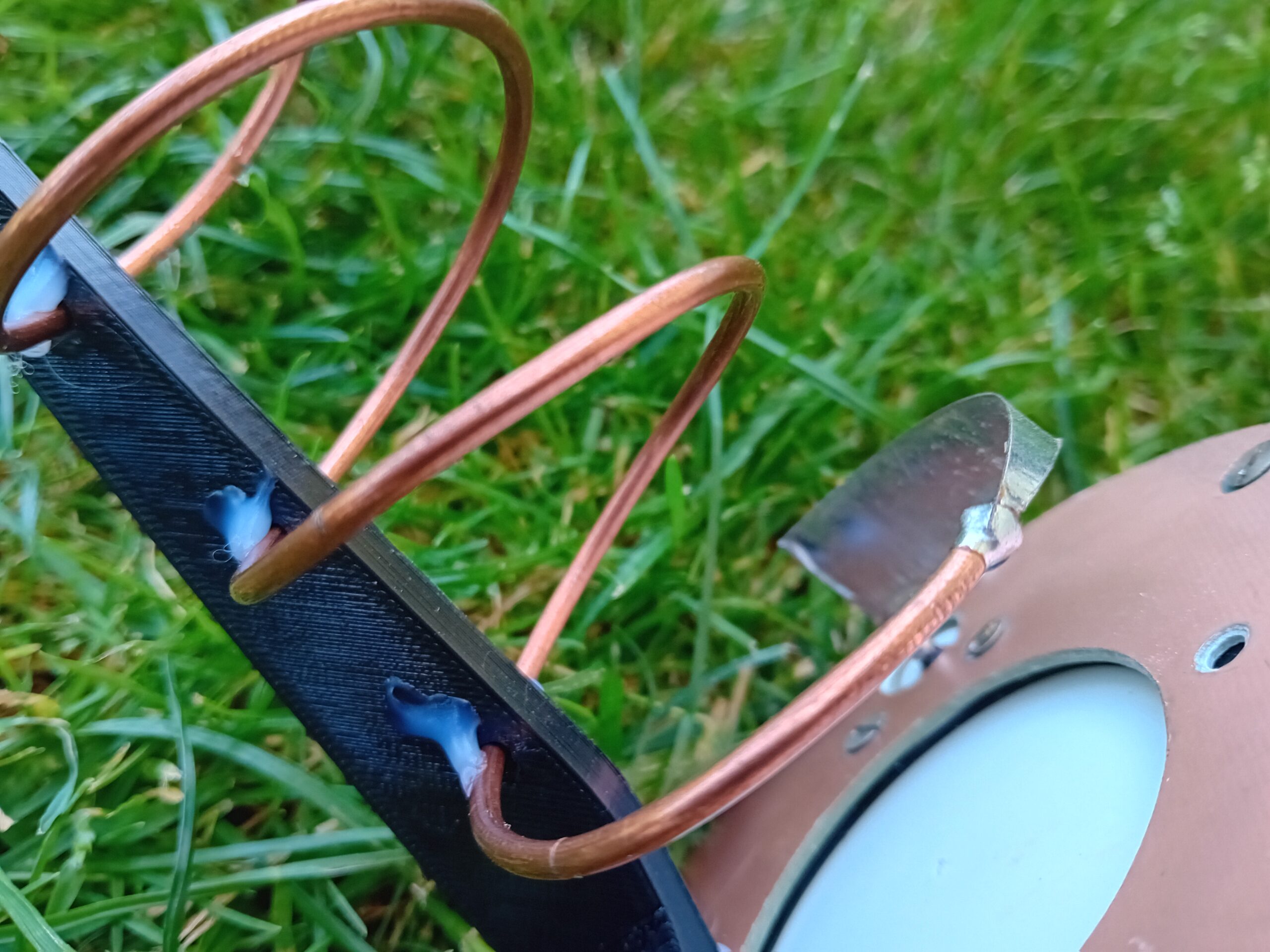
The next part is the helix. It is also possible to print a template on a 3D printer into which the wire is wound. I used it, but it is not necessary, the helix can be wound on a tube of a suitable diameter and stretched to the desired length.
The Helix irradiator has impedance transformation by a sheet metal matching element in the shape of a triangle with dimensions of 17 x 71 millimeters. The shape and location are in the description and drawings on the aforementioned page.

First, we mount the reflector and N-connector in the holder. Next comes the holder for the helix coil and the LNB. Finally, we screw the helix itself into the holder and solder the adjusting member.
Tuning and setting up the DC8PAT Ice Cone Feed irradiator
This part cannot do without measuring technology. VNAs that operate at 2.4 GHz are already relatively available among radio amateurs. The adjustment is made by changing the distance of the end of the adjustment circuit from the reflector and also by slightly shaping the helix of the helix. The location of the irradiator in the focus of the parabola and the action of the irradiator cover must also be taken into account. Approximate measurements of the 2.4 GHz emitter:

Unfortunately, the measurement was made without calibration, so it only shows the tuning. However, each constructor will still have to make his own measurements. The final securing is with a melt gun.
Practical results with the DC8PAT irradiator
I have the irradiator in a relatively large offset dish with a diameter of 105 centimeters. Practical tests confirm that reception and transmission with a power of 2 watts from SG-Labs transverter it produces an excellently readable SSB signal. Patrik states that the helical helix shades the LNB and thus creates an attenuation of approx. 2 dB. However, with such a large offset parabola, the reception is excellent and the shadowing is unnoticeable. Many stations also use smaller dishes. Will you also try to get to the QO-100 with 3D printing?