
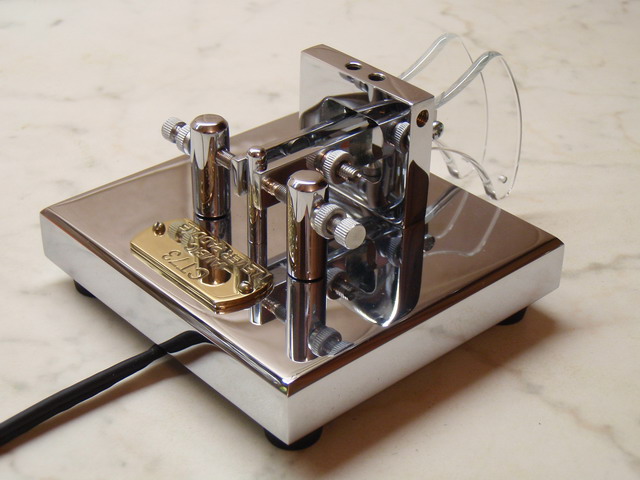
The last weekend of November belongs to shortwave telegraphy. The CQ World Wide DX contest CW 2026 will take place on November 28-29, 2026 and will fill the bands from 160 to 10 meters with thousands of stations from all over the world for 48 hours. But how does the telegraphic part differ from the phonetic part, what do the rules for 2026 bring and what to watch out for when submitting the diary?
You will read in the article
Date and goal of the competition
The telegraph portion begins on Saturday, November 28, 2026 at 00:00:00 UTC and ends on Sunday, November 29, 2026 at 23:59:59 UTC. Since Central European Time (UTC+1) applies in Slovakia in November, on our clocks this means starting on Saturday at 01:00 and ending on Monday at 00:59.
The goal is simple: to establish as many connections as possible with radio amateurs in as many CQ zones and countries as possible. Several openings of each band alternate in 48 hours, so it is not only speed that decides, but also when and where you sit.
Bands, competition code and score calculation
It competes exclusively on six KV bands: 1.8; 3.5; 7; 14; 21 and 28 MHz. WARC bands (10, 18 and 24 MHz) or 50 MHz and above are not used. The rules explicitly recommend following zone plans.

The competition code consists of the RST report and the CQ number of the zone from which you are broadcasting. Slovakia is in CQ zone 15, so by default you send 599 15. The zone of the broadcast location is decisive, not the home zone of the brand owner. If the opposing station sends a serial number or abbreviated digits instead of a zone (for example, T instead of 0 or N instead of 9), write down the zone it really meant based on its location.
The points for the connection depend on the position of the opposing station. A connection with another country on another continent is worth 3 points, with another country on the same continent 1 point. Stations in North America have 2 points for connections to other countries within the continent. Connecting with your own country has 0 points, but the multiplier counts. For a Slovak station, Europe gives 1 point, a connection outside Europe 3 points, and an OM – OM connection only a possible multiplier.
The resulting score is the sum of points for connections multiplied by the sum of the multipliers of zones and countries. Multipliers are calculated separately on each band, so zone 3 on 80m and on 40m are two different multipliers. Countries are determined by DXCC and WAE lists including IG9 and IH9. Maritime mobile stations count only as a zone multiplier. Example from the rules: 1,000 points × (30 zones + 70 countries) = 100,000 points. You can only do each station once on each band.
Competition categories: from QRP to Multi-Distributed
Single Operator and Single Operator Assisted

In the Single Operator category, one person does everything: operation, searching for stations and writing in the diary, without any help in finding connections. Single Operator Assisted allows such assistance. Both have three power classes: High power up to 1,500 W, Low power up to 100 W and QRP up to 5 W. Power is measured at the output of the active amplifier. In each category, you can compete on all bands or on one band.
Classic, Rookie and Youth categories overlay
Overlay categories are added with the CATEGORY-OVERLAY line in the Cabrillo header and are evaluated as all-band. Classic is intended for a single radio station without assistance that operates no more than 24 out of 48 hours. Breaks must be at least 60 consecutive full minutes without a recorded connection and you must not fill the bandmap or watch the DX cluster during them. The 24 hour window is counted from the first recorded QSO. If the log shows more, only the first 24 hours are counted. On-air reception is prohibited and Assisted stations cannot log into Classic.
The Rookie category is for operators who obtained their first permit less than three years before the competition. You enter the date of the permit in the SOAPBOX field. The Youth category is for operators who were no more than 25 years old at the start of the competition, and the year of birth is indicated in the SOAPBOX field. You can only apply to one overlay category, even if you meet the conditions of several.
Multi-operator categories
Viacoperátorské stanice súťažia len na všetkých pásmach a asistencia je povolená. Multi-Single má jeden hlavný signál, ktorý musí na pásme ostať 10 minút od prvého spojenia, a jeden násobičový signál na inom pásme, ktorý smie len volať nové násobiče a nesmie dávať výzvu. Multi-Two môže vysielať dvoma signálmi na dvoch rôznych pásmach a každý signál smie zmeniť pásmo najviac 8-krát za hodinu. Multi-Multi môže byť aktívna na všetkých šiestich pásmach naraz, jeden signál na pásmo. Multi-Distributed povoľuje až šesť signálov z rôznych miest, všetko vybavenie však musí byť v tej istej krajine DXCC a v tej istej CQ zóne. Pre viacoperátorské kategórie platí limit 1 500 W na signál, Multi-Single má aj triedu Low Power do 100 W.
What's new in 2026
Two changes from the 2025 rules will affect every participant. The first is the deadline for sending the diary. In 2025 you had five days, for 2026 the rules require submission within 48 hours of the end of the competition. For the CW portion, the deadline is December 1, 2026 at 23:59 UTC.
The second innovation is a new rule point on robotic operation. Changing the frequency, calling the station and entering the connection must always be initiated by a person. Autonomous systems or robots that imitate these actions are prohibited. The 2025 rules did not include such a point.
Assistance, CW decoders and rules of operation

The rules consider any technology or resource that discloses a marker or multiplier to the operator to assist in finding connections. These include DX cluster, spot sites, CW skimmer, Reverse beacon Network and agreement with other people. In the telegraph part, it is important that every CW code decoder requires the Assisted category, since 2015.
a waterfall or panoramic display in the transceiver is allowed in the unassisted category, as long as it does not show the markings or competition code. An unassisted station can send spots, but it must not read other people's spots or verify its own signal via RBN or DX cluster. Self-spotting and asking for a spot are prohibited in all categories.
Only one signal may be active on one band at a time. It is also prohibited to alternately call CQ on two or more frequencies of the same band. Stations in ITU Region 1 may not broadcast below 1810 kHz during the competition. The rules consider as unsportsmanlike behavior, for example, negotiating connections via telephone or Internet, excessive bandwidth, Harmonic radiation or a station that does not give its signal after more than three connections.
Journal, Cabrillo, and log submission

The diary is submitted exclusively electronically in format Cabrillo cez form on the CQ WW site. Each connection must include the UTC date and time, frequency or band, peer tag, and code sent and received. Applicants for world and continental placement must record the actual frequency.
Do not delete connections from the log. A duplicate QSO is worth zero and nothing is deducted for it, but a deleted connection would take away points from the opposing station. If you need to exclude a connection, for example, because it violates the rules of a category, mark it with an X- prefix at the beginning of a line in the Cabrillo file. Post-competition corrections are only allowed from your own notes, not from the recording, database, DX cluster or email from the opposing station.
For a single-band category, log all connections from all bands and set the band in the header, for example CATEGORY-BAND: 40M. Only connections from this band are evaluated. Duplicates and erroneously received code will be removed without further penalty when checking the logs. An erroneously received tag or a connection that is not in the opposing station's log (NIL) is removed and twice its point value is deducted.
Single Operator and Single Operator Assisted stations competing for the top five in the world, the continent or the USA (including Classic) must continuously record both received and transmitted audio throughout operation, ideally in a common format such as mp3 and each ear on a separate channel. The competition committee can request the recording within 90 days after the deadline and it must be delivered within five days.
What CQ WW CW looks like in practice
The following three videos all capture actual telegraph operation in CQ WW: fast key work, reception on a crowded band, and smooth switching between calling, receiving and logging.
TO7A from Martinique: at the other end of the pile-up
Dimitriy, UT5UGR, competed in CQ WW CW 2025 from Martinique as TO7A in the Single Operator All Band High Power category. Martinique is a sought-after country in North America for Europe, so each connection with TO7A is worth 3 points to the European station, and on each band there is a new multiplier for both country and zone 8. The result is a pile-up in which the operator must keep a fast and regular pace.
WB6JWB: connections on the globe
The second video shows the opposite side. WB6JWB combined audio samples of his CW calls from CQ WW CW 2025 with an animated globe that zooms in on the opposing station's position with each QSO. ZF1A, J38W, PZ5DX, CN3A, KH6J, HQ9X, PJ2E, F6KOP, CR3M, CE0Y, B1Z, 5J1DX, 4A7S, V47T or 8P5A. Among them is TO7A from the first video. 5J1DX is worth mentioning: this tag was served by E77DX in the competition and won the plaque for first place in South America in the single operator category on all bands.
DXLog.net during CQ WW CW 2021
The third video by Mehmet Raşid Öğünç is older, from 2021, and focuses on the competitive logging program DXLog.net. During the CW contest, the program sends CW from memory, guards against duplicates, shows the missing multipliers on each band, and you enter the connection with a few keys.
DX site vs regular station
The videos show two styles of competition. A station from the Caribbean or the Pacific gives a call almost all the time because the whole world is calling. A common European station with less power does not stand up to the challenge for long, so most of the time it passes the band and calls others. Both approaches are legitimate.
From the point of view of the score, the main deciding factor is when the zones between the continents are open. Evening and night hours on 160, 80 and 40m, opening to Asia and North America on the higher bands during the day and short grayline time windows bring multipliers that can't be done at other times. It is worth looking for a rare station on several bands, because the multipliers are calculated on each one separately.
Full rules and results from previous years can be found at CQ WW official website, alone rules for 2026 they are also in PDF. See you in the zone, 599 15.
Frequently asked questions
Kedy presne sa koná CQ WW DX Contest CW 2026 a dokedy treba poslať denník?
Contest runs from Saturday 28 November 2026 00:00:00 UTC to Sunday 29 November 2026 23:59:59 UTC. The journal must be submitted within 48 hours after the end, ie by December 1, 2026 23:59 UTC.
What competition code does the station from Slovakia send?
RST report and CQ number of the zone from which you are transmitting. From Slovakia it is 599 15.
Can I use a CW decoder or skimmer in the Single Operator category?
Nope. Each CW code decoder, skimmer, RBN and DX cluster means assistance and requires the Single Operator Assisted category. Waterfall without displaying tags is enabled.
Should I delete duplicate or bad connections from the log?
No, connections are not deleted, because you would take away points from the opposing station. Duplicates are scored zero with no penalty, and connections to be excluded are prefixed with an X-.
Who has to record audio during the competition?
Single-operator stations that fight for the top five in the world, on the continent or in the USA, including the Classic category. The competition committee can request the recording within 90 days after the deadline.