
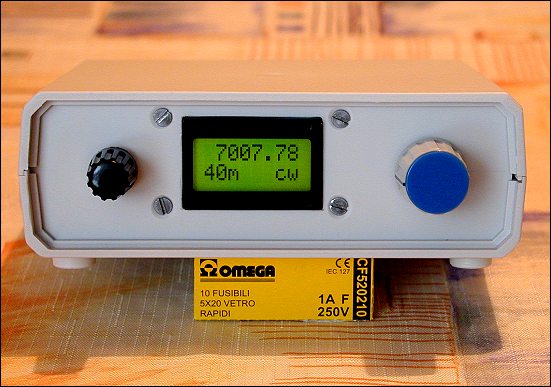
Existuje mnoho firiem ponúkajúcich QRP devices or QRP kits. We will provide their list and links in the next parts of our story...
Now we will try to get acquainted with the basic division in order to bring the world of QRP constructions (mostly CW, but not the rule) as close as possible to fans, beginners and everyone who is interested in this part of our hobby. In our case, we will try to divide QRP kits or devices into the following basic groups:

Typ 1: These devices can be called "Building blocks for experiments". These include products such as Pixie 2, Foxx-3 and similar from Vectronics, SOP, Kanga Kits, etc. These are the simplest TX, RX or direct mixing transceivers and their functions are mostly very limited. Performances are on the border of QRPP and QRP, i.e. 1–2 W.
Typ 2: These products can be called "Single Band Miracles" (in a good way!). They are primarily represented by numerous single-band, already mostly well-made sets such as SW+ from Small Wonder Labs, NC-40 from Northern California or OHR-100 from Oak Hill Research. The functions are already more advanced, mostly TX/RX are integrated into the transceiver, many times with QSK, RIT/XIT and often with better quality AGC obvodmi. Výkon sa pohybuje okolo 2–5 W a prijímače sú takmer vždy superheterodynové s jedným miešaním, osadené NE612 alebo lepšie TUF-1 DBM.

Typ 3: Tento typ môžeme nazvať „Všepásmové komplety“, ktorých hlavnou prednosťou je pokrytie všetkých pásiem. Sú vybavené základnými prvkami ako ALC, AGC, RIT/XIT, CW/SSB, gain and power regulation, possibly changing the filter bandwidth. Classic representatives are the K2 and K1 from Elecraft or the relatively successful OHR-500 from Oak Hill Research.
Of course, the kits also differ in many other aspects – the processing of the manual, the concept of the device and its parameters, the design of the PCB and the components used, the box and control elements. However, the most important are two parameters that most interested parties evaluate with the greatest emphasis: price vs. usability in operation, i.e. the "utility value" of the kit for our needs.

Therefore, if you decide to get one of the building blocks, you must first decide whether it will be a simple experimental model, a monoband that will be well usable in operation and which you would like to further improve, or whether it should be a finished product with coverage of all bands and the greatest possible comfort. In that case, you'll have to dig deeper into your wallet. Indicative prices are:
- Type 1: - + shipping
- Type 2: -0 + shipping
- Type 3: 0-0 + shipping
Mnohdy nájdete stavebnicu, ktorá ponúka viac funkcií za menej peňazí než konkurenčné produkty. Aj tu existuje konkurenčný boj firiem, prevažne z USA. Pozor treba dávať nielen na reklamné slogany typu „…the best performance at all“, ale aj na samotné zapojenie a použité súčiastky.
In the next parts, we will try to go through several building sites from individual categories, and you will also get a fairly extensive overview of the offered building sites and links to manufacturers.
If you have questions, please contact ok1rp@QSL.net or visit https://www.qsl.net/ok1rp. I will be happy to advise how to get some kits or where to buy parts such as TOKO coils for your devices.
Petr OK1RP