
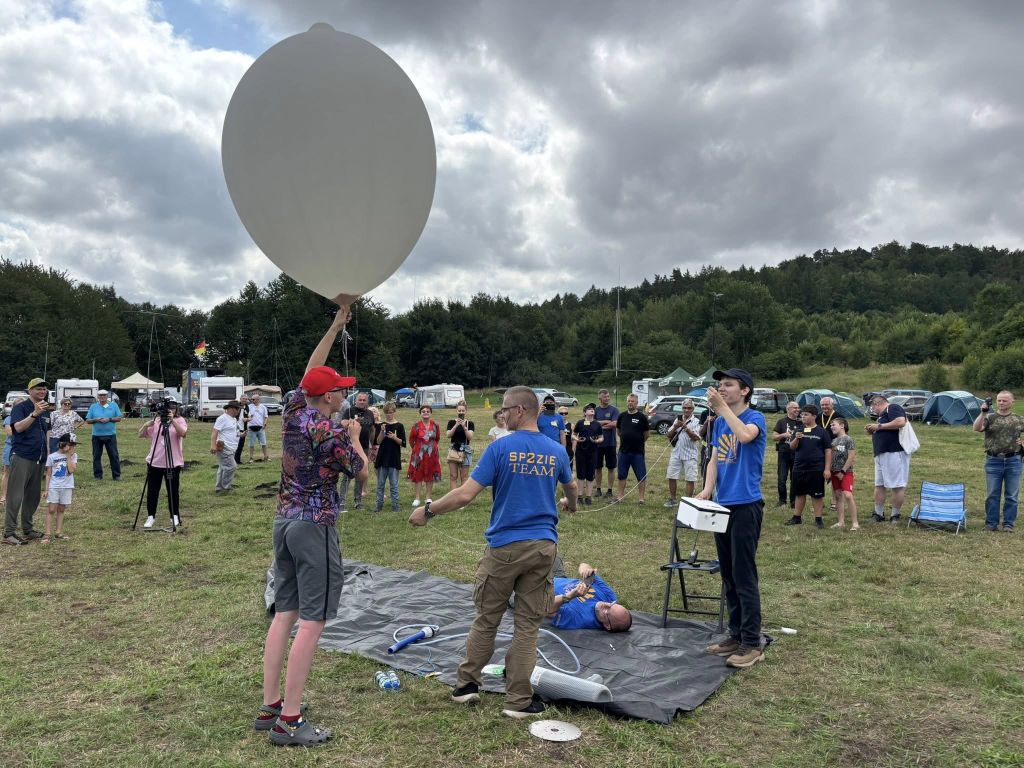
One of the most interesting technical attractions of this year's Ogólnopolskiego Spotkanie Krótkofalowców GRYF 2026 will be the launch of a stratospheric balloon equipped with several radio transmitters and a system for transmitting photos from the stratosphere. The project is led by Paweł SQ2IPS, and is being implemented in cooperation with the radio clubs SP2ZIE from Gdynia and SP2YWL from Władysławowo.
In the article you will read
Balloon release data
The balloon launch is scheduled for Saturday, July 11, 2026 at approximately 12:00 local time from the Polish village of Czymanowo. The flight has been duly reported to the Polish Air Navigation Services Agency (PAŻP) and the maximum planned flight altitude is approximately 34,000 m AMSL.
The balloon will transmit stratospheric photographs and telemetry data via multiple independent radio systems. The organizers also encourage radio amateurs to participate in receiving individual transmissions, as the packets received from different receiving stations are then assembled into complete images.
Transmission modes and frequencies
| Fashion | Frequency | Note |
|---|---|---|
| Wenet v2 | 435.400MHz | Transfer of digital photos with a resolution of 3280 × 2464, speed 96 kBd (I2S). |
| SSTV PD120 | 436.400MHz | Analog photo transfer compatible with the Robot36 app. |
| Horus Binary V3 | 436.800MHz | Telemetry (tone spacing 244 Hz), identification SP2GRYF. |
| APRS | 432.500MHz | Tracker with call sign SP2ZIE-11. |
| LoRa APRS | 434.855MHz | 1200 bit/s, CR 4:7, SF9, identification SP2YWL-11. |
The main transmission system will be Wenet v2, which will transmit high-resolution photos via a transmitter at a frequency of 435.400 MHz. The transmitter power will be approximately 500 mW and it will take approximately four minutes to send one photo. An RTL-SDR compatible receiver can be used for reception together with Wenet or WebHorus software.
Druhý obrazový kanál bude využívať mód SSTV PD120 at a frequency of 436.400 MHz. The organizers state that a regular VHF a handheld radio and a smartphone with the Robot36 application. Since the transmission of one SSTV image takes approximately two minutes, there will be approximately two-minute breaks between individual broadcasts.
Three independent telemetry systems will work simultaneously to track the position – Horus Binary V3, classic APRS and LoRa APRS. A modified M20 radiosonde with the project author's own firmware will be used as a tracker. The balloon's position will be continuously displayed via the SondeHub network. The organizers also point out that the selected frequencies were chosen to minimize interference in the 437 to 439 MHz band.
Videos
The project represents an interesting opportunity for radio amateurs to participate in receiving telemetry and image data from the stratosphere. Each receiving station contributes to the successful compilation of complete photographs, so the organizers welcome the participation of as many listeners as possible.