
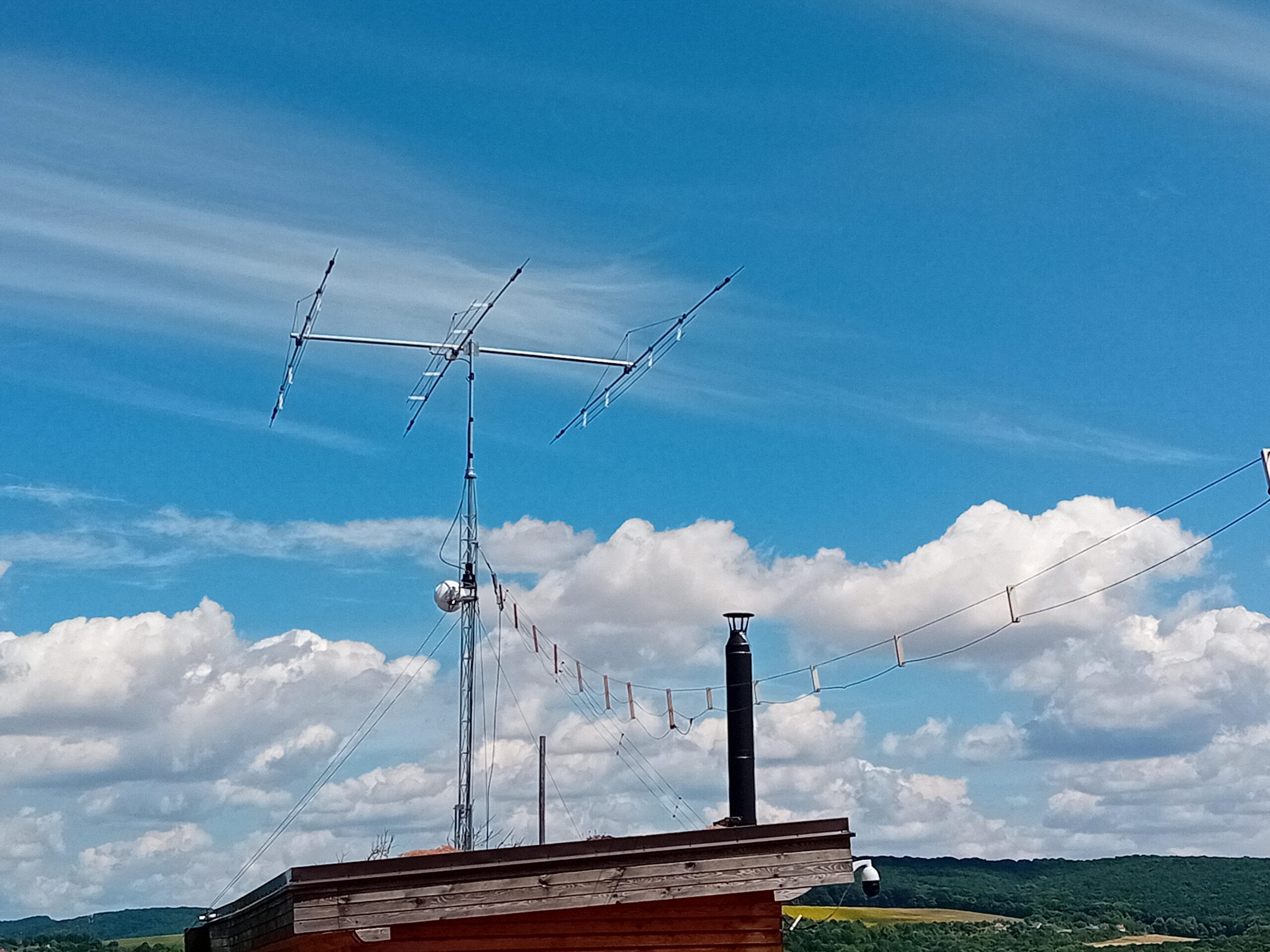
Pre rok 2023 pribudli do pravidiel European HF Championship, známy aj ako EUHFC, nové kategórie na skúšku: SINGLE-OP-UNLIMITED, SINGLE-OP QRP a ONE-BAND (160m – 10m). Ak sa osvedčia, v ďalších ročníkoch budú štandardnou súčasťou pravidiel. Cieľom European HF Championship je, aby európski amatéri kontaktovali čo najviac ďalších európskych amatérov a súťažili o titul „Majster Európy HF“. Počítajú sa iba kontakty z EÚ do EÚ, berúc do úvahy zoznam krajín CQWW.
In the article you will read
2. Deadline
The competition deadline is the first Saturday in August each year, from 12:00 UTC to 23:59 UTC (August 5, 2023).
3. Bands
The competition is held in the 160-10m bands (excluding WARC).
4. Kategórie European HF Championship 2023
Participants can compete in one of the 9 categories listed below:
| # | Category | Category marking in Cabrillo log |
| 1 | CW/SSB – High power | SINGLE-OP ALL HIGH MIXED |
| 2 | CW/SSB – Low power | SINGLE-OP ALL LOW MIXED |
| 3 | CW only – High Power | SINGLE-OP ALL HIGH CW |
| 4 | CW only – Low Power | SINGLE-OP ALL LOW CW |
| 5 | SSB only – High Power | SINGLE-OP ALL HIGH SSB |
| 6 | SSB only – Low Power | SINGLE-OP ALL LOW SSB |
| 7 | SINGLE-OP-UNLIMITED | SINGLE-OP-UNLIMITED |
| 8 | SINGLE-OP QRP | SINGLE-OP ALL QRP |
| 9 | ONE-BAND (160m – 10m) | SINGLE-OP ONE-BAND |
General terms relating to output power for all categories
a. High Power: The total output power must not exceed 1500 watts at any time.
b. Low Power: The total output power must not exceed 100 watts at any time.
c. QRP: Total output power must never exceed 5 watts

Competition conditions for all categories
a. All operational and logging activities are performed by only one person (operator).
b. All participants must work within the limits of their chosen category when performing any activity that could affect their result.
c. V každom okamihu je povolený len jeden vysielaný signál. Iba jeden operátor can perform all operational and logging activities and only one call sign is allowed from a particular station.
d. If two or more transmitters are on the same band at the same time, a hardware device must be used to prevent more than one signal from being transmitted at the same time. It is not permitted to request or require QSO (napr. volanie CQ) na viac ako jednej frekvencii na tom istom pásme súčasne. Druhá blokovaná stanica na pásme by mala byť len volajúca stanica a po každom QSO musí zmeniť frekvenciu.
e. Celá prevádzka must be from a single operating location. The transmitter and receiver must be located in a circle with a diameter of 500 meters.
f. Remote station operation je povolená, ak je fyzické umiestnenie všetkých vysielačov, prijímačov a antén v okruhu s priemerom 500 metrov. Vzdialene prevádzkovaná stanica musí dodržiavať licenciu stanice, prevádzkovateľa licencie a obmedzenia pre jednotlivé kategórie. Použitý volací znak musí byť vydaný alebo povolený regulačným orgánom v mieste umiestnenia stanice. Vzdialené prijímače mimo lokality stanice nie sú povolené.
g. Pre všetky kategórie je povolená akákoľvek verejná pomoc pri upozorňovaní na QSO. To zahŕňa okrem iného DX siete typu Cluster, miestne alebo vzdialené technológie typu skimmer and/or Skimmer-like and RBN siete.
h. Self-spotting or requesting spotting is not permitted.
i. Logs with recorded contacts in only one mode in categories 1-6 will be classified as "single mode" (CW or SSB).
Competition conditions for new experimental categories

SINGLE-OP-UNLIMITED
The new SINGLE-OP-UNLIMITED category is subject to the same rules as the existing All Band High Power categories (#1, 3, 5), except that there is no limit to the maximum number of band/mode changes and an audio recording of the competition is required (see more detailed explanation below).
SINGLE-OP-UNLIMITED only has an “All Band Mixed” classification, there is no separate division regarding “Band”, “Mode” or “Power”.
Audio recording request
SINGLE-OP-UNLIMITED participant competing for a top five (5):
– must record the transmitted and received sound as heard by the operator during the duration
competitive operation
– the recording must be in a common format (e.g. mp3, wav…) and should contain audio for each
as a separate channel.
– the recording must be continuous (not a record of individual QSOs)
– time “off the air” (when not transmitting or receiving) may not be recorded
– the committee may request the record within 90 days after the journal closes to assist
when deciding on a diary
– the participant must provide the recording files within 5 days of the request
– failure to submit the required audio recording may result in reclassification of the category in the diary or disqualification
SINGLE-OP QRP
The new SINGLE-OP QRP category is subject to the same rules as Category No. 2 (Mixed LP), except that the total output power must not exceed 5 W at any time. A maximum of ten (10) band and mode changes (see paragraph 9).
SINGLE-OP QRP only has the classification "All Band Mixed", there is no separate division regarding "Band" or "Mode".
SINGLE-OP ONE-BAND
The new SINGLE-OP ONE-BAND category is intended primarily for amateurs who do not have antennas for all bands and operate on only one of the 6 bands (160m, 80m, 40m, 20m, 15m or 10m). A maximum of ten (10) mode changes are possible (see point 9).
SINGLE-OP ONE-BAND only has a “Mixed mode” classification, there is no separate division regarding “Mode” or “Power”.
SINGLE-OP ONE-BAND participants are required to include all calls made during the competition period, even if on other bands. Only calls made on the band listed in the Cabrillo header will be considered for scoring purposes. Logs with calls on only one band will be classified as single-band.
NOTE: This does not mean 6 new single-band categories, but only 1 (one) common category, all single-band results regardless of the band of operation will be evaluated against other single-band results within one common single-band category.

5. Competition code
SSB: RS report / CW: RST report + two-digit number. This is the year the operator's amateur radio license was first issued, regardless of whether they use that callsign or another.
NOTE:
– 59(9) 82 means that the first official amateur radio concession was issued in 1982, 17 means 2017, etc.
– oficiálna licencia SWL is also considered an official amateur radio concession
– there is no exception regarding work on special brands or competitive brands, exactly the same rules apply as written above: the first official operator concession is considered valid data for the broadcasted two-digit number
– if you are unsure or have doubts about the correctness of the competition code, contact the organizer before the competition
6. Multipliers
Multipliers are different two-digit numbers, meaning the last two digits of the year in which the competitor first obtained an amateur radio license. The multiplier is counted only once per band, regardless of mode.

7. Points for connections
Each completed valid connection is counted as one (1) point regardless of mode. The same station may be contacted once on each band and mode.
8. Final score
The final score is the result of the sum of the points for the QSO multiplied by the total number of multipliers.
9. Band and mode changes – applies to all categories except SINGLE-OP-UNLIMITED
a. Mixed Mode Categories (Category No. 1, 2, 8) – A maximum of ten (10) band and mode changes may be made in any hour (00 to 59 minutes). For example, five (5) band changes and five (5) mode changes, with a band change and a mode change counted as one (1) change.
b. Single mode categories (CW or SSB only) (Category No. 3, 4, 5, 6) – maximum ten (10) band changes in any hour (00 to 59 minutes).
c. ONE-BAND Category (Category #9) – A maximum of ten (10) mode changes can be made in any hour (00 to 59 minutes).
d. Changing band or mode after the tenth band/mode change will be penalized by deducting QSO points and multipliers for those QSOs in that hour.
10th DXCC contest
A separate DXCC entity result list (sum of all results from valid DXCC countries), regardless of club affiliation, will be published. The most recent ARRL DXCC country list will be used for this purpose.
11. Awards (plaques and certificates)
a. Plaques will be awarded to European champions in several categories depending on
sponsorship.
b. It is strongly recommended that you record the exact operating frequency for each QSO in your Cabrillo log. Only logs with accurate frequencies will be eligible for plaques.
Poznámka: Ak nepoužívate kontrolu CAT To record the exact frequency of a QSO, log only the general frequency (1800, 3500, 7000, etc.) on your Cabrillo and do not use other artificial frequencies.
frequencies within the band (3545, 7033, etc.).
c. Journals sent after the deadline may be included in the results, but are not eligible for plaques.
Resubmitting an entry after the deadline will result in it being considered a late entry.
d. Electronic certificates will be available for download for anyone who submits a logbook for evaluation.

12. Decision
The EUHFC Competition Committee is responsible for the control and assessment of the competition logs. All logs are checked using proprietary software and human judgment. Participants are expected to adhere to the rules and good amateur radio practices. Violation of the competition rules or unsportsmanlike conduct may result in disciplinary action by the committee.
13. Penalties
a. For missed calls, incorrectly changed contest codes, and QSOs not entered in the contest log, and other similar cases such as discrepancies in the log, the call will be deducted and an additional one (1) QSO point will be awarded for each such error. A high percentage of bad calls or violation of contest rules will result in the participant being disqualified from the classification.
b. Participants who have been disqualified or sanctioned in other competitions in the previous year will result in the participant being removed from the classification.
c. Other reasons may also lead to disqualification, such as failure to submit the required information from the participant.
14. Disqualification
a. Violation of the competition rules, unsportsmanlike conduct or a very high percentage of unverifiable QSOs will be considered sufficient reason for disqualification.
b. Examples of unsportsmanlike conduct include, but are not limited to:
– arranging or confirming any connection during or after the competition using ANY non-amateur means such as telephones, internet, instant messaging, chat rooms, VoIP, email, social media, etc.
– broadcasting of the competitor on frequencies outside of license restrictions
– changing times in the log to accommodate a change in zone/mode or adjusting the time at the start or end of the competition
– excessive amount of unverifiable QSOs or unverifiable multipliers
– signals with excessive bandwidth (e.g., ghosts, clicks) or Harmonické signály na iných pásmach
– operation of stations that establish more than three consecutive connections without transmitting their call sign
c. Disqualified participants will be published in the results and are not eligible for awards.
d. Notification of the committee's actions will be sent by email to the address provided in the log.
submission. The participant has five (5) days to appeal the decision to the Competition Director. After this period, the decision is final.
e. The Committee reserves the right to change the category of any journal based on review.
denníka alebo iných informácií f. Diskvalifikovaný operator nebude klasifikovaný v rebríčku European HF Championship v danom roku nasledujúcom po diskvalifikácii.
15. Supervision
The organizer reserves the right to use any publicly available technology and to designate different persons to monitor the operation of different stations during the competition.

16. Declaration
By submitting the EUHFC competition diary and taking into account the efforts of the EUHFC competition committee
to review and evaluate this diary, the participant unconditionally and irrevocably agrees that:
– has read and understood the competition rules and agrees to be bound by them
– operates in accordance with all rules and regulations relating to an amateur radio station
– agreed that the logbook entry and the report on UBN môžu byť sprístupnené verejnosti
– agreed that the issuing of disqualifications and other decisions of the committee are official and
final
If the participant is not willing or able to agree to all of the above conditions, they should not send the log or submit it only as a control log.
17. Deadline and diary instructions
All participants must submit their logs electronically and must meet the requirements below:
– The logbook must contain the following information for each call: correct date and time in UTC, frequency (or band), call sign of the station being worked with, and the competition code sent and received. A logbook without all the required information may be reclassified as checklog.
– Calls should be recorded at the time of their termination. Stations competing for the European Champion must enter the actual frequencies for all calls in the log.
– Participants in the single-band competition are required to list all calls made during the competition period, even if made on other bands. Only calls made on the band listed in the Cabrilla header will be taken into account for evaluation purposes. Logs with calls on only one band will be classified as single-band logs.
The Cabrillo file format is the standard for logs. Here is a sample/template of what your EUHFC Cabrillo log should look like.
Nahrávanie na web je jediným spôsobom odoslania denníkov. Nahrávanie denníkov na web je k dispozícii na stránke Log Submission page. Všetky prijaté denníky budú potvrdené e-mailom.
A participant may withdraw a submitted diary for any reason within 30 days of the diary deadline. Please contact the Competition Committee for instructions.
All entries must be submitted within 48 hours of the competition closing date (Monday 23:59 UTC).
If you are unable to send the log in CABRILLO format or have other questions, please contact
the organizer at the email address "euhfc (at) s5cc.eu" and ask for help.