
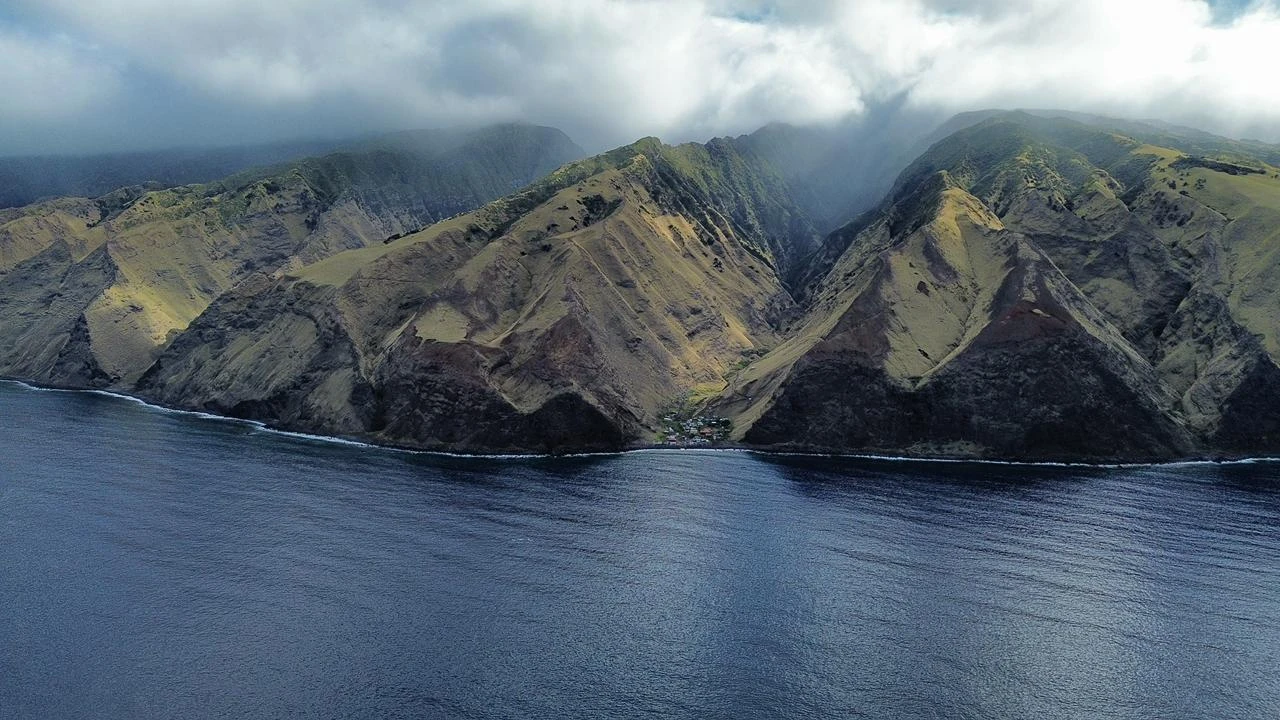
Alejandro Selkirk Island, part of the Chilean Juan Fernández archipelago in the Pacific Ocean, is one of the extremely rarely activated locations on the IOTA list. In October 2026, a pair of operators will set out to it, who under the callsign XR0Z have prepared one of the most physically demanding DXpeditions of recent times.
In the article you will read
Very demanding expedition XR0Z
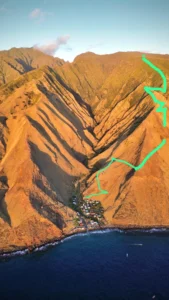
QTH expeditions XR0Z is located in a shelter at an altitude of 1057 meters above sea level, at the coordinates 33°45’44.3″S 80°47’58.0″W – in a location that, according to the organizers, offers excellent conditions for making connections with the whole world.
The journey to this place, however, poses a significant logistical and physical challenge: access requires a hike of more than four hours over a distance of more than seven kilometers from the fishing village to the shelter. All equipment needed for the expedition – radios, generator, fuel, water, food, sleeping bags, and personal items – had to be carried to the top of the mountain by the operators manually, each with a backpack weighing 15 kg, with the help of local fishermen.
Undoubtedly, this is an exceptional location that requires considerable effort and determination from the operators. However, we are convinced that the reward will be worth the effort – to establish numerous connections from one of the most remote places on Earth.
Operators, location, date
The expedition consists of two operators: Moisés, CE3VTZ, and Felipe, XQ7IR. The station will be on the air from Alejandro Selkirk Island (IOTA SA-101, locator EF96of) for approximately ten days during October 2026. Operations are planned on bands from 160 to 10 meters, in modes FT8, CW, and SSB.
The technical equipment consists of two transceivers Yaesu FT-710 and a 400W solid-state amplifier. The antenna park includes a DX Engineering antenna for the 160/80/40 m bands DX Commander antenna pre pásma 80–10 m, jednoprvkovú Delta loop anténu pre pásmo 10 m a 3-prvkovú yagi for the 6 m band. Power is provided by a Honda EU22i generator, with a backup 1200W generator.
Band plan XR0Z
Pri pile-up prevádzke platia nasledujúce pravidlá: CW split operation will always be 1 to 3 kHz up (UP) from the listened frequency. SSB split operation will always be 10 to 15 kHz up. Operation in FT8 mode uses software MSHV with reception in the range of 200-3000 Hz, always on two or three concurrent streams.
| Band | CW | SSB | FT8 |
|---|---|---|---|
| 160 | 1.820 | 1.860 | 1.836 |
| 80 | 3.523 | 3.790 | 3.567 |
| 60 | 5.352 | 5.357 | |
| 40 | 7.023 | 7.175 | 7.078 |
| 30 | 10.108 | 10.131 | |
| 20 | 14.023 | 14.240 | 14.091 |
| 17 | 18.079 | 18.130 | 18.091 |
| 15 | 21.023 | 21.265 | 21.091 |
| 12 | 24.894 | 24.955 | 24.911 |
| 10 | 28.023 | 28.485 | 28.091 |
| 6 | 50.110 | 50.313 / 50.323 |
| Mode | Split (shift) |
|---|---|
| CW | 1–3 kHz UP |
| SSB | 10–15 kHz UP |
| FT8 | MSHV, RX 200–3000 Hz, 2–3 streams simultaneously |
Island Alejandro Selkirk
The island, formerly known as Más Afuera, is located in the Pacific Ocean and is part of the Juan Fernández archipelago, territory belonging to Chile. It lies 180 kilometers west of Robinson Crusoe Island. It is the largest and westernmost island of the entire archipelago, with an area of 49.5 square kilometers and a maximum elevation of 1268 meters (the peak Cerro de Los Inocentes). The rugged terrain of the island is dominated by impressive cliffs lining most of the coast; on the southern coast, numerous narrow waterfalls plunge directly into the sea from high peaks, which is one ofthe most characteristic natural features of the island.
During the fishing season, a floating population of approximately 60 people lives on the island. The small settlement includes a pier, about twenty buildings, a football field, and a cemetery, reflecting a unique way of life in this remote corner of the South Pacific. The island is forested and very mountainous, with ridges and numerous deep ravines leading to steep, rugged coastlines. It is the summit of a submarine shield volcano formed during the Pleistocene – in age, it is the youngest of the Juan Fernández islands, being 1 to 2 million years old.
QSL XR0Z
The QSL manager for the expedition is Tim Beaumont, M0URX (83 Limbrick Avenue, Tile Hill, Coventry, West Midlands CV4 9EX, England, UK). QSL card requests can be processed through the OQRS system directly on the page m0urx.com/oqrs/logsearch.php for the callsign XR0Z.