
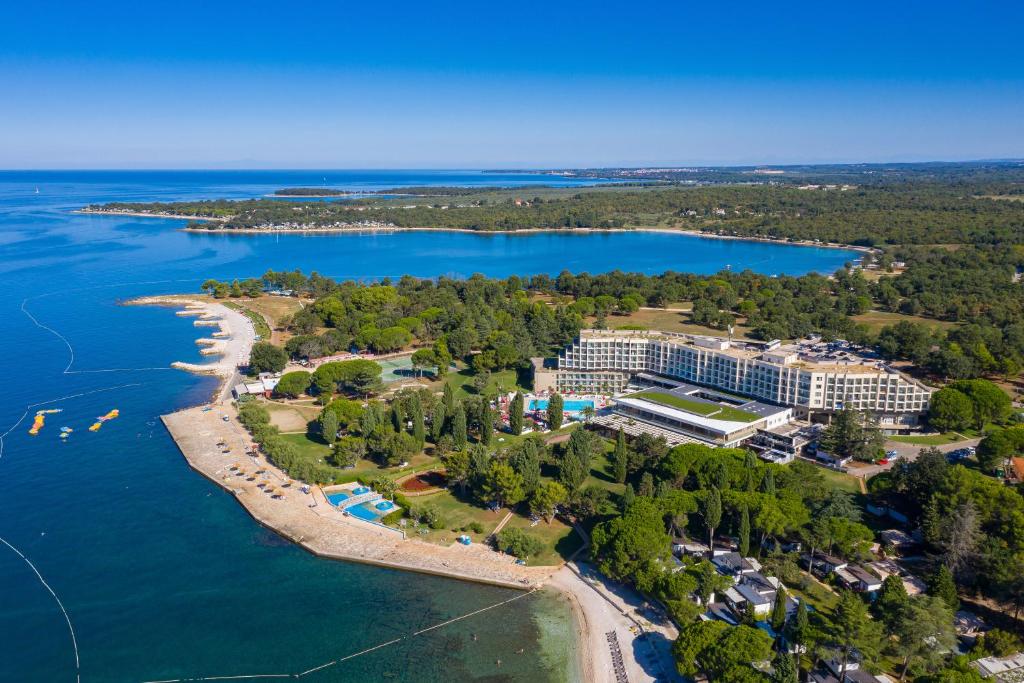
First weekend of October, Hotel Materada in Poreč, Croatia. The fifth year of the conference organized by the team around 9A6KX Mirka and the radio club 9A1P (Radio Club Poreč). Twelve lectures, over a hundred participants from all over Europe and an atmosphere that has no equivalent in the radio amateur world. The Istra contest Conference is not Dayton or Friedrichshafen - it is a meeting where antenna array design and pile-up tactics are discussed as passionately over an evening beer. And that's what makes it an event that people keep coming back to.
What actually happened at ICC 2026? Let's go through the program - from Friday morning to Saturday's ceremony to the late-night raffle, which drew prizes that we would have never dreamed of ten years ago.
You will read in the article
WRTC 2026 and the question: where to next?

Saturday's ICC program culminated with the awards ceremony of the WRTC 2026 UK – the world championship in radio amateur sports, which took place in Great Britain this summer. For those who didn't watch it: dozens of two-person teams competed from identical stations to eliminate differences in antennas and position. However, the stain was caused by the additional analysis, which revealed the dishonest practices of some competitors. As a result, the results were changed and new winners were awarded.
Nasledovala diskusia o WRTC 2030. For many in the hall, this debate was the key moment of the conference. Today we already know that it will happen Croatia.
CR3DX - how to build a contest station in Madeira

OM2KW priblížil príbeh contestovej stanice CR3DX na Madeire – od výberu lokality, cez návrh anténneho systému, až po reálnu prevádzku v contestoch CQ WW. Kto si myslí, že stačí kúpiť letenku a zobrať si TRX v kufri, toho táto prednáška rýchlo vyliečila. Madeira ponúka výnimočnú polohu pre contesty: nízka zemepisná šírka, čistý výhľad do Severnej aj Južnej Ameriky, Afriky i Európy. Ale stavať stanicu na ostrove v Atlantiku prináša aj logistiku, ktorú si domáci contestman nevedia predstaviť – od prepravy materiálu cez povoľovacie procesy až po korozívne prostredie, v ktorom soľný aerosól dokáže zlikvidovať konektor za jednu sezónu. Prednáška ukázala, že za pekným skóre v logu stoja mesiace plánovania a kompromisov.
How to cheat and not get caught
Probably the most provocative title of the entire conference. 9A6KX Mirko - yes, the organizer himself - discussed unfair practices in contesting. Not as a guide, but as an analysis of what the refereeing commissions deal with: from post-contest logo modifications, to DX cluster abuse in categories without an assistant, to techniques for masking unfair traffic. The aim was to show what contest commissions focus on and why it is important that the rules have teeth. For anyone who has ever dealt with a suspect competitor score, this was a must ride.
2BSIQ – a new dimension of single-operator

YO8TTT presented the experience of entering the category 2BSIQ (Two Band Synchronized Interleaved QSOs) z Chorvátska. Princíp, ktorý pôvodne rozpracoval CT1BOH, je jednoduchý na papieri: jeden operátor makes calls on two bands at the same time, with QSO interleaving. In one ear you hear CQ on 20m, in the other you answer on 15m - and both at the same time. In practice, this means extreme demands on coordination, auditory processing and software support. The 2BSIQ category has emerged in the CQ WW rules in recent years, attracting operators looking for something beyond the classic SO2R. The question is how many extra QSOs per hour this will realistically bring and whether the investment in training is worth it. The lecture showed that yes - but only if you are willing to invest hundreds of hours in practice.
Station Genius - all in one box
S52KA introduced the concept of Station Genius – an automated control system of a radio amateur station. The idea: one box that integrates antenna switching, rotator control, amplifier management and RF parameter monitoring. For a contest station with multiple antennas, rotators and amplifiers, this means fewer cables, a unified interface and faster switching between configurations. The question from the audience was predictable – what if it fails? The only point of failure is the integration tax. But when it works, it saves the seconds that decide the contest.
Bounce from airplanes - when Boeing helps you with your QSO

DL2SAX devoted his lecture to the phenomenon airplane scatter vo VHF, UKV a SHF contestoch. Princíp: rádiový signál sa odráža od trupu lietadla, čo umožňuje krátke spojenia na vzdialenosti, ktoré by inak vyžadovali tropo alebo meteor scatter. Znie to ako sci-fi? Vôbec nie – na frekvenciách nad 144 MHz, a obzvlášť na 1296 MHz a vyššie, môže byť letecká prevádzka rozhodujúcim faktorom. Softvér AirScout from DL2ALF displays aircraft positions in real time and predicts when the bounce geometry will be advantageous for connecting with a specific counter station. For VKV contestants, this is information that changes the tactics of the entire race - instead of waiting for tropo improvement, all you have to do is wait for Ryanair from London.
GhostBox SO2R – software ghost instead of hardware

YO3HEX introduced GhostBox – windowsovú aplikáciu, ktorá nahrádza klasický hardvérový SO2R kontrolér. Namiesto fyzickej krabice s relé and audio switches, everything runs in software: audio switching between two radios, integration with logging programs via OTRSP protokol, DSP funkcie vrátane binaurálneho spracovania, redukcie šumu a zvýraznenia CW signálov. GhostBox komunikuje s N1MM+ aj DXLog a vyžaduje len USB audio interface for each radio. The system requirements are modest - Windows 10, a quad-core processor and 8 GB of RAM for full DSP mode with MP3 recording. How much does a hardware SO2R box cost? One hundred, two hundred euros? GhostBox solves this with software and at a fraction of the price. For operators who are thinking about SO2R but don't want to invest in hardware, it's an interesting gateway.
Contest effort from station LX7I
DK6XZ shared his recent experience operating at the Luxembourg contest station LX7I. Luxembourg – a country smaller than the Bratislava region, but well represented in the contest world. LX7I is a station that, among other things, also hosts YOTA's youth contest programs. The lecture covered category selection, antenna system, operational strategies and comparison of results with previous years. For those who are thinking about staying at a foreign station, the practical observations were especially valuable: from adapting to an unfamiliar station, through communication with the station owner, to the logistics of traveling with your own accessories. How to avoid the situation when you find out that your plug adapter does not fit until you are 800 km from home?
Drone antenna diagrams and receiving systems

Two Friday lectures were devoted to antennas - from different angles. S53ZO showed how a drone equipped with a measuring receiver can be used to capture a real antenna radiation pattern. Not a simulation in EZNEC, but a real diagram on a real mast, with all the effects of the surrounding terrain and structures. He compared the results to modeled patterns, and the differences were surprisingly large on some antennas—a warning to anyone who blindly trusts a software simulation.
OM8AW focused on receiving antenna systems - specifically, a redesigned version of the 4-square RX antenna. Receiving antennas are often underestimated in contesting, although it is the ability to hear weak signals in the noise that decides whether you record a connection or not. The lecture covered the design of phasing networks, switching directions and practical experience with installation in the real conditions of a Central European station.
LDMOS amplifiers - compromises that are not discussed
The final technical lecture of the Friday block was given by 4O3A – Ranko, whose call sign is synonymous with contest hardware. Topic: wideband LDMOS amplifiers and design trade-offs. Anyone who has ever opened an LDMOS PA catalog has seen promising numbers: 1.5kW, 1.8-54MHz, no tuning. The reality is more complex. Wideband design means compromises in linearity at the band edges, thermal management in long-term CW or RTTY mode, and considerations of where the limits of the BLF188XR or MRFE6VP61K25H transistors are. The lecture was not an advertisement for a specific product, but an honest look at the physical limits that every designer will encounter.
More than lectures
ICC 2026 was not just about lectures. Thursday belonged to informal meetings in the lobby bar - and whoever was there knows that this is where the best agreements on joint contest expeditions are made. On Friday evening, there was a competition in QLF (vysielanie ľavou nohou – áno, naozaj), HAM pub kvíze a pile-up súťaži. Sobotná raffle s cenami od sponzorov, skupinová fotka a „Last HAM Standing“ – posledný stojaci po celovečernom maratóne v bare – to všetko dotvorilo atmosféru, ktorá je pre ICC typická.
The conference takes place in the Materada Hotel directly in Poreč, with prices from €77 per night including half board and lectures. For that money, you get three days of content, food, the Croatian sea and a community of people who speak your language - and I don't mean Slovak, but CQ TEST.
The fifth year confirmed that the Istra Contest Conference has built a stable position on the map of European amateur radio events. It is not the largest, but in terms of content per participant it is one of the best. While at the big HAM fairs you walk between Chinese electronics stands, here you sit in a hall with people who make the top 10 in CQ WW. And that's exactly what the contest world needs - a place where experiences are shared, not just catalogs.