
In the article you will read
What does the RigControl Web application allow?
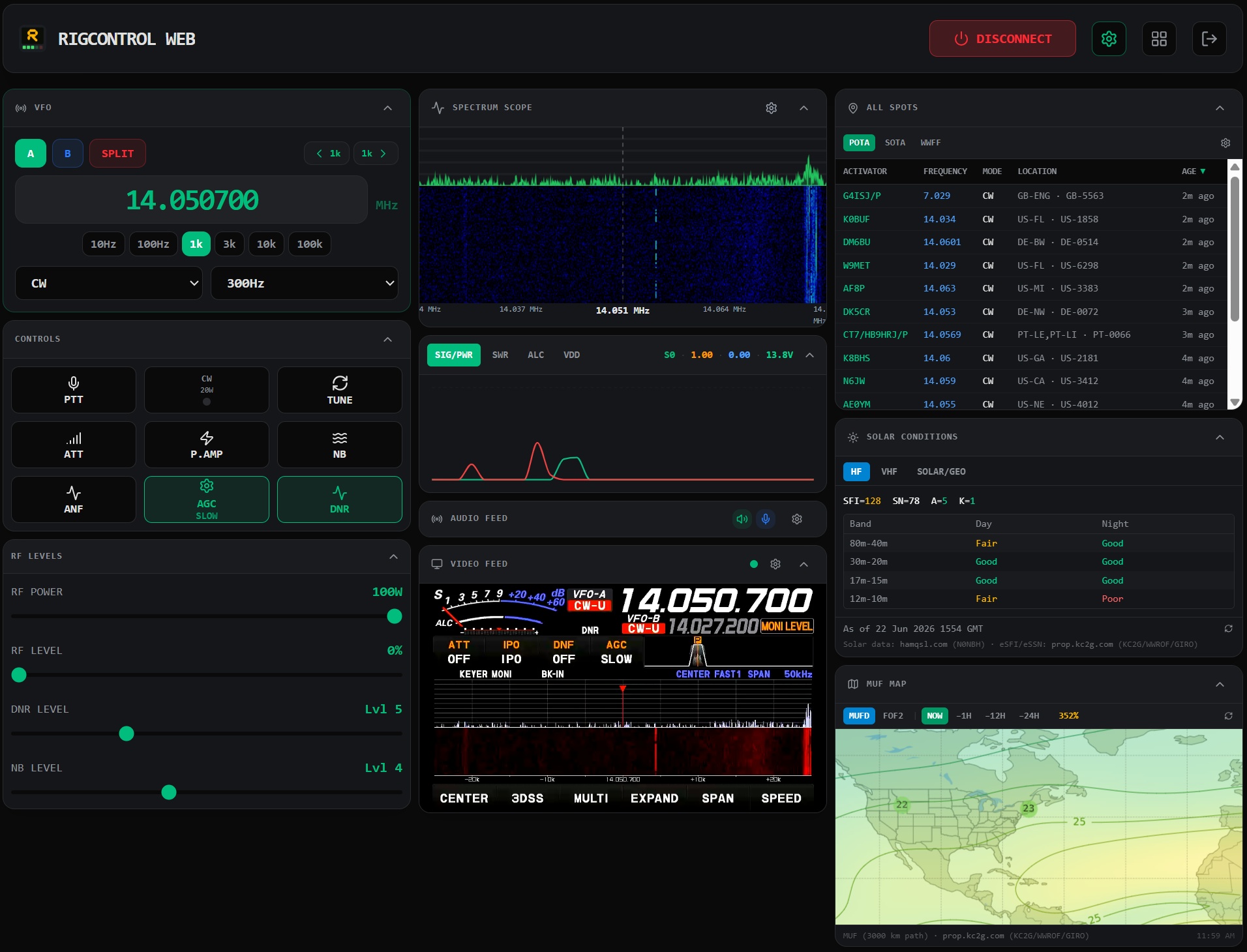
Hlavným cieľom projektu je sprístupniť vzdialené ovládanie moderných rádioamatérskych transceiverov bez zložitej konfigurácie vzdialenej plochy. Po úspešnom pripojení k programu rigctld získava používateľ online prístup k frekvencii, režimu práce, S-metru, výkonu, SWR, ALC a ďalším údajom prenášaným z rádia v reálnom čase. Aplikácia umožňuje nielen meniť pracovnú frekvenciu alebo mód, ale aj uskutočňovať kompletné SSB a CW spojenia. Zvuk je prenášaný po sieti pomocou kodeku Opus 1.5, pričom podporované sú obojsmerné audio prenosy pre SSB, AM aj FM prevádzku. Pre operátorov využívajúcich digitálne módy je pripravený modul WSJTX Bridge, ktorý umožňuje používať WSJT-X, WSJT-X Improved, Fldigi, VARAC, JS8Call and other applications via an existing secure connection. The big advantage is that the application does not require dividing serial ports between multiple programs. The transceiver is controlled by a single Hamlib instance, to which other compatible applications can connect via the standard Hamlib NET interface. Rigctl.Project architecture
RigControl Web uses a client-server architecture. On the computer connected to the transceiver, a backend based on Node.js and Express runs, which communicates with the Hamlib rigctld program. The frontend is a web application displayed in any modern browser. There is also a desktop version created with Electron, which automatically runs the backend in the background. Communication takes place via an HTTPS server using an automatically generated certificate. When connecting for the first time, the web browser displays a warning about an untrusted certificate, which is expected behavior when used locally. For access via the Internet, the author recommends using your own VPN or a reverse proxy server with a trusted certificate.Overview of main features
The functionality of RigControl Web significantly exceeds the capabilities of a simple CAT ovládania. Projekt spája do jedného prostredia ovládanie transceivera, prenos zvuku, zobrazovanie spektra, digitálne módy aj informácie o šírení.| Function | Description |
|---|---|
| Radio control | Frequency, VFO, mode, PTT, výkon, S-meter, SWR, ALC and other parameters. |
| CW operation | Integrated Iambic Keyer A/B, straight key, local Sidetone and adjustable speed. |
| CW decoder | Real-time Morse code decoding using the GGMorse library. |
| DIGIMODES | WSJTX Bridge for FT8, FT4, WSPR and other applications. |
| spectrum scope | Live panadapter a waterfall for supported Icom and Yaesu transceivers. |
| Videos | Transfer the image of the radio's front panel via HDMI or other video capture card. |
| Spots | POTA, SOTA and WWFF with Click-to-Tune function. |
| Promotion | HF/VHF conditions, solar data and interactive MUF map. |
| Users | Prihlasovanie, administrácia, audit log and správa používateľských účtov. |
Supported transceivers
The author explicitly states that the project is intended primarily for modern transceivers supported by the Hamlib library. The Spectrum Scope function is currently implemented for Icom IC-7300, IC-7300MKII, IC-7610, IC-7850/7851, IC-705, IC-9700, IC-905 and Yaesu FT-710. Other Hamlib-compatible transceivers can use basic CAT control as long as they are supported by rigctld. The author also states that the application has been practically tested on the FT-710, FT-891 and IC-7300. He expects a similar level of functionality for other modern Hamlib-compatible transceivers, and encourages users to send feedback and compatibility reports.What else will be added to RigControl Web and what not?
The author of the project publishes the development plan directly in the documentation of the GitHub repository. RigControl Web is actively developed and new features are gradually added according to the priorities of the community. The upcoming improvements include additional user interface configuration options, expanded transceiver support, new diagnostic tools and further improvements to the stability of the application. The development is primarily focused on reliable remote control of an amateur radio station, not on creating a full-fledged logging program. The author also clearly states that RigControl Web is not intended to replace existing specialized applications. Therefore, the program will not include its own log QSO, DX cluster server ani dekodér digitálnych módov. Namiesto toho využíva integráciu s osvedčenými aplikáciami, ako sú WSJT-X, FLDigi alebo ďalší softvér podporujúci Hamlib. Rovnaká filozofia platí aj pri ovládaní rádia – aplikácia využíva existujúci server rigctld, namiesto vytvárania vlastných ovládačov jednotlivých transceiverov.System requirements
RigControl Web je navrhnutý tak, aby jeho inštalácia bola čo najjednoduchšia. Väčšina používateľov nemusí projekt kompilovať zo zdrojových kódov, ale môže použiť pripravený inštalačný balík dostupný v sekcii GitHub Releases. K dispozícii sú verzie pre Windows aj Linux. The Linux version already includes the Hamlib library, so its separate installation is not necessary. On Windows, you need to have Hamlib version 4.7 or later installed as recommended by the project author. Developers or advanced users can also run the application directly from the source code according to the instructions in the README repository. The project is intended for licensed radio amateurs who are familiar with the basic parameters of their transceiver, such as serial ports, baud rate, VFO or rigctld program configuration. The author explicitly states that the user does not have to be a programmer or a computer network administrator.Installation and basic configuration
Základným predpokladom úspešnej prevádzky je správne nastavenie programu Hamlib rigctldThis process ensures communication between the transceiver and the web application. It is advisable to use Hamlet UI, which simplifies the setup. After starting RigControl Web, the user logs in to their account and the application then establishes a connection to the locally running rigctld server. The connection status is continuously displayed directly in the user interface. If the user plans to use remote control via the Internet, the author recommends access via VPN instead of directly publishing the application to the Internet. Such a solution increases the security of the entire station and at the same time simplifies the management of user accounts. The application itself contains a login system, an administrator interface and user role management. When starting for the first time, it is advisable to verify communication with the transceiver, the functionality of audio inputs and outputs, the correct configuration of the CW keyer and, if necessary, video transmission from the camera capturing the front panel of the radio. The documentation contains separate chapters dedicated to diagnostics, audio and video settings, CW operation and WSJT-X integration.User interface
