
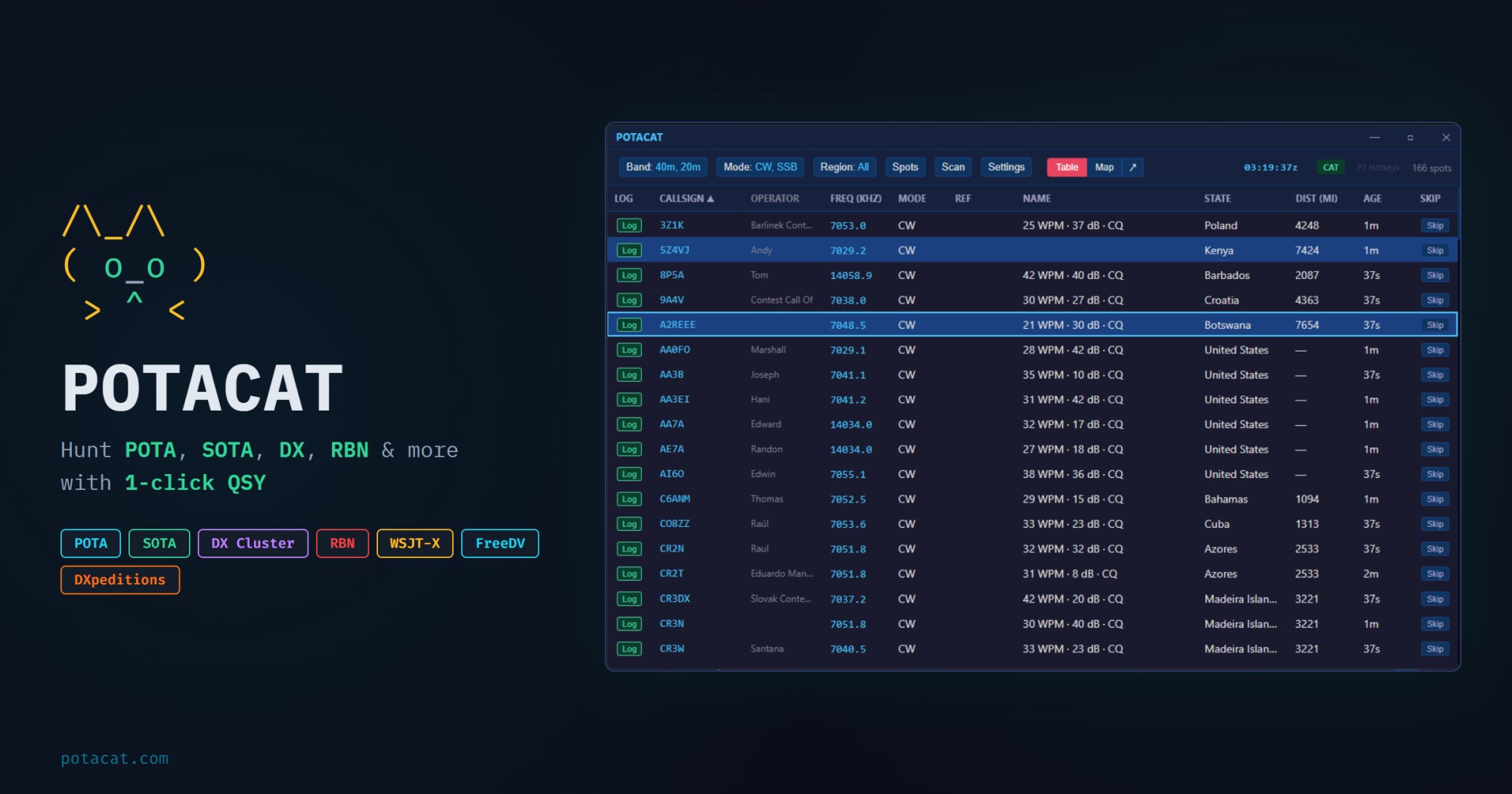
Chasing Parks on the Air activators, monitoring DX Clusters, and parallel transceiver control from one work environment – that was the original intention with which Casey Stanton, K3SBP, wrote the first version of the application. STAND . Od víkendového projektu pre FlexRadio a POTA spots, a full-fledged open-source tool has been developed covering seven sources of spots, several methods CAT riadenia, integráciu WSJT-X, logovanie QSO s exportom do bežných logbokov a v najnovšej verzii aj kompletnú funkciu vzdialenej prevádzky , teda remote station, ECHOCAT. Aplikácia je bezplatná, zdrojový kód je verejne dostupný na GitHub and the installer for Windows, macOS, and Linux is available at potacat.com.
In the article you will read
Výhoda remote station pre rádioamatéra
Vzdialená prevádzka bola dlho doménou drahých riešení: internetovo prepojené transceivery popredných výrobcov, proprietárny softvér a predplatné cloudových služieb. Pre operátora so strednou vybavenosťou to predstavovalo finančne aj technicky náročnú bariéru. STAND prináša funkciu vzdialenej prevádzky ECHOCAT ako súčasť bezplatnej aplikácie. Princíp je jednoduchý: transceiver zostane v shacku pripojený k počítaču alebo Raspberry Pi, operátor sa vzdialene pripojí cez VPN Tailscale a v prehliadači telefónu alebo tabletu má k dispozícii plnohodnotnú obsluhu stanice – ladenie frekvencie, SSB cez PTT, CW makrá aj digitálne módy.
The practical impact of this feature is obvious: the POTA activator appears on 14 MHz while the operator is sitting in the car. He opens the phone's browser, taps spot, stlačí PTT a QSO zaloguje priamo z aplikácie. Bez laptopu, bez RDP, bez cloudového predplatného. To isté platí pre FT8, kde Raspberry Pi v shacku vykonáva dekódovanie a volanie CQ, zatiaľ čo operátor sleduje waterfall na telefóne z inej miestnosti alebo z iného mesta.
What POTACAT can do – feature overview
The core of the application is the aggregation of live spots from seven sources into a single view. A single click on a spot row will tune the transceiver to the appropriate frequency and mode. On the waterfall FlexRadio, spots are displayed directly as labels above the markers. Built-in CW Keyer s podporou MIDI pádiel a CW makier funguje lokálne aj vzdialene. Logovaním QSO v aplikácii sa záznamy v reálnom čase preposielajú do externých logbokov. Pre operátorov s FlexRadio je k dispozícii integrácia so SmartSDR panadapter. The application contains solar data with SFI, A-index and K-index, a heatmap of band activity and DXCC tracker pre sledovanie chýbajúcich entít.
Video: POTACAT on the KM4ACK YouTube channel
Application author Casey K3SBP introduced STAND in an interview with Jason KM4ACK, who runs one of the most watched YouTube channels dedicated to amateur radio Linux and Raspberry Pi projects. The video covers installation, radio configuration, and basic workflows.
Spot sources, their display and filtering

STAND agreguje spoty zo siedmich zdrojov súčasne. POTA API poskytuje spoty aktivátorov obnovované každých 30 sekúnd. SOTA API dodáva spoty zo summitov vrátane výšky a referencie. DX cluster streamuje spoty v reálnom čase cez Telnet a zobrazuje ich farebne odlíšené od POTA a SOTA riadkov. Reverse beacon Network ponúka samostatný pohľad s mapou, kde sú zobrazené skimmery zachytávajúce konkrétne CQ vrátane hodnoty SNR a rýchlosti odosielania CW v WPM. PSKReporter poskytuje spoty FreeDV digitálneho hlasového módu. Priama integrácia s WSJT-X prináša FT8 a FT4 dekódovania priamo do tabuľky spotov. Siedmym zdrojom sú DX expedičné upozornenia s vlajkami krajín.
Spots can be viewed in four modes: table view with sortable columns, full-screen map view with dark or light OpenStreetMap basemaps, combined table and map view side by side, and pop-up map in a separate window for a second monitor.

Filtrovanie spotov pracuje na viacerých úrovniach. Pásmové filtre prepínajú viditeľnosť jednotlivých pásiem od 160 m po 6 m. Módové filtre zobrazujú alebo skrývajú CW, SSB, FT8, FT4, FM a digitálne módy. Každý zdroj spotov možno zapnúť alebo vypnúť samostatne. Funkcia Hide Worked odstraňuje z pohľadu stanice, s ktorými je QSOs už zalogované. Funkcia Hide Out-of-Privilege zohľadňuje triedu licencie operátora a automaticky skrýva frekvencie, na ktorých nemá oprávnenie vysielať. Filter kontinentov sústreďuje pohľad na konkrétne geografické oblasti. Watchlist s desktopovými notifikáciami upozorňuje na výskyt sledovaných volaných znakov v akomkoľvek zdroji, aj v momentálne vypnutom.
Radio control

POTACAT supports three methods of connecting to the transceiver. FlexRadio SmartSDR connects via TCP or COM port to any slice A to D. For other transceivers, a library is included in the installer. Hamlib 4.7 bez nutnosti samostatnej inštalácie; zoznam podporovaných rígov presahuje 200 modelov od výrobcov Icom, Yaesu, Kenwood, Elecraft, Xiegu and others. The third method – serial CAT with Kenwood protocol – is intended for QRPLabs transceivers QMX and QDX and other radios with Kenwood protocol, with adjustable baudrate and DTR/RTS configuration.
Rig profiles can be saved under custom names and switched with a single click. When tuning to a CW spot, the application automatically applies a CW XIT offset for precise tuning. Scan mode automatically cycles through filtered spots at an adjustable interval and skips logged stations - a principle similar to scanning the channels of a rescue radio station, but applied to live POTA or DX spots.
SmartSDR Panadapter
Operators with FlexRadio have direct integration with the SmartSDR panadapter. POTA, SOTA, DX Cluster and Watchlist spots are displayed as labels directly on the waterfall display - each marker is labeled with the call sign and park or summit reference. Visual tuning to the activator is thus possible directly from the panoramic spectrum view without switching to the spot table. The connection is made via the SmartSDR TCP API.
QSO logging
The logging dialog opens with one click after a QSO is made and is pre-filled with the call sign, frequency, mode, park or summit reference, date, time, power and RST. Each QSO record is saved locally to an ADIF file as a backup.

In parallel, the application can forward records in real time to external logbooks. Supported are: Log4OM 2 via UDP, DXKeeper, Ham Radio Deluxe cez UDP, N3FJP cez TCP a ďalšie logbooky vrátane Wavelog, MacLoggerDX, QRZ logbook, World Radio League and SOTAdata. The list of the last QSOs in the session is visible as a scrollable panel with the option of re-spotting.
POTACAT interface: SSB, CW, WSJT-X and scanning
Aplikácia ponúka tmavý aj svetlý vizuálny motív s prepínačom v reálnom čase. V stavovom riadku sú trvalo zobrazené hodnoty SFI, A-indexu a K-indexu. Heatmapa aktivity pásiem zobrazuje, ktoré pásma sú momentálne najaktívnejšie podľa počtu spotov. Desktopové notifikácie upozorňujú na zhody so Watchlistom. CAT log panel zobrazuje živý výpis každého CAT príkazu a udalosti pripojenia pre diagnostiku.

For SSB operation via ECHOCAT, the application streams two-way real-time audio over WebRTC with no visible latency. The PTT button on the phone controls the transmitter directly. Pre-recorded voice macros are also available for discreet operation. CW operators have programmable CW macros with direct local sidetone, support for Vband, Vail, TinyMIDI Key and other MIDI keyers, as well as keyboard CW input. WSJT-X integration works in two layers: the desktop version of the application feeds FT8 and FT4 decoding from a running WSJT-X into the spot table, remote ECHOCAT operation on FT8 and FT4 runs through the existing WSJT-X pipeline on the shack computer without the need for its presence during operation.
POTACAT also includes a built-in FT8/FT4 JTCAT engine that does not require an external WSJT-X. JTCAT has its own waterfall, decoding panel and auto-QSO function directly in the application. In addition, POTACAT supports SSTV: you can take a picture from your phone and send it as an SSTV broadcast to a remote station.
Requirements
| Component | Requirement |
|---|---|
| Operating system | Windows 10+ (64-bit), macOS 11+, Linux x86_64 or ARM64 |
| Radio station | FlexRadio (SmartSDR), or Hamlib-compatible radio (200+ models), or serial CAT Kenwood protocol (QMX, QDX) |
| Internet connection | Vyžadované pre SWEAT/SOTA spoty, DX Cluster a RBN |
| Maidenhead locator | Needed for calculating distances from spots |
| Remote operation (ECHOCAT) | Tailscale VPN on both Shack PC and mobile device (free for personal use) |
| Hardware for remote station | Raspberry Pi 4/5 or regular PC; transceiver with USB or serial port |
POTACAT version 1.8.13 is available as an installer for Windows, DMG for macOS (Apple Silicon and Intel), and as AppImage, DEB, and RPM for Linux, including ARM64 for Raspberry Pi 4 and 5. The application is open-source, the source code is available at github.com/Waffleslop/POTACAT, and it can be compiled from source using Node.js 22 and npm.
Conclusion
POTACAT started as a tool for quick tuning to POTA spots. Today it covers the entire chain from live spot aggregation and CAT transceiver control through QSO logging to full-fledged remote operation on SSB, CW and FT8 from your phone without a single cloud subscription. Free availability, support for a wide range of transceivers via Hamlib and the possibility of operation on Raspberry Pi make POTACAT a practical tool for POTA operators, DX chasers and those looking for an affordable remote station solution.