
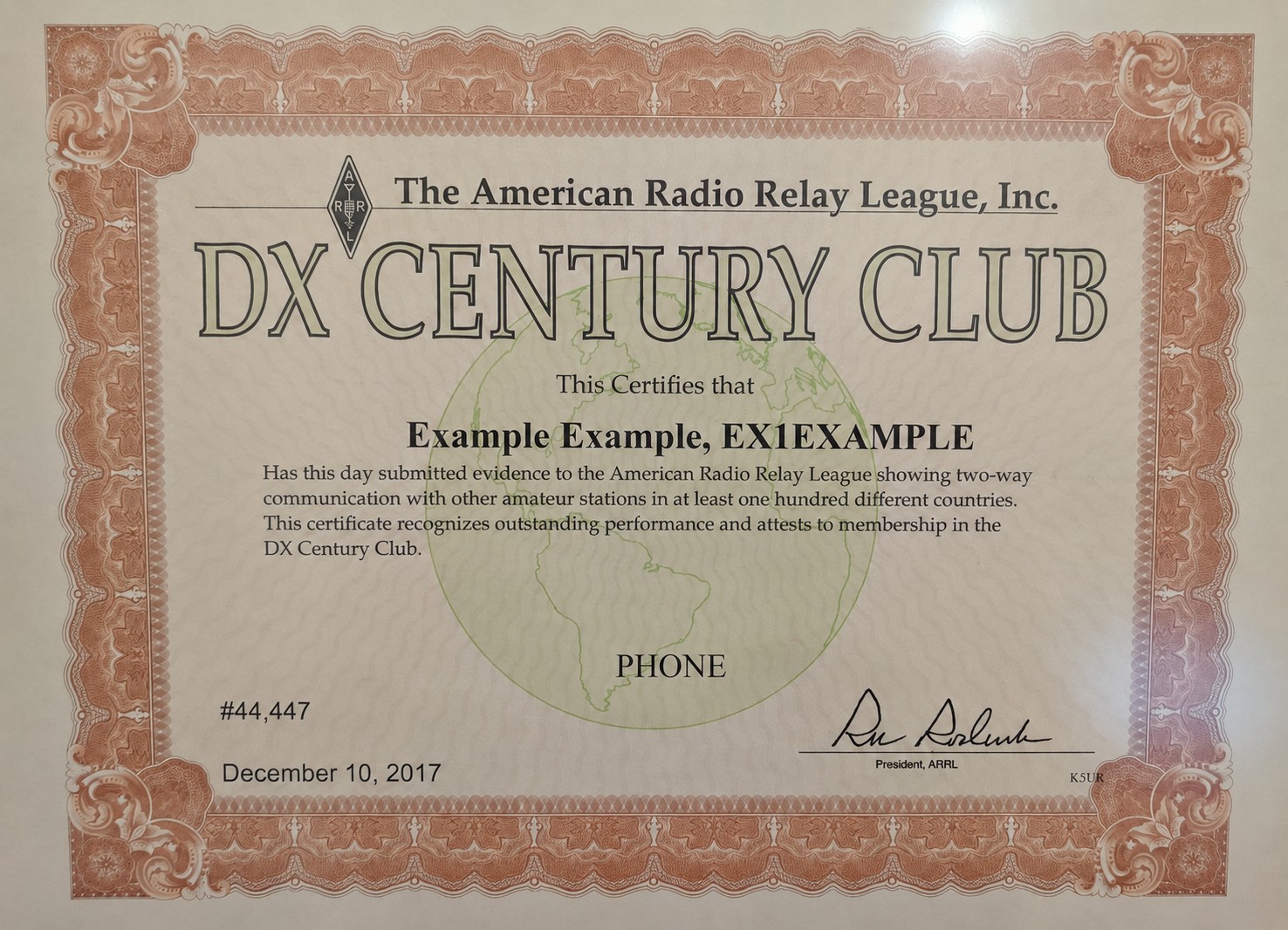
Pre väčšinu rádioamatérov predstavuje získanie prvého diplomu DXCC significant milestone. Although there are a number of national and international diploma programs, it is DXCC (DX Century Club) patrí už takmer sto rokov medzi najuznávanejšie ocenenia v amatérskej rádiovej prevádzke. Program spravovaný organizáciou ARRL (American Radio Relay League) created a unified system of recording confirmed contacts with individual DXCC entities and became the worldwide standard for evaluating the success of DX operations.
At first glance, it may seem that this is just a diploma for contacts with a hundred countries. In fact, the DXCC system is much more complex. It does not work with political states, but with precisely defined DXCC entities, the list of which is governed by ARRL's own rules. In addition to the basic diploma, there are dozens of other awards, continuous recognition, Honor Roll, DXCC Challenge or multi-band diplomas.
DXCC is also one of the few diploma programs that pays special attention to verification of contacts. Each confirmation must meet precisely defined conditions and the entire process is designed to maintain maximum credibility of the results.
In the article you will read
What is DXCC?
DXCC (DX Century Club) is an international diploma program of the ARRL, which aims to recognize radio amateurs for making and confirming two-way contacts with individual DXCC entities. The basic diploma is awarded after confirming at least 100 different entities from the DXCC list.

The program was created in 1937 based on an idea published in QST magazine in 1935. Since its inception, it has become the most prestigious diploma program in the amateur radio world, and its rules have been adopted as a reference by many other diploma programs.
It is important to note that DXCC does not use the term "country" in a geographical or political sense. It uses the term DXCC entity. A single political country may represent multiple DXCC entities, and conversely, some entities are not separate states at all.
Typical examples are island territories, overseas territories, or areas that meet geographical or administrative criteria defined by DXCC rules.
A DXCC entity is not a state.
One of the most common mistakes made by novice DXers is confusing the state with the DXCC entity. The ARRL uses its own list of entities, which is constantly maintained according to strictly defined rules. Some entities are created, others disappear, or move between current and canceled entities.
The current list includes 340 DXCC entities. In addition to these, there is a list of so-called Deleted Entities, i.e. historical entities that no longer meet the criteria for a separate entity. However, connections with them may still count towards some diplomas under certain circumstances, although they do not count towards the Honor Roll or DXCC Challenge.
The rules for assigning an entity are based on a combination of geographical, administrative and international legal criteria. Therefore, not all changes in the world automatically result in the creation of a new DXCC entity.
Basic rules of the DXCC program
The basic requirement for earning your first DXCC award is to confirm contacts with 100 different current or eligible DXCC entities according to ARRL rules. Each entity is counted only once for a specific award type.
The program includes several categories according to the type of operation. The most famous are Mixed, Phone, CW, Digital and individual single-band diplomas. Each category has its own rules for counting calls.
Contacts must be made by two-way amateur radio operation between authorized amateur stations. They must be made in accordance with the applicable regulations of both countries and with all DXCC program rules.
Each call must clearly identify both the opposing station and the own station. It is not permissible to count calls made under another license or call sign holder, unless the rules explicitly allow this.
How are connections confirmed?

The ARRL today recognizes two basic methods of confirming connections.
Najrozšírenejším spôsobom je elektronické potvrdenie prostredníctvom systému logbook of The World (LoTW). Pokiaľ obe stanice nahrajú zodpovedajúce denníkové záznamy, systém automaticky vyhodnotí zhodu údajov a spojenie sa môže započítať do diplomového programu bez potreby papierovej QSL karty.
The second method is to use traditional paper QSL cards, which must be checked by either ARRL staff or an authorized DXCC Card Checker before being counted.
Oba spôsoby majú rovnakú hodnotu z pohľadu programu DXCC. Mnohí rádioamatéri dnes kombinujú LoTW s papierovými QSL kartami, pričom papierové potvrdenia využívajú najmä pri vzácnych expedíciách alebo starších spojeniach, ktoré v LoTW nie sú dostupné.
Conditions for accepting connections
Not every contact made is automatically eligible for DXCC. The program contains detailed rules determining under what circumstances a contact can be recognized.
It is essential that two-way radio communication between the two stations is maintained throughout the entire connection. It is not permissible for a substantial part of the connection to be mediated by other means of communication, the Internet or a third party in a manner contrary to the rules of the program.

In modern digital modes such as FT8 or FT4, connections made in a standard manner according to the rules of the respective mode are considered valid. The mere transmission of data over the Internet between a remote operator and his own station is not automatically an obstacle, as long as the operation complies with ARRL rules and the relevant license conditions.
Additionally, connections must be confirmed in a manner accepted by the ARRL. Simply logging or electronically exporting ADIF is not sufficient.
Accreditation and credibility of the program
One of the reasons for DXCC's high prestige is its strict confirmation verification system. The ARRL has been implementing a multi-step verification process for both paper QSL cards and electronic confirmations for decades.
Paper cards are checked by trained and authorized DXCC Card Checkers or ARRL personnel. Each Card Checker is approved according to program rules and must follow a uniform checking procedure.
Elektronické potvrdenia v systéme LoTW využívajú kryptografické certifikáty, ktoré zabezpečujú autenticitu denníkových záznamov. Vďaka tomu patrí LoTW medzi najspoľahlivejšie elektronické systémy potvrdzovania rádioamatérskych spojení.
Video: What is DXCC?
This detailed video introduces the basic philosophy of the DXCC program, the importance of each entity, and the possibilities of obtaining your first diploma. It is a suitable introduction to the subject for those interested in DX operations.
Checking QSL cards for DXCC

Hoci dnes významnú časť potvrdení predstavuje systém Logbook of The World (LoTW), papierové QSL lístky zostávajú dôležitou súčasťou programu DXCC. Týka sa to najmä starších spojení, historických expedícií alebo staníc, ktoré LoTW nepoužívajú.
In order for paper QSLs to be counted in the DXCC program, they must be checked. This is done either by the ARRL DXCC Desk in Newington or by authorized DXCC Card Checkers operating in individual countries. A Card Checker is an experienced radio amateur authorized by the ARRL to verify the authenticity and correctness of submitted QSL cards.
The advantage of using Card Checker is that the applicant does not have to send their original QSL cards to the USA. They will receive them back after checking, while only the relevant documentation confirming the check is sent to the ARRL.
The current list of authorized DXCC Card Checkers is published on the ARRL website and is continuously updated.
How is paper QSLs checked?
The check does not only verify the existence of the QSL card. The Card Checker compares the data on the card with the data in the application. It mainly checks the call signs, date, time of contact, band, type of operation and correct assignment of the DXCC entity.
The inspector also assesses whether the card meets the requirements of the DXCC program and does not show signs of alteration or other irregularities. In case of doubt, a specific card may be forwarded for further review by the DXCC Desk staff.
The ARRL places great emphasis on consistency in the inspection process, ensuring that the results of the inspection are comparable regardless of the country in which the inspection is conducted.
How to prepare QSL cards for checking?

Proper preparation of QSL cards significantly speeds up the entire process. The procedure depends on the method of submitting the application.
When using the Online DXCC system, individual QSLs are first entered into an electronic application. Once completed, the system creates a DXCC Record Sheet in which all contacts are listed in exact order. Paper QSLs must then be arranged exactly according to this list. The Card Checker then checks the individual cards sequentially according to the printed statement.
If using a traditional paper application, the ARRL requires that cards be sorted first by band, then by type of operation. Cards containing multiple contacts are placed at the end of the entire file. QSLs should not be sorted by call sign or entity name, as this will slow down processing.
Originálne QSL karty musia byť čitateľné a nesmú byť nahradené fotokópiami, skenmi ani elektronicky zaslanými obrázkami. Výnimku predstavujú iba potvrdenia vytvorené prostredníctvom systému Logbook of The World.
What forms need to be filled out?
Each request for recognition of new DXCC credits must include appropriate documentation. The basis is the DXCC Application Form, which identifies the applicant, the type of diploma or credit increase requested, and the method of payment of fees.
The second document is the DXCC Record Sheet containing a list of all submitted contacts. With Online DXCC, this list is created automatically after completing the electronic application. With the paper form, it is filled out manually.
The ARRL recommends using only the current forms available on its website. Older versions or custom-made forms may not be accepted.
Each new submission requires a separate application, even if the applicant has previously received a DXCC diploma. The form includes current contact information and also specifies whether it is a new application or just an endorsement of additional confirmed entities.
Online DXCC greatly simplifies the entire process
In recent years, the ARRL has strongly encouraged the use of the Online DXCC system. The applicant first enters all QSLs electronically, then the system creates a complete application including a list of cards and, after checking with the Card Checker, the data is processed without the need for manual re-typing by ARRL staff.
The electronic method brings several advantages. It reduces the likelihood of errors in data transcription, shortens processing time, and is generally cheaper than traditional paper submission, as it eliminates the time-consuming manual data entry by DXCC Desk staff.
Do I have to send original QSLs to the USA?

Not always. If an authorized DXCC Card Checker is available in your region, the original QSLs remain with you after checking and only the relevant documentation is sent to ARRL headquarters. This method is more secure and eliminates the risk of losing valuable QSLs during international shipping.
If Card Checker is not available or the applicant chooses to use the ARRL's direct check, the original QSLs are sent directly to the DXCC Desk. After the check is completed, they are then returned to the owner.
DXCC fees
The DXCC program is fee-based. The ARRL charges fees for application processing, diploma issuance, individual endorsements, plaques, and other services. The amount of the fees is constantly changing, so the ARRL does not publish a fixed price list directly in the program rules.
Z tohto dôvodu sa odporúča pred každou žiadosťou skontrolovať aktuálny cenník na stránke DXCC Award Fees. Nachádzajú sa tu všetky poplatky vrátane spracovania papierových žiadostí, Online DXCC, LoTW žiadostí, vydania nových diplomov, plakiet, odznakov aj poštovného.
When using Online DXCC, processing costs are lower than with a traditional paper application, as there is no need to manually enter data into the ARRL system.
DXCC-related diplomas and awards
The DXCC program is not just a single diploma for one hundred confirmed entities. A number of other awards can be earned over time based on bands, types of operations, or total number of confirmed entities.
| Diploma | Characteristics |
|---|---|
| DXCC Mixed | Basic diploma without distinction of type of operation. |
| DXCC Phone | Calls made by voice only. |
| DXCC CW | Connections made exclusively by telegraphy. |
| DXCC Digital | Digital modes of operation recognized by ARRL rules. |
| Single band DXCC | Diplomas for individual amateur radio bands. |
| 5BDXCC | Award for fulfilling DXCC on five basic HF bands. |
| DXCC Challenge | Program based on the total number of confirmed entities on all bands. |
| Honor Roll | Award for confirming almost all current DXCC entities. |
Individual diplomas can be continuously expanded through so-called endorsements, which express the achievement of a higher number of confirmed entities.
DXCC Challenge Award

After earning the basic DXCC diploma, many radio amateurs set another goal – the DXCC Challenge Award. Unlike the classic DXCC, this award does not count the number of confirmed entities, but the total number of confirmed entity × band combinations.
Each confirmed DXCC entity is counted separately on each amateur band from 160 to 6 meters. 60 meters are not counted in the program, and deleted entities are not counted either. For example, if an amateur confirms a connection with the same entity on the 80m, 40m, 20m, and 15m bands, he will receive four DXCC Challenge points.
The basic requirement for obtaining the DXCC Challenge diploma is to achieve at least 1000 confirmed band-entities. There is no requirement for an even representation of individual bands - only the total sum of recognized combinations is decisive.
The program is ongoing. Each new confirmed band-DXCC entity combination automatically increases the resulting score, and the ARRL regularly updates the ranking of stations in the DXCC Challenge Standings.
For experienced DXers, the DXCC Challenge is a long-term goal, often lasting decades. It requires systematic filling in missing entities on less busy bands, especially on 160m, 80m or 6m.
Honor Roll and #1 Honor Roll

One of the most prestigious awards in the DXCC program is the Honor Roll. It is awarded to an amateur radio operator who confirms virtually all currently existing DXCC entities. The required number changes automatically as the ARRL adds or removes entities.
The Honor Roll is therefore not fixed to a specific number of entities. The limit is based on the current DXCC list and represents all entities except a few missing ones. The required number may be adjusted after each DXCC list change.
The highest possible honor is #1 Honor Roll. This designation goes to stations that have confirmed all currently valid DXCC entities without a single missing item. This is an extremely rare achievement that only a small number of radio amateurs in the world can achieve.
Making the Honor Roll is a lifelong goal for many DXpers. It requires long-term tracking of rare expeditions, excellent propagation conditions, quality antenna systems, and often a considerable amount of patience.
5 Band DXCC
Among the most famous additional awards is the 5 Band DXCC (5BDXCC). The condition for obtaining it is to fulfill the basic DXCC separately on five classic HF bands - 80, 40, 20, 15 and 10 meters.
On each of the bands listed, a radio amateur must have at least 100 different DXCC entities confirmed. Contacts on each band are judged independently and each band must meet the program conditions separately.
Later, the diploma can be expanded to include other bands through separate endorsements, for example for 160 m, 30 m, 17 m, 12 m or 6 m.
DXCC Standings
The ARRL regularly publishes publicly available rankings of DXCC award holders. Separate rankings exist for Mixed, CW, Phone, Digital, Single Band, Satellite, Honor Roll, and DXCC Challenge.
The results are published in the form of regularly updated lists that include callsign, country, total number of confirmed entities and other data by specific category. This allows each radio amateur to compare their results with other participants in the program.
The ARRL only publishes stations whose owners have agreed to be included in the public results, so the rankings do not represent a complete list of all DXCC award holders.
The most successful DXCC stations
The top ranks of the DXCC rankings have long been occupied by experienced DXers with several decades of active operation. Typical features of these stations are systematic participation in significant DX expeditions, powerful multi-band antenna systems and continuous addition of new band-entities.
In the DXCC Challenge category, the world's top stations achieve over 3,000 confirmed entity-band combinations. Such results represent decades of active DXing and require regular participation during band openings on all HF bands, including 6 meters.
Aktuálne poradie sa priebežne mení podľa pribúdajúcich potvrdení v systéme LoTW aj po spracovaní papierových QSL. Z tohto dôvodu ARRL odporúča sledovať vždy najnovšie vydanie DXCC Standings.
Practical recommendations for getting your first DXCC

Začínajúci DX-mani dnes majú situáciu výrazne jednoduchšiu než pred dvadsiatimi rokmi. Väčšina veľkých DX expedícií používa Logbook of The World, takže potvrdenia často prídu už niekoľko dní po skončení expedície. Výrazne sa tým skracuje čas potrebný na získanie prvých sto potvrdených entít.
Dobrou stratégiou je priebežne sledovať DX Cluster, kalendár plánovaných DX expedícií a okamžite nahrávať vlastný denník do LoTW. Zároveň sa oplatí uchovávať všetky papierové QSL, pretože môžu byť potrebné pri starších alebo vzácnejších spojeniach.
When submitting your first request, it is recommended to use the services of an authorized DXCC Card Checker. The entire process is simpler, safer, and in most cases faster than sending original QSLs to ARRL headquarters.
Video: DXCC Challenge and Honor Roll
The video of an experienced DX operator explains in detail the philosophy of the DXCC program, the difference between the basic diploma, the Honor Roll and the DXCC Challenge, and also provides practical experience in building a high number of confirmed band-entities.
Conclusion
DXCC si už takmer deväť desaťročí udržiava postavenie najprestížnejšieho diplomového programu amatérskeho rádia. Kombinuje jednoznačne definované pravidlá, dôsledné overovanie spojení a celosvetovo uznávaný systém evidencie potvrdených DXCC entít. Vďaka Logbook of The World sa proces získavania kreditov výrazne zrýchlil, pričom papierové QSL lístky naďalej zostávajú plnohodnotnou súčasťou programu.
Whether the goal is to get the first 100 entities, complete 5BDXCC, make the Honor Roll, or exceed 3000 points in the DXCC Challenge, it is a long-term project that motivates radio amateurs to improve their technique, operational skills, and knowledge of radio propagation. This is why DXCC remains one of the symbols of world DXing even after decades.